




I Thought My Water Flosser Made My Teeth Gaps Bigger—Here’s What May Actually Be Happening
It started with a tiny dark space between two of my lower teeth.
I'd recently started using a water flosser, and one night, while brushing my teeth before bed, I noticed a gap near my gumline that looked bigger than I remembered.
I leaned closer to the mirror. Then I checked it from another angle.
Was that always there?
Naturally, I wondered about my new water flosser. I'd bought it to improve my oral-care routine, not create another problem.
The more I looked, the more questions I had. Had I used too much pressure? Could the water have pushed my teeth apart? And how could I tell whether anything had actually changed?
Here's the important distinction: a gap that looks bigger after water flossing doesn't necessarily mean your teeth have moved. But if the change is real or comes with other symptoms, it's worth finding out why.

1. Why I Bought a Water Flosser in the First Place
Flossing Was the Part I Kept Skipping
I've always been pretty good about brushing twice a day.
Flossing was another story.
I'd use string floss for a few nights, forget about it for a week, then promise myself I'd do better. Getting around my back teeth was especially annoying when I was tired and ready for bed.
I wanted something that felt easier to use consistently.
That's why I became interested in the usmile C30 water flosser. The adjustable pressure settings and larger water tank were the features that stood out to me.
My goal was simple: stop skipping the spaces between my teeth.
Getting Used to Water Flossing
The first thing to learn about a water flosser? Keep your face over the sink.

There's a reason so many new users end up spraying water on the mirror.
Getting the angle right, letting the water drain out of your mouth, and finding a comfortable pressure setting take a little practice.
I liked the idea of starting gently rather than immediately turning up the pressure. And being able to reach around the back teeth made water flossing seem much more manageable than the routine I'd struggled to maintain.
So when I noticed that little gap a few weeks later, it caught me off guard.
2. Then I Noticed Something Strange Between My Teeth
Wait, Was That Gap Always There?
It wasn't a dramatic change.
Just a small dark triangle near the gumline between two teeth.
But once I'd noticed it, I kept looking.
I tried different lighting. I checked old photos, hoping one might show what my lower teeth looked like before. None was clear enough to help.
That's when I realized the hardest part wasn't seeing the gap.
It was not knowing whether the space had actually changed.
My First Thought Was the Water Pressure
The water flosser was the newest thing in my routine, so it was the obvious suspect.
Maybe I'd held the stream in one place too long. Maybe I should've used a gentler setting. Maybe I hadn't been paying enough attention to the gumline.
I'd also heard people worry about flossing too aggressively, which made me wonder if I'd somehow been overdoing it.
But I had no way to tell whether the water had caused anything just because I noticed the gap afterward.
I needed a better answer than my own reflection in the mirror.
3. Did My Water Flosser Actually Make My Teeth Gaps Bigger?
Cleaning Can Make an Existing Space Easier to See
One possibility is that the gap was already there.
Small amounts of trapped food and soft plaque can make the spaces between teeth less noticeable. Once some of that material is removed, the area may look more open.
That's different from physically pushing teeth apart.
A water flosser helps clean between teeth, but it doesn't remove hardened tartar or straighten or reposition teeth.
So a wider-looking space after cleaning isn't, by itself, proof that the water pressure caused damage.
The Gums Can Change How a Gap Looks
I hadn't thought much about the gum tissue between my teeth.
When gums are inflamed, they can look puffy or swollen. If that swelling improves, the area may look different.
But there's an important catch: less swelling isn't the same thing as gum recession.
Receding gums can expose more tooth surface and make spaces near the gumline appear larger. Gum disease can also affect the tissues that keep teeth stable.
That's why the appearance of a gap alone isn't enough to explain what's happening.
What If a Tooth Really Feels Loose?
There's also a difference between seeing a gap and feeling a tooth move.
A tooth that genuinely feels wobbly, a change in the way your teeth fit together, or spacing that continues to increase deserves more attention.
Problems with the gums and supporting bone can sometimes cause teeth to loosen or shift. Those are issues a dentist can assess.
And if you think a tooth is loose, don't keep wiggling it to test your theory.
4. I Realized I Needed to Check More Than Just My Water Flosser
What a Dentist Can Actually Find Out
This turned out to be the most useful part of understanding the problem.
The question isn't simply, “Did the water flosser do this?”
It's “Has the space actually changed, and are the teeth and gums healthy?”
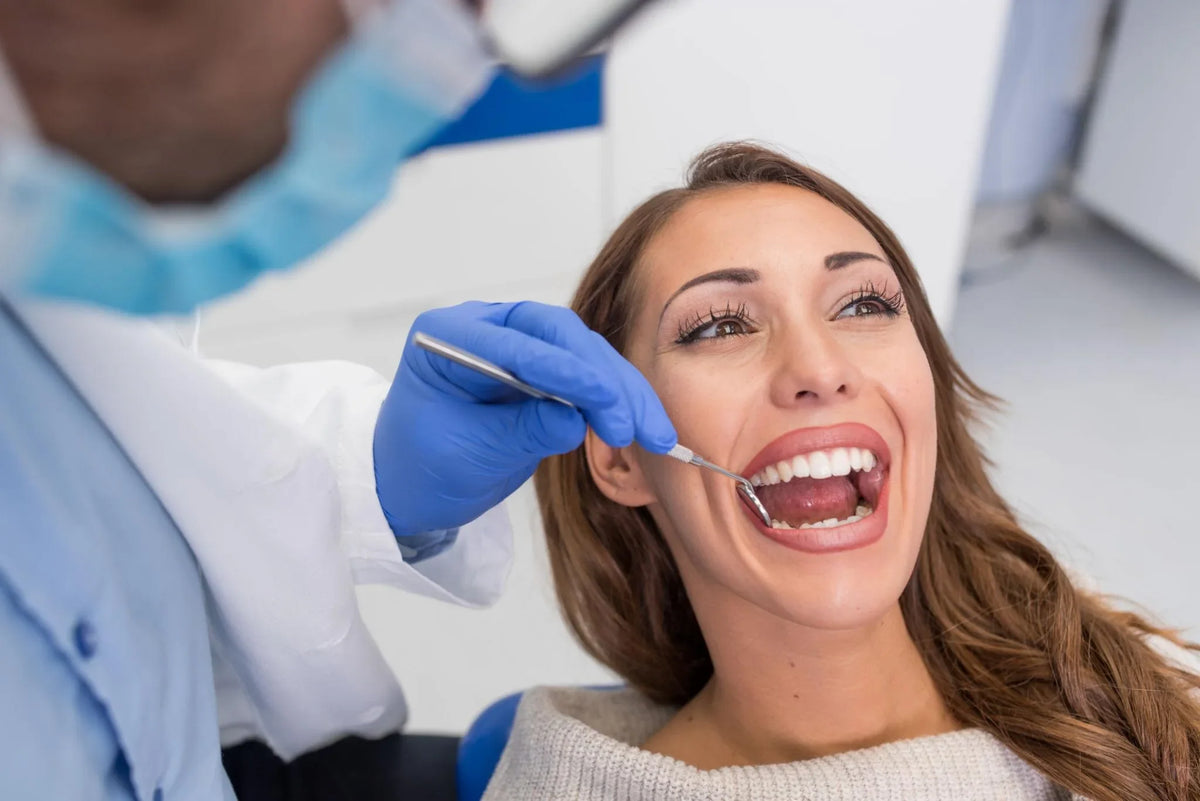
A dentist can examine things you can't reliably judge in a bathroom mirror: whether the gums are inflamed or receding, whether a tooth has abnormal mobility, and whether there are signs of periodontal disease. Depending on the findings, periodontal measurements or X-rays may be needed.
And those findings lead to different next steps.
| What the dentist finds | What it may mean | What happens next |
|---|---|---|
| No abnormal tooth mobility or concerning gum findings | The visible space may not indicate active damage, although its previous size may still be uncertain | Maintain appropriate cleaning and follow the dentist's advice |
| Gum inflammation or bleeding | The gums may need better plaque control or additional care | Review cleaning habits and any recommended treatment |
| Gum recession or periodontal changes | The space may reflect gum or supporting-tissue changes, not simply leftover food being removed | Discuss the cause, treatment needs, and follow-up |
| Actual tooth mobility or changing bite | There may be a problem requiring further evaluation | Arrange the recommended dental assessment or treatment |
The detail that matters most: Even a reassuring examination today may not prove exactly how wide the gap was several weeks ago. But it can help determine whether there's a current problem requiring care.
For anyone worried that a water flosser has damaged their teeth, that's a much more useful answer than a blanket promise that every gap is harmless.
The Questions Worth Asking Your Dentist
If you're getting a new-looking gap checked, you don't need a long list of dental terms.

These are the questions worth saving on your phone before the appointment:
My dental appointment checklist
- Did my teeth actually move, or is the space just more visible?
- Do you see any gum recession or inflammation around this area?
- Is there any unusual tooth mobility or evidence of a periodontal problem?
- Can I keep using my water flosser, and should I change my technique or pressure setting?
- Do I need treatment, follow-up, or anything specific to watch for?
I'd also mention when the change first appeared, whether the area bleeds or hurts, and what has changed in my oral-care routine.
One useful thing to remember is that not every question will have a definite answer on the spot. Without earlier photos or dental records, your dentist may not be able to confirm exactly when a gap changed.
But you should leave understanding what was found and what to do next.
Don't wait for a routine appointment if a permanent tooth is genuinely loose, a gap is changing rapidly, or you have significant pain or swelling. Seek prompt dental care.
5. What I Changed About My Water Flossing Routine
More Pressure Isn't the Goal
The pressure question was what worried me most in the beginning.
But the point of a water flosser isn't to use the strongest possible stream. It's to clean between teeth in a controlled way.
With the C30, having adjustable settings makes it easier to choose a pressure level that feels comfortable.
That doesn't mean the lowest setting is a treatment for gum disease, or that a higher setting will always clean better.
It means I can pay attention to technique instead of chasing more pressure.
A Simple Routine Worth Keeping
I don't think water flossing needs to be complicated.
Here's a quick routine checklist that's more useful than constantly staring at your teeth in the mirror:
- Start comfortably. Use a gentle pressure setting while learning, and follow your device's instructions.
- Stay over the sink. Lean forward and keep your lips partly closed so water can drain without spraying everywhere.
- Move along the gumline. Follow the recommended tip position and pause between teeth rather than concentrating on one spot.
- Don't force the nozzle. Avoid pushing it into tight spaces or repeatedly blasting an irritated area.
- Watch for symptoms. Repeated bleeding, worsening pain, real looseness, or changes that keep progressing are reasons to seek dental advice.
- Keep the basics. Brush twice daily and use an interdental-cleaning approach that suits your teeth and gums.
The goal is a routine I can stick with.
If something feels wrong, I'd rather get a professional opinion than keep changing settings and hoping for the best.
6. What I Wish I'd Known Before Worrying About Those Gaps
A Bigger-Looking Gap Doesn't Tell the Whole Story
What I wish I'd understood sooner is how easy it is to confuse timing with cause.
I started using a water flosser. Then I noticed a gap.
Both things happened. But that doesn't automatically mean one caused the other.
Maybe cleaning made an existing space more noticeable. Maybe the gum tissue changed. Or maybe there's an issue a dentist needs to evaluate.
The mirror can't give you that answer.
What I'd Tell Someone With the Same Worry
If you've just used your water flosser and suddenly think your teeth look farther apart, I understand why that would be unsettling.
But I'd focus on three things.
First, look beyond the gap. Are your gums bleeding? Does anything hurt? Is a tooth actually loose? Is the space continuing to change?
Second, check your routine. You don't need to force the water stream into every tight space or turn the pressure all the way up.
Third, get a real answer when you need one. A dental examination can distinguish some of the problems that look similar in the mirror and help you decide whether to change your cleaning routine or get treatment.
I'm still glad interdental cleaning has become a bigger part of my routine. I just wouldn't expect a water flosser to answer every question about my teeth.
The takeaway: A gap that looks bigger after water flossing isn't proof that your water flosser pushed your teeth apart. What matters is whether there's a genuine change—and whether your gums and teeth are healthy.
This article provides general oral-health information and is not a substitute for individualized dental advice. Seek prompt professional evaluation for loose permanent teeth, significant pain or swelling, rapidly changing spacing, or other concerning symptoms.


Looking for something else?
Electric Toothbrush on Plane: The Complete Travel Guide (2026)
LEARN MORE
Best Cheap Electric Toothbrush (2026): Top 5 Budget Picks That Actually Work
LEARN MORE
Ultrasonic Toothbrush vs Electric: Which Technology Wins for Your Smile?
LEARN MORE
Best Electric Toothbrush for Sensitive Teeth (2026) — 5 Tested
LEARN MORELooking for something else?
Does an Electric Toothbrush Have a Lithium Battery
LEARN MORE
How to Make Brushing Teeth Fun for Kids Without Daily Battles
LEARN MORE
Best Toothbrush for Kids Who Hate Brushing: Parent Guide
LEARN MOREYou may also like

usmile C30SE Portable Dental Flosser

usmile Q30 Kids Electric Toothbrush Trio Pack


usmile Y20PRO Adults Toothbrush x Q30 Kids Toothbrush
Further reading
I Thought My Water Flosser Made My Teeth Gaps Bigger—Here’s What May Actually Be Happening

Why Teeth Look More Spaced Out After Water Flossing
Best Sustainable Electric Toothbrush 2026: 5 Picks Tested for a Greener, Healthier Smile