





How to Get a Child to Brush Teeth Without Daily Battles
Your kid went limp. Just — completely limp, like they had no bones. On the bathroom floor. Over a toothbrush.
Or maybe it’s the clamped mouth. Or the running. Or the very detailed story they need to tell you right at the exact moment you produce the toothpaste.
Either way, you’ve explained cavities. You’ve tried the timer. You bought the character brush. And yet.
Here’s the thing: brushing resistance in young children is genuinely, boringly, universally common. It’s not a parenting failure. It’s developmental. And there are strategies that work — not because they trick kids, but because they address what’s actually driving the refusal. As a smart dental hygiene brand, uSmile has watched parents navigate this over and over, and the same handful of approaches keep coming up. Here they are.
Why Your Child Refuses to Brush Their Teeth
Worth figuring out first. Because the fix depends entirely on the cause, and there are four very different ones.
Control — That’s Usually the Whole Thing
Toddlers are in the middle of figuring out where they stop and the world begins. Brushing is something that happens to them, not with them. Nobody asked their opinion. And at two or three years old, that matters enormously. More than you’d expect.
The fix isn’t to make brushing optional. It’s to give back a small piece of control in the routine. Which brush tonight? Which song. Whether they start with the top or bottom teeth. These are real choices. They don’t change the outcome. But they change how the child experiences the routine, and that’s what actually matters.
The Brush or Paste Is Genuinely Unpleasant

Medium bristles hurt sensitive gums. A brush head that’s too large can’t reach back molars without pushing awkwardly on the jaw — and triggers gagging. Mint toothpaste tastes spicy to many three-year-olds. That’s not a dramatic overreaction. Mint is legitimately sharp for young palates.
If this is the real problem, no amount of songs or sticker charts will fix it. Change the brush. Change the paste. See what happens.
Two Minutes Is a Very Long Time
Genuinely. For a child who’d rather be doing literally anything else, two minutes at the sink without entertainment is an eternity.
Songs, games, and timers don’t just make brushing more fun — they make it feel shorter. That distinction matters. You’re not bribing them with entertainment. You’re removing the boredom that makes them resist.
Something Actually Hurts, and They Can’t Tell You Properly
A child who suddenly starts refusing after months of cooperating — and especially one who cries when you touch a specific spot, or points to a tooth — may have a cavity, a sore gum from an erupting tooth, or another issue a sticker chart won’t fix.
Don’t assume its behavior. Ask a dental professional if the resistance came out of nowhere.
Why Brushing Matters Even for Baby Teeth
The ‘they’ll fall out anyway’ logic is so tempting. And so wrong.
Baby Teeth Get Cavities. Cavities Hurt.

CDC data puts childhood tooth decay at roughly 20 percent of kids between ages 5 and 11 — making it one of the most common chronic conditions in children. Cavities in baby teeth are painful. They affect how a child eats and speaks. And they can disrupt how permanent teeth come in behind them.
None of that waits for the adult teeth.
You’re Building a Reflex, Not Just Clean Teeth
The real goal of brushing your two-year-old’s teeth isn’t dental perfection. It’s making tooth brushing so normal, so unremarkable, so just-what-happens-before-bed, that by the time they’re old enough to resist effectively, it’s already a reflex.
Start early. Keep it consistent. The habit is the point.
Start With the Right Toothbrush and Toothpaste
Before any behavioral strategies, check the equipment. Wrong tools make everything harder.
Small Head, Soft Bristles: The Only Rules That Actually Matter

Small enough to fit the child’s mouth. Soft enough not to irritate young gums. That’s the whole brief. The ADA recommends a soft-bristled brush as the default for everyone, including kids. If you’re looking at an electric toothbrush for children, the same criteria apply: small brush head, soft bristles, genuinely child-sized rather than a shrunk adult brush that still won’t reach back molars properly. Everything else — color, character, price — is secondary.
Get the Toothpaste Amount Right

Under three: a smear the size of a grain of rice. From age three: a pea-sized blob. Based on AAP guidance.Kids Electric Toothbrushes & Brush Heads | usmile Not a full stripe — that’s for toothpaste ads. Too much paste produces excess foam that overwhelms kids and makes the whole experience feel worse. Use less. It works better.
Two Choices, Both Lead to Brushing
Put two toothbrushes on the shelf — different colors or designs. Let them pick tonight’s brush. Pre-approve two toothpaste flavors; let them pick the winner. The choice is real. It costs nothing. It removes a significant amount of resistance because the child’s brain is now focused on choosing rather than refusing.
Consider a Child-Sized Electric Brush

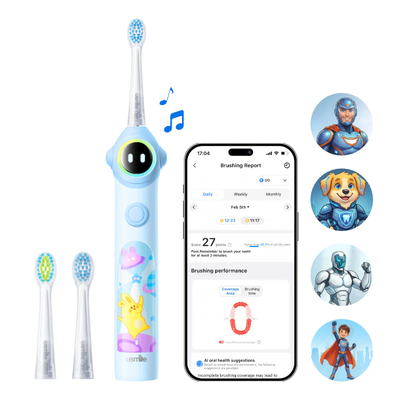
For kids over 3, a child-sized Sonic toothbrush can make a big difference for many families. The uSmile Q30 uses a quiet sonic motor — not the loud spinning kind that scares kids who are already anxious about brushing — and comes with a built-in two-minute timer. The brush head is properly sized for a child’s mouth, not an adult brush in miniature. For kids who rush through manual brushing or need something more interesting to stay engaged, it’s consistently one of the tools parents mention first.
Build a Simple Brushing Routine
Consistency does more than any individual trick. Not elaborate consistency. Just — same time, same way, every day, without exception.
|
Age |
Who Brushes? |
Toothpaste Amount |
Key Tips |
|
0–18 months |
Parent only |
Water only (no toothpaste yet) |
Soft cloth or tiny infant brush; 30-second sessions |
|
18 months–3 yrs |
Parent + child practicing |
Rice-grain smear of fluoride paste |
Child goes first; you finish; two brush choices help |
|
3–6 years |
Parent supervises and finishes |
Pea-sized fluoride toothpaste |
Songs, timers, sticker charts; ‘your turn, my turn’ |
|
6–8 years |
Child brushes, parent checks |
Pea-sized fluoride toothpaste |
Brush together; praise effort; check the back teeth |
|
8+ years |
Child independent |
Standard pea-to-full amount |
Routine anchored to morning and bedtime |
Morning and Bedtime, Every Day
Two anchors. Morning after breakfast. Bedtime before sleep. The ADA recommends twice-daily brushing for two minutes with fluoride toothpaste, and these two moments work because they’re tied to things that already happen without debate. When brushing is always the next thing after breakfast, it stops feeling like a demand and starts feeling like just what happens now.
A Picture Chart for Younger Children

Not a discipline chart. A sequence chart. Each step as an image: pick up the brush, add toothpaste, brush the top, brush the bottom, spit, rinse. Young children who can’t read still respond well to a visual sequence because predictability reduces anxiety. When they know what’s coming next, there’s less to resist.
Keep It Short, Stay Calm, and Don't Negotiate
Two minutes of brushing should feel like two minutes — not a drawn-out back-and-forth. Kids pick up on your energy fast. If you stay relaxed and treat brushing like something that just happens every night, they stop pushing back sooner than you'd expect. You don't need to raise your voice or turn it into a lecture. Just show up the same way each time. Calm, quick, done.
Make Tooth Brushing a Fun Activity

This is the section most parents are looking for. Pick one thing. Try it for a week before adding another.
The Same Song, Every Session
One song. Close to two minutes. Your child picks it. Play it at every single brushing session without variation. When the song ends, brushing ends. No clock. No countdown. The music is the timer.
If your kid starts requesting the brushing song at random times during the day, you’ve built a habit without even trying. That’s the goal.
Sugar Bugs — the Game That Won’t Die
Tell your child their mouth has invisible sugar bugs that only the toothbrush can defeat. Narrate the battle in real time. ‘Got the ones on top! The sneaky ones are hiding way in the back!’
Call it at the two-minute mark. Victory declared. Pediatric dentists have been recommending this for decades. Kids stay engaged the entire two minutes without once asking if they’re done.
Sand Timer or Brushing App

A sand timer works well for the three-to-six crowd because they can see time moving. Watching the sand fall gives a physical, satisfying finish line. For older kids, the Brush DJ app plays two minutes of their own music while they brush. Free. No screens required — just audio.
Brush the Stuffed Animal First
Hand them the brush and a favorite toy. Let them brush the toy’s teeth for 30 seconds. Then swap roles. This sounds silly. It consistently works for children who are anxious about brushing because it puts them in control first. They’re the ones holding the brush. That shifts something.
Mirror Games
Roar like a lion so all the teeth show. Make a fish face. Ask for their biggest smile. These keep the mouth open without requiring a dental procedure vibe — and the sillier the parent acts, the more cooperative the child gets. No shame in making a fool of yourself at the bathroom sink.
The “Your Turn, My Turn” Method

This deserves its own section. It’s the single most consistently effective technique for toddlers and preschoolers, and it works because it offers independence without sacrificing the cleaning itself.
They Go First
Hand over the brush. Let them go for 20 to 30 seconds, however they want. The brushing won’t be thorough. That’s completely fine. The goal right now is to build the habit of keeping the brush in their mouth while moving it. That’s it.
You Finish
‘Now it’s my turn to get the very back ones.’
That’s the line. Not ‘you missed a bunch’ — just ‘my turn.’ The child keeps their sense of accomplishment. You get the actual cleaning done. It’s not a correction. It’s teamwork.
Keep Helping Longer Than You Think You Need To
The CDC guidance is clear: children younger than six should be supervised while brushing and helped with the amount and spitting. Most parents hand over full responsibility earlier than that. Children typically need meaningful adult help until around age seven or eight, sometimes later. Supervising for longer than feels necessary is almost always the right call.
Use Rewards Without Turning Brushing Into a Negotiation

Sticker Chart — Keep It Simple
One sticker for morning brushing. One for bedtime. Chart on the bathroom wall. No conditions. No stickers withheld for imperfect technique. You’re rewarding the act of showing up at the sink, not dental perfection. A full chart at week’s end is enough of a reward for most kids under seven.
Make the Rewards Non-Food
Extra bedtime story. Choosing pajamas. Picking the next family activity. Three nights of choosing the bedtime song. These build a positive association with the brushing routine without teaching children that clean teeth earn candy. That particular message tends to backfire.
For Resistant Kids, Start Smaller
For a child with strong resistance, the first goal isn’t two perfect minutes. It’s opening the mouth. Then, tolerate one pass on the front teeth. Then adding fifteen seconds. You’re not lowering standards permanently — you’re meeting the child where they are and moving from there.
What to Do If Your Child Still Won’t Brush
Change the Toothpaste First
Seriously — try this before anything else if you haven’t. Mint tastes spicy to many young children. Strawberry, watermelon, bubblegum, or even unflavored paste can completely change the experience. This one switch ends more brushing battles than any other single change, and it’s the last thing most parents think of.
Try a Different Brush

Extra-soft bristles instead of just soft. A smaller head. A silicone finger brush for toddlers who gag on everything conventional. Three or four brush types over a month cost less than a single dental visit. Worth trying.
Move the Location
If the bathroom itself has become a stress trigger, just leave it. Kitchen sink. Hallway mirror. Even outside, once on a good evening. Sometimes the environment holds the anxiety, not the brushing. Change the space, and the brushing often follows without a fight.
Book a Dental Visit If Pain Might Be Involved
Sudden refusal after previously cooperating. Pointing to a specific tooth. Crying when you approach one area. Visible white or dark spots. Bad breath that doesn’t clear up after brushing. Any of these: dental visit, not a new sticker chart.
Conclusion: Predictable, Playful, and Non-Negotiable
Perfect brushing at age three is not the point. The point is a child who gets their teeth brushed twice a day with fluoride toothpaste, without ending in tears for everyone involved.
Pick one thing from this article. Try it this week. If it sticks, keep it. If it doesn’t, try the next one. The parents who come out the other side of the brushing-battle phase almost always say the same thing: stay calm, stay consistent, and don’t let brushing become a bigger issue than it needs to be.
Good oral hygiene habits aren’t built in one good week. They’re built in a hundred ordinary nights where the toothbrush came out, and everyone got through it without drama. Start there.
FAQs
How do you get a stubborn child to brush their teeth?
Calm and consistent beats clever every time. Ask ‘blue brush or dinosaur brush?’ — not ‘do you want to brush?’, which has a wrong answer. Let them go first, then you finish. Keep the tone flat and matter-of-fact. No pleading, no negotiating. Most children adjust within two to three weeks of a genuinely steady approach. Not two to three days. Weeks.
What is the 3-3-3 rule for brushing teeth?
A South Korean national dental health campaign: brush three times a day, within three minutes of finishing a meal, for at least three minutes per session. It’s backed by Korean oral health research and embedded in school culture there — students commonly brush after lunch as a routine part of the school day. US guidance from the ADA is simpler: twice daily for two minutes. Both support healthy teeth. The 3-3-3 is just more intensive. Follow whatever your dentist recommends for your child.
What can I do if my child won’t brush their teeth?
Try in this order: change the toothpaste flavor, switch to a softer or smaller brush, introduce a two-minute song as the timer, offer two brush choices, use the ‘your turn, my turn’ method, and add a sticker chart. If nothing moves after two to three weeks of genuine consistency — or if there are any signs of pain — talk to a dental professional. Some children need a more gradual sensory approach that goes beyond standard tactics.
At what age should a child start brushing their teeth?
At the first tooth. That’s usually around six months. Start with a rice-grain smear of fluoride toothpaste and a tiny, soft toothbrush; keep sessions very short, and focus on establishing the routine rather than on thorough cleaning. AAP guidance is explicit: fluoride from the first tooth, not after the full set has arrived.
Is it normal for a 2-year-old to not want to brush teeth?
Completely normal. Most two-year-olds resist because brushing is done to them without their input, at an age when control matters a lot. Keep the routine consistent anyway. Offer two choices. Use a short song. Expect to work through resistance daily for several weeks before it eases. It almost always does — once the routine becomes genuinely predictable.
What is the 2-2-2 rule for brushing teeth?
A simple memory tool: brush twice a day, two minutes each session, visit the dentist twice a year. Not an official ADA designation by that name, but it maps exactly to standard dental care guidance. Easy enough to teach to children, as a rule, they can remember it themselves once they’re old enough.
How do I get my 1-year-old to let me brush his teeth?
Tiny soft brush. Rice-grain smear of fluoride toothpaste. Sit him on your lap, facing away from you; support his chin gently with one hand, and brush with the other. Sing something short. Stop at thirty to sixty seconds — don’t push for two minutes at this age. Getting him comfortable with something touching his teeth is the entire goal right now. Thorough cleaning comes later, once the routine is established.
What is the 7-4 rule for teeth?
A rough guide to baby tooth eruption: Babies typically start teething around 7 months, and roughly 4 new teeth appear every 4 months until all 20 primary teeth are through. Cleveland Clinic notes that primary teeth usually start between 6 and 12 months, with all 20 typically in by around age 2½ to 3. It’s a memory aid, not a rigid timeline — some kids teethe earlier, some later, and both are normal.
Sources
- American Dental Association —Toothbrushes: Evidence-based guidance on toothbrush types, bristle firmness, and proper brushing technique for all ages.
- MouthHealthy by ADA —Fun Ways to Encourage Kids to Brush: Parent-friendly tips for making toothbrushing enjoyable and building lasting habits in children.
- CDC —Children's Oral Health Prevention: National data and preventive strategies for childhood cavities, fluoride use, and dental sealants.
- HealthyChildren.org / AAP —Good Oral Health Starts Early: Pediatrician-backed advice on early dental care, first dentist visits, and age-appropriate brushing routines.
- Better Health Victoria —Toothbrushing Children 0–6 Years: Step-by-step brushing guidance for babies, toddlers, and young children with fluoride recommendations.
- Lovebee Pediatric Dentistry —Toddler Won't Brush Teeth: 7 Proven Strategies: Practical, parent-tested approaches for handling toddler resistance during brushing time.
- Colgate —How to Help a Child Who Won't Brush Their Teeth: Gentle techniques and behavioral tips for encouraging reluctant kids to brush consistently.
- Children's Dental Health NJ —How to Deal with Kids Who Don't Want to Brush: Real-world strategies from pediatric dental professionals for overcoming brushing battles at home.


Looking for something else?
Ultrasonic Toothbrush vs Electric: Which Technology Wins for Your Smile?
LEARN MORE
Best Electric Toothbrush for Sensitive Teeth (2026) — 5 Tested
LEARN MORE
Does an Electric Toothbrush Have a Lithium Battery
LEARN MORE
How to Make Brushing Teeth Fun for Kids Without Daily Battles
LEARN MORELooking for something else?
Best Toothbrush for Kids Who Hate Brushing: Parent Guide
LEARN MORE
Best Electric Toothbrush for Kids: What Parents Should Look For
LEARN MORE
How to Get a Child to Brush Teeth Without Daily Battles
LEARN MOREYou may also like

usmile C30 Cordless Water Flosser – Portable Oral Irrigator

usmile Y20 PRO Upgraded AI Electric Toothbrush

usmile P10 S Electric Toothbrush
usmile Q30 Kids Electric Toothbrush
usmile C30SE Portable Dental Flosser
usmile Q30 Kids Electric Toothbrush Trio Pack
Further reading

What Candy & Holiday Foods Can You Eat With Braces? Plus How to Get Food Out of Braces in 2 Minutes
Halloween Candy Before Bed: A Kid-Friendly Cleanup Routine to Protect Kids' Teeth
I Thought My Water Flosser Made My Teeth Gaps Bigger—Here’s What May Actually Be Happening