White Spots on Kids' Teeth: Causes, Treatment, and Prevention
You spotted a chalky white mark on your kid's tooth, and now you're here. Same boat as half the parents who've Googled this in the last hour. White spots on kids' teeth are weirdly common — and weirdly misunderstood. That first wave of "wait, is that a cavity?" panic is real. Almost every parent goes through it at some point.
Here's what nobody tells you upfront. A white spot doesn't automatically mean decay. Could be a cavity, sure. It could also be too much fluoride during the toddler stage — more common than parents realize, especially with kids who like to swallow toothpaste. It could be enamel that just didn't form properly while the tooth was developing. It could be a knock to a baby tooth a few years back that quietly affected the permanent tooth underneath. Or it could be plaque that's been parked in the same spot for too long because brushing was rushed for, oh, the last month.
All of those look pretty similar to the naked eye. That's the frustrating part. Telling them apart isn't a job for parents or Google — it's a job for your kid's dentist.
What this guide actually covers: what's likely behind the spot you're looking at, which versions need a real appointment versus which can wait, and the small daily habits that stop new ones from showing up.
What Are White Spots on Kids' Teeth?

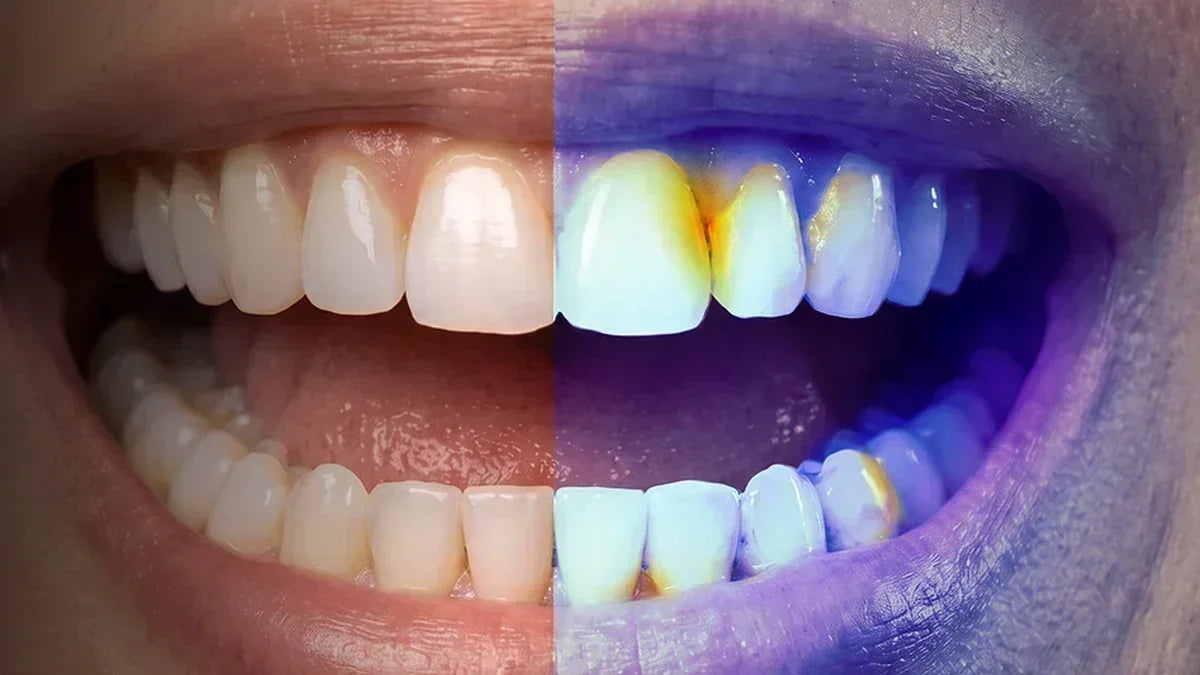
It's basically what the name suggests. A patch on a tooth that looks paler than the rest — chalkier, cloudier, sort of washed out compared to the enamel right next to it. Hard to miss once you've seen one. Also hard to unsee, honestly.
The look varies. Some kids get tiny dots, like little white freckles, across a tooth. Others get faint horizontal stripes — those tend to ride across the front of the tooth in a straight line, which is its own specific thing (we'll get to it). And then there's the kind where the surface actually feels different. Your kid runs their tongue over it, and you can hear the pause. Rough. Slightly textured. Not smooth like the rest of the tooth.
Size-wise? Could be a pinpoint. It could cover half the tooth. Both are normal. Neither tells you much on its own about what's actually going on underneath.
What white spots look like

Some look almost frosty. Almost like they got snowed on a little, others are way more chill, more like a haze just sort of sitting there under the surface. On newly erupted permanent teeth (those bigger front ones that show up around age 6 or 7), the lines tend to run side to side and can be really faint at first, sometimes only catching the light at certain angles.
Texture is a big tell, honestly. Smooth and intact usually means it's developmental. Translation: it's been there since the tooth was forming under the gum. Rough or soft to the touch? That means minerals are leaving the enamel right now, today, as in while you're reading this. Those are not the same problem, and they don't get the same response.
Where they usually show up
A few predictable hotspots:
- Right along the gumline (plaque's favorite hideout)
- The front of newly erupted permanent teeth
- Around brackets if your kid's in braces
- The chewing surface of the back molars, where snack debris likes to camp out
Are white spots always cavities?
Nope. Not even kind of. A lot are purely cosmetic. Some are leftovers from how the tooth originally grew in. Some came from a little too much fluoride at some point in the toddler years. And yeah, a few are the very first signs that a cavity is starting. The catch? You really can't tell which one you've got just by eyeballing it. The dentist can. You can't. Sorry.
What Causes White Spots on Teeth in Children?
There's no one reason every kid gets these. Which, honestly, makes it harder because you can't just rule it out with one test. But once you know what caused a particular spot, the treatment becomes obvious. So that's the upside, I guess.
Early tooth decay and enamel demineralization

Starting with this one because it's the heavyweight. The one most parents are actually worried about when they see a white spot.
Here's roughly what's going on. Your kid eats something sugary — fruit snacks, juice, the back half of a cupcake from a birthday party. Sugar sticks. Bacteria in the mouth, of which there are millions, treat that sugar like a buffet. And then they do the thing that's honestly kind of disgusting once you actually think about it: they produce acid as a waste product. That acid sits on the tooth and quietly leaches calcium and phosphate out of the enamel.
That chalky white patch you're seeing? Minerals have already left the building. The decay actually starts underneath the surface and works upward, which is why by the time it's visible, things have been brewing for a while.
Here's where it gets less grim. According to theNational Institute of Dental and Craniofacial Research, early decay at this stage is reversible. Not "manage it" reversible — actually reversible. Tighten up the brushing, get the fluoride dose right, cut back on the constant sugar drip throughout the day, and enamel can pull minerals back in and re-harden itself. The white spot fades. No drill, no filling, nothing.
But — and this is the part dentists wish more parents understood — that window isn't huge. Catch it now, and you might be looking at zero treatment. Same spot, six months later, after another half-year of rushed brushing and grape juice cups? That's filling territory. Sometimes a crown is bad. The difference between "we fixed it with toothpaste" and "we need to schedule a procedure" can be weeks, not years.
Dental fluorosis from too much fluoride

Fluoride is one of those things where the right amount is great, and the wrong amount is its own problem. The wrinkle is that most parents have no idea how easy it is to overshoot. It's not one source — it's three or four small sources stacking up.
Here's the actual mechanism, minus the textbook version. Permanent teeth spend years developing inside the gum before they ever break through. If a kid gets too much fluoride during that build phase, the enamel doesn't mineralize properly. You get faint white streaks or little chalky specks baked right into the tooth. And here's the maddening part — you don't see it for years. The tooth is doing its slow construction job underground, and by the time it finally erupts, and you spot the marks, the cause is long gone. Kids under 8 are most vulnerable because that's when most of their adult teeth are still forming.
The dosing rules aren't complicated. TheCDC's fluoride guidance lays it out plainly: a smear about the size of a grain of rice for kids under 3, and a pea-sized blob from age 3 to 6. That's it. Not "a generous pea." Not "however much fits on the brush." A pea.
Where it goes sideways is the stacking. Most kids swallow toothpaste — it's not a moral failing, it's just what tiny humans do, especially when the toothpaste tastes like bubblegum. Add tap water that's already fluoridated (most US municipal water is). Now add a prescription fluoride supplement, as your pediatrician suggested. Three sources, all doing their job individually, can add up to too much in combination. That's where fluorosis actually comes from in most cases — not one big mistake, just a quiet accumulation nobody flagged.
Enamel hypoplasia or weak enamel development

Sometimes the enamel just didn't form right. The tooth grew, but the enamel layer came in thinner or less mineralized in certain spots. That's enamel hypoplasia. It could be a tiny dot. It could be a more obvious groove. Depends on how much enamel got skipped during development.
The Cleveland Clinic lists out a bunch of possible causes. Premature birth. A high fever from a bad illness when they were really tiny. Certain medications are taken during tooth development. A bump or fall at exactly the wrong age. Nutritional issues during pregnancy or infancy. It can affect baby teeth, permanent teeth, or both, depending on when it happened.
Plaque and rushed brushing.

OK, let's be honest about how kids actually brush.
They brush like the bathroom is on fire, and they need to be somewhere else. Which, in their minds, they always do. They don't really aim — the toothbrush kind of wanders. The gumline gets ignored because they're focused on the front teeth, where they can see what they're doing. The back molars? Forget it. The back of the mouth might as well be another country. Pressing? Way too hard in one spot, then almost no contact two teeth over. Consistency is not the vibe.
Plaque, meanwhile, doesn't go anywhere on its own. So whatever they're missing today, they're also missing tomorrow, and the day after, and by week three of that pattern, the enamel underneath that little patch of plaque starts giving up minerals. The chalky ring you're now staring at? That's the result. A halo where bacteria set up shop, and your kid never quite reached.
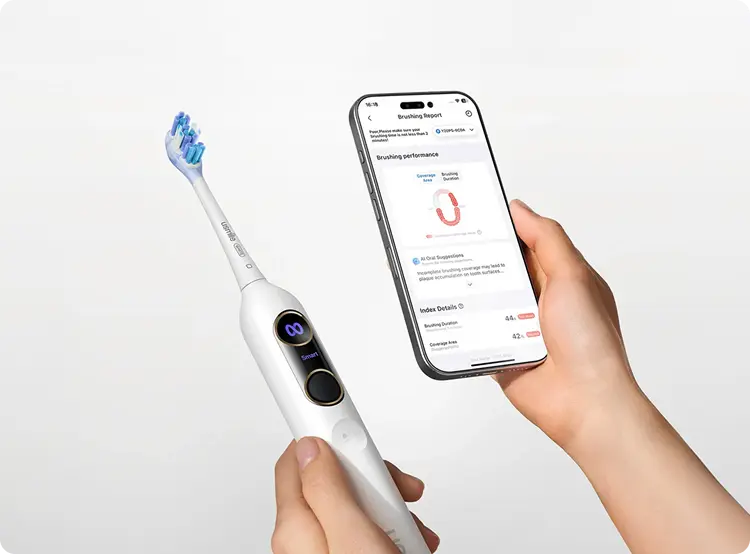
Here's the upside, though, and it's a real one. Out of all the causes on this list, this one is genuinely fixable. Better aim, slower pace, a timer running so they don't quit at the 30-second mark thinking they're done. Mostsmart dental hygiene brand toothbrushes for kids run a built-in two-minute timer with little pulses every 30 seconds to nudge them to a new section of the mouth — and that small piece of automation does more for plaque control than any lecture from a parent has ever accomplished. A grown-up standing nearby to help with the back molars helps too. Especially the bottom row. Always the bottom row.
Give it a few months of actually doing it right, and that spot can fade. Enamel pulls minerals back in. You won't see the change day-to-day, but a checkup six months out usually tells the story.
White spots after braces
This one mostly hits tweens and teens, and honestly, it's the one that stings the most because it's so preventable. Brackets turn a normal brushing routine into an actual obstacle course. Plaque sneaks into the little nooks around each bracket and just camps out there. Brushing the front of the tooth doesn't reach it. Brushing harder doesn't really help. The plaque sits, and the enamel right under it slowly loses minerals month after month. Then the big day finally comes: brackets come off, and there it is — a perfect white square outline where each bracket used to be, framed like a Polaroid. Two years of orthodontics. A few thousand dollars. And now the teeth are straight but visibly stamped. Brutal.

A kid-friendly electric toothbrush built for gentle daily cleaning, paired with a water flosser, is honestly worth the money during the braces years. No exaggeration. Manual brushing barely gets near the spots wedged around the wires. Plenty of people come out of orthodontic treatment with beautifully straight teeth and permanent white marks, and what gets me is that most of it is preventable with the right tools.
Nutritional shortfalls
Calcium. Phosphorus. Vitamin D. The big three for enamel. A long stretch low on any of them, especially while teeth are still forming, can show up later as weaker enamel and visible white patches.
One important thing, though. A single white spot is not evidence of a deficiency on its own. Don't start dosing supplements after a Google rabbit hole at 11 PM. That conversation belongs with the pediatrician first.
Trauma to teeth that are still developing
Kids fall constantly. They smash into doorframes. They yank pacifiers out like they're in an action movie. Sometimes, a hard knock to a baby tooth gets passed down to the permanent tooth that's forming right underneath it. Then, two or three years later, when the adult tooth finally erupts, there's a yellowish or white patch right where the trauma occurred. Frustrating. Also, way more common than people realize.
Are White Spots on Kids' Teeth serious?
Depends. Here's a quick way to sort them in your head.
When white spots might be harmless

If the spot has been there as long as the tooth has been in your kid's mouth, hasn't changed at all, doesn't feel rough, and your kid has never said anything hurts, you're probably looking at something developmental or a mild case of fluorosis. Cosmetic. Maybe annoying. Not dangerous.
When white spots could mean early decay
If the spot is new, sitting along the gumline, feels chalky to the touch, or it's hanging out on a tooth that's been hard to clean lately, that's a different story. Early demineralization isn't a cavity yet. But it's the doorway. Don't sit on it.
Signs you really shouldn't ignore
Pick up the phone if any of these are happening:
- A new spot that wasn't there a month ago
- The existing spot is getting bigger or darker
- Brown or yellow color showing up around the white area
- Sensitivity to cold, sugar, or even brushing
- A rough or pitted texture
- Pain, swelling, or bad breath that hangs around
Why the pediatric dentist needs to weigh in
I'm going to be straight here. This is the step you cannot skip. To a parent's eye, fluorosis, hypoplasia, and early decay all kind of look the same. To a dentist, they look completely different, and each one needs different care. A 10-minute visit now can stop a much bigger one six months from now.
Can white spots on kids' teeth be fixed?
Sometimes yes. Sometimes partially. Sometimes the answer is just to leave it alone and monitor. Really comes down to the cause and how deep the spot is.
Remineralization for early enamel weakness
If the spot is from early mineral loss and nothing worse, you genuinely have a shot at walking it back. The whole point is to get minerals back into the enamel before the damage progresses to a real cavity. In practice, that looks like: tighter brushing at home (no more 20-second sessions), using a fluoride toothpaste at the right dose, and usually a fluoride varnish applied by the dentist every few months. Saliva does most of the heavy lifting after that — pulling calcium and phosphate back into the weakened spot, with fluoride basically acting as the foreman. Parents hear this and look at me like I just told them teeth grow back. Not quite that wild. But closer to it than most people expect.
Professional fluoride treatments

The varnish thing is so simple it's almost funny. The dental hygienist brushes a fluoride gel onto your kid's teeth, which takes about 30 seconds. Tastes mildly fruity. Sticks around for a few hours doing its job. Kids barely notice. If your dentist mentions it, just say yes and move on with your day.
Microabrasion for shallow surface spots
Microabrasion is a quick polishing technique that removes a very thin layer of enamel to even out the appearance of shallow white spots—done in the office. Not at home. Quick side note here: please don't try to scrub white spots out with baking soda or lemon. People do this. People also wreck their kids' enamel doing this.
Resin infiltration (Icon)
Newer technique, and honestly, pretty impressive when it works. A resin is worked into the porous areas of the enamel, essentially filling the lesion from within so the spot blends with the rest of the tooth. No drill. No shot. No scary stuff. Works really well for certain types of white spots. Not every spot is a candidate, so the dentist has to assess first.
Cosmetic bonding for visible front-tooth spots
Here's a humanized rewrite, matched to the original's length.
Cosmetic Bonding for Visible Front-Tooth Spots
For the deeper spots — the ones a self-conscious 12-year-old keeps checking in the mirror every single time they wash their hands — there's an actual cosmetic fix. The dentist bonds a thin layer of tooth-colored composite resin right over the spot—it blends in pretty seamlessly. Most people can't tell it's there once it's polished up. Lifespan depends on the kid and how they treat it, but with normal care, you're usually looking at five to ten years before it needs a touch-up. The catch is that bonding isn't permanent — it can chip, stain over time (especially with a lot of coffee or tea in their teen years), and eventually it'll need to be redone. Worth knowing going in, but for a kid who's actually upset about how their tooth looks, it can be a pretty big confidence shift.
What About Whitening, Veneers, or Crowns for Older Teens?

These options come into play down the road. Not for little kids. Whitening can sometimes lighten the surrounding enamel enough that the white spot blends in better. Veneers and crowns are reserved for permanent teeth that are fully grown, generally in late teens or adulthood. Get to those conversations later.
Fillings if the spot has turned into a cavity
If the enamel has actually broken down — maybe the window closed before anyone noticed, maybe the spot was stubborn from day one — there's no rebuilding it. The dentist clears out the decay and packs in a tooth-colored filling. Not catastrophic. Just not the easy ending anyone was rooting for.
How to Prevent White Spots on Children's Teeth

You can't head off every possible cause. Can't undo a fever from when your kid was two. Can't change a premature birth. But for the everyday stuff, your daily habits genuinely move the needle. Here's where to put the focus.
Use the right amount of fluoride toothpaste.
Rice grain under 3. Pea size from 3 to 6. After 6, a small ribbon is fine, as long as they're spitting and not swallowing. Stay in the bathroom while they brush. Toddlers will eat an entire tube of toothpaste if no one's watching, which I'm 100% sure is a universal law of parenting.
Brush twice a day, floss once a day, and use a toothbrush.
Two minutes in the morning. Two minutes at night. Once two teeth are actually touching, start flossing the space between them. The brush physically can't reach where the teeth meet, so flossing is the only way to clean that gap. Try a song. Try one of those brushing apps with characters. Try standing there with goofy running commentary. Whatever keeps your kid engaged for the full two minutes is the right approach for your house.

A solidkids' electric toothbrush genuinely outperforms a manual one for most children. The built-in two-minute timer takes the guesswork out. The vibrations handle a chunk of the cleaning motion that small hands can't quite do on their own.
Watch the snacking, not the total sugar.
This took longer than I expected to understand. It's not the amount of sugar your kid eats. It's how often they're eating it. Slow-sipping a juice box for over an hour means the bacteria in their mouth are producing acid the whole time, and drinking the same juice box in five minutes? Way less acid exposure overall. Same thing with raisins, those fruit snack pouches everyone has at preschool, gummy bears, anything sticky that wedges between teeth and stays. Constant low-level sugar exposure is the bigger enemy, not the occasional dessert.
Pay attention to bottles, sippy cups, and bedtime drinks.
Almost every time I hear about a toddler with white spots on the front teeth, there's a bottle or sippy at bedtime in the story somewhere—milk, juice, even formula. The liquid pools around the front teeth all night while they sleep, and a few months down the road, you're noticing changes in the enamel. Once teeth are in the mouth, water-only at bedtime is the rule that protects them. Annoying for everybody. Your kid is going to push back—still the right call.
Support enamel through food.
Yogurt. Cheese. Leafy greens. Eggs. Fish. Fortified milk. Crunchy vegetables. Protein in general. None of this fixes a spot that's already there, by the way. It just supports the enamel that's still being built. Think of it as long-term background nutrition, not active treatment.
Don't skip dental visits.

Every six months. Start around the first birthday or whenever that first tooth pokes through, whichever happens first. The pediatric dentist will catch developing white spots much earlier than you could at home, and they can apply a fluoride varnish during the visit if they think it's needed. Honestly, getting your kid comfortable with the dentist while they're young pays off forever. I cannot overstate how much easier it makes the rest of childhood. Building a routine around smart oral hygiene early on is one of those small things you'll be glad you did.
When Should You Take Your Child to a Pediatric Dentist?
Some of these can absolutely wait until the next routine visit. Others need to get on the calendar this week. Here's how to tell which is which.
Move the visit up sooner if...
- A new spot showed up in the last month or two
- An existing spot is growing or changing color
- Your kid has pain, sensitivity, or won't chew on one side
- The spot is front and center, and they're getting self-conscious
- You honestly aren't sure what you're looking at
Skip the DIY whitening kits
I know they're cheap. I know they're at every drugstore now. Please don't use them on a kid. Their enamel is way thinner than adult enamel. Whitening strips, baking soda scrubs, lemon paste, charcoal paste, all things parents have tried on their kids' teeth after seeing something on TikTok, and all things that can do permanent damage. The dentist has gentler tools that actually work.
Final Thoughts: Small Spots, Manageable Problem

White spots on kids' teeth feel scarier than they usually are. The mouth is small. The spot is right there. Your kid smiles at you about fifty times a day. The visual reminder is constant. Most cases are common and manageable. The actual work is figuring out the cause so the right care matches up.
Stick to the basics, and you'll cover most of it—the right amount of toothpaste. Brush twice a day. Floss the gaps once teeth are touching. Less constant snacking. Regular dental visits where your kid feels comfortable. Watch the spots that change. Leave out the ones that don't, and let your kid decide on cosmetic options when they're actually old enough to weigh in. And try not to project your own stress onto the dental appointments. Kids read parent stress like a flashing neon sign, and dental visits go a million times smoother when they don't think something is wrong.
FAQs
How do you get rid of white spots on kids' teeth?
Depends on what's causing them. Early demineralization usually improves with fluoride toothpaste, a varnish at the dentist, and tightening up the daily brushing. Surface spots sometimes get evened out with microabrasion. Deeper or developmental ones might need resin infiltration or cosmetic bonding. The dentist selects the right option after thoroughly examining the tooth.
What Causes White Spots on Kids' Teeth?
The common ones are early tooth decay (enamel demineralization), dental fluorosis, enamel hypoplasia, plaque buildup, dental trauma to a developing tooth, white spots that form around braces, and sometimes nutritional issues during the years teeth are forming.
What deficiency causes white spots on teeth?
Long stretches of low calcium, phosphorus, or vitamin D during the years teeth are developing can weaken enamel and contribute to white spots. But one white spot is not proof of a deficiency on its own. Get a pediatrician or dentist involved before adding any supplements to your kid's routine.
How to get rid of calcium deposits on kids' teeth?
Plenty of parents call white spots "calcium deposits," but they're usually mineral loss, plaque-related demineralization, or fluorosis. Not actual calcium buildup. A cleaning, a fluoride treatment, or a cosmetic fix is the right move, depending on what the dentist actually sees.
Are white spots on teeth serious?
Sometimes, yeah, sometimes no. A spot that's rough, growing, sensitive, or starting to turn brown or yellow needs to be looked at. A spot that's been the same forever and doesn't hurt is usually just cosmetic.
Do white spots on kids' teeth go away on their own?
Some fade as the surrounding enamel evens out, especially when oral hygiene is solid and fluoride exposure is consistent. Most don't fully disappear without help,p though. Demineralization is sometimes reversible. Developmental spots usually need a cosmetic touch.
How to naturally remove white spots on teeth?
There's no actually safe way to remove a white spot at home. The best "natural" move is prevention. Fluoride toothpaste in the right amount. Flossing. Drinking water. Easing back on constant snacking. Regular dental checkups. Skip the lemon juice, baking soda scrubs, charcoal, and whatever else is trending on TikTok this week.
Why does my 2-year-old have white spots on her front teeth?
In toddlers, white spots on the front teeth are often tied to early childhood decay. Bedtime bottles, frequent sippy cups, and missed brushing along the gumline are the usual culprits. It could also be enamel hypoplasia or mild fluorosis. Get a pediatric dental visit on the calendar either way. Toddler teeth progress from white spots to actual cavities faster than you'd think.
Can babies and toddlers get white spots on their teeth?
Yep. Baby teeth develop white spots for the same reasonsas those in older kids. Baby teeth also have thinner enamel than permanent teeth, which means problems progress more quickly. Getting eyes on it early matters even more than it does with adult teeth.
Sources
- NIDCR — The Tooth Decay Process: How to Reverse It and Avoid a Cavity
- CDC — About Dental Fluorosis
- Cleveland Clinic — Enamel Hypoplasia
- CDC — About Fluoride
- MedlinePlus Genetics — Amelogenesis Imperfecta
- American Academy of Pediatric Dentistry — Policies & Recommendations


Looking for something else?
Best Electric Toothbrush for Gum Disease (2026): 6 Picks Tested for Real Gum Protection
LEARN MORE
Electric Toothbrush on Plane: The Complete Travel Guide (2026)
LEARN MOREBest Sustainable Electric Toothbrush 2026: 5 Picks Tested for a Greener, Healthier Smile.docx
LEARN MORE
Best Sustainable Electric Toothbrush 2026: 5 Picks Tested for a Greener, Healthier Smile
LEARN MORELooking for something else?
Best Cheap Electric Toothbrush (2026): Top 5 Budget Picks That Actually Work
LEARN MORE
Ultrasonic Toothbrush vs Electric: Which Technology Wins for Your Smile?
LEARN MORE
Best Electric Toothbrush for Sensitive Teeth (2026) — 5 Tested
LEARN MOREYou may also like
usmile Q30 Kids Electric Toothbrush Trio Pack
usmile Y20PRO Adults Toothbrush x Q30 Kids Toothbrush
Further reading
Plaque, Stains, or Food Debris? How to Interpret What a Toothbrush Camera Shows
The 5 Toothbrushing Spots Kids Miss Most—and How Parents Can Help
The Back-to-School Brushing Reset: A 14-Day Plan for Kids Ages 3–8