




What Candy & Holiday Foods Can You Eat With Braces? Plus How to Get Food Out of Braces in 2 Minutes
Wearing braces during Halloween, Thanksgiving, and the winter holidays does not mean sitting on the sidelines with a bowl of plain soup while everyone else enjoys the dessert table. Whether you are an adult navigating office holiday parties in brackets or a parent sorting through your teenager's trick-or-treat haul, you can still enjoy plenty of seasonal favorites—including soft chocolates, peanut butter cups, sliced roast turkey, and pumpkin pie.
Still, there is a catch that most standard holiday food lists leave out: a food that is safe for your brackets is rarely safe from getting trapped. Soft, orthodontist-approved treats like peanut butter cups, tender turkey, and warm dinner rolls will not snap an archwire, but they pack tightly around bracket wings and underneath wires within seconds. Learning which holiday treats to enjoy, which bracket-breakers to skip, and how to get food out of braces in just two minutes with a dedicated water flosser for braces lets you enjoy every holiday meal without emergency dental visits or 20-minute bathroom sessions with floss threaders.

Soft holiday treats won't snap a bracket, but pairing your celebration with a 2-minute orthodontic water flosser routine keeps melted chocolate and festive starches from lingering under your wires.
What Candy Can You Eat With Braces? The Halloween & Holiday Sweet Guide
When you ask an orthodontist what candy can you eat with braces, the answer comes down to simple physics. Your brackets are bonded to your tooth enamel with specialized dental adhesive built to handle normal vertical chewing forces—not the pulling tension of sticky taffy or the sudden impact of biting hard candy. That is why the American Association of Orthodontists (AAO) reassures patients that you can still enjoy Halloween and holiday sweets, as long as you stick to softer, melt-in-your-mouth treats that won't pop a bracket loose and delay your treatment.
Braces-Friendly Candy You Can Safely Enjoy
- Soft Chocolate & Peanut Butter Favorites: Plain milk or dark chocolate bars (broken into small pieces and left at room temperature—never frozen), creamy peanut butter cups like Reese's, and soft peppermint patties melt quickly against your tongue without stressing your brackets.
- Light Wafer & Melt-Away Sweets: Thin wafer chocolates like Kit Kats, soft-whipped nougat bars without nuts or caramel (such as 3 Musketeers), and smooth chocolate truffles give you a festive crunch or richness with low mechanical resistance.
- Soft Seasonal Baked Treats: Frosted sugar cookies without hard sprinkles, soft gingerbread, cupcakes, and mini pumpkin muffins are gentle on newly adjusted teeth and won't bend delicate archwires.
Candy to Avoid With Braces (And Why They Break Brackets)
- Sticky & Chewy Candies: Caramels, taffy, Starburst, Skittles, gummy bears, licorice, and chewy fruit snacks mold around brackets like suction cups, pulling directly against the bonding adhesive as you open your jaw.
- Hard & Nut-Filled Candies: Jolly Ranchers, lollipops, candy canes, peanut brittle, toffee, and chocolate bars packed with whole almonds or peanuts (like Snickers or Almond Joy) concentrate biting force onto a single bracket wing, which can pop it right off the tooth.
- Popcorn & Kernel Sweets: Caramel corn and kettle corn carry a double risk—unpopped kernels can shear off molar bands, while paper-thin popcorn hulls slide deep beneath the gumline next to orthodontic wires where a toothbrush cannot reach.
- Sour & Acidic Candies: Sour gummies and sour powders bathe the enamel edges around your brackets in concentrated citric acid, accelerating surface demineralization even if they don't physically break a wire.
The "Eat in One Sitting + 15-Minute Rule" for Holiday Sweets
How you eat holiday candy matters just as much as which candy you choose. Grazing on a stash of mini chocolates every half hour keeps oral bacteria supplied with sugar all afternoon, maintaining a constant acid attack around your brackets. Instead, enjoy your braces-friendly sweets in a single sitting right after lunch or dinner when your natural saliva flow is already high.
Once you finish dessert, wait about 10 to 15 minutes before brushing with a toothbrush so acid-softened enamel can recover—but do not wait to flush out trapped sugar and melted chocolate. Swishing with water or using an orthodontic water flosser right after eating clears sticky residue out of bracket crevices immediately without scrubbing softened enamel.
Thanksgiving & Holiday Foods With Braces: What Stays on Your Plate vs. Off-Limits
Holiday dinners bring a crowded table of textures, from slow-roasted meats to crusty artisan breads. A reliable rule of thumb at Thanksgiving, Christmas, or Hanukkah dinner is the Fork-Mash Rule: if you can easily cut or mash a bite with the side of a dinner fork, it is mechanically safe for your brackets.
Braces-Friendly Holiday Classics (And Simple Prep Tweaks)
- Tender Holiday Proteins: Sliced roast turkey, glazed ham cut into bite-sized pieces, slow-cooked pot roast, meatloaf, and baked salmon are gentle on orthodontic hardware—just be sure to cut meat off the bone and across the grain into small bites.
- Comforting Side Dishes: Mashed potatoes and gravy, sweet potato casserole (without a hard pecan topping), soft-baked stuffing without nuts, green bean casserole, macaroni and cheese, and smooth cranberry sauce are effortless to chew even if your teeth feel tender after a recent wire adjustment.
- Holiday Pies & Desserts: Classic pumpkin pie, sweet potato pie, smooth cheesecake, chocolate mousse, and warm apple pie with soft-baked cinnamon apples are all great choices when you stick to the tender filling and fork-soft crust.
Holiday Foods to Avoid With Braces
- Whole Nuts & Brittle Pies: Pecan pie, walnut tarts, and charcuterie board nuts require heavy molar grinding that can bend archwires or loosen molar bands.
- Bone-In Meat & Corn on the Cob: Biting directly into turkey drumsticks, ribs, or whole corn on the cob drives your front brackets straight into hard bone or cob cores. Always slice meat and corn kernels onto your plate before eating.
- Crunchy Crusts & Raw Veggie Trays: Hard sourdough crusts, twice-baked biscotti, raw carrots, and raw celery stalks should be swapped for soft dinner rolls and steamed or roasted vegetables.
Quick Note for Clear Aligner Wearers at Holiday Meals
- Always Remove Trays Before Eating or Drinking Hot Beverages: Never chew soft candy or sip hot cider, cocoa, or mulled wine with clear aligners in—heat can warp the medical-grade plastic, and trapped sugar sits sealed against your enamel.
- Store Aligners in Their Case (Never a Holiday Napkin): Wrapping clear trays in a festive napkin on a crowded dinner table is the number-one reason aligners accidentally end up in the trash on Thanksgiving.
- Flush Interdental Spaces Before Snapping Trays Back In: Putting aligners back over teeth that still have turkey fibers or pie crust packed between molars traps food and acid against your teeth for hours.
| Holiday Candy or Dish | Bracket Safety | Primary Trapping Risk Around Braces | Best Post-Meal Cleanup Action |
|---|---|---|---|
| Peanut Butter Cups & Plain Chocolate | Safe for brackets (at room temp) | Melts into a thick paste around bracket wings and tie-wings | Warm-water rinse + orthodontic water flosser flush along bracket margins |
| Sliced Roast Turkey & Ham | Safe when cut into small bites | Long protein fibers wrap around archwires and wedge between molars | Direct water flosser stream + slim-bristle orthodontic tip sweep under the wire |
| Soft Stuffing & Dinner Rolls | Safe for brackets | Hydrated starch turns into gluey dough inside bracket slots | 60–90 seconds of pulsed microbubble water flossing before brushing |
| Pumpkin Pie & Soft Apple Pie | Safe for brackets | Sugary filling and wet pastry cling along the gumline beneath brackets | Gumline and bracket-perimeter flush within 15 minutes of finishing dessert |
| Cranberry Sauce & Berry Desserts | Safe (smooth or cooked) | Tiny fruit skins and seeds lodge inside bracket tie-wings and elastic chains | Targeted pulse flush with an angled orthodontic nozzle |
| Caramels, Taffy & Gummy Candies | Avoid (High bracket-pull risk) | Seals over brackets and pulls orthodontic adhesive off enamel | Skip completely; if eaten, rinse with warm water and flush gently—never pry |
| Pecan Pie, Popcorn & Hard Candy | Avoid (High fracture risk) | Hard shells and hulls wedge beneath gums and bend archwires | Skip completely; inspect brackets for loose wires if bitten accidentally |
Why Even "Braces-Safe" Holiday Foods Cause Trouble (And What Happens If Left Overnight)
Most orthodontic food guides stop once they tell you which foods won't break a bracket. Anyone who has actually eaten a holiday meal with braces knows that is only half the story. In fact, the very foods that are safest for your hardware—soft chocolates, flaky pastries, tender turkey, and mashed sides—are often the worst culprits for getting stuck.
The 4 Ways Holiday Foods Trap Around Brackets and Archwires
- Sticky & Melted Pastes (Chocolate, Peanut Butter, Marshmallow Toppings): As chocolate and peanut butter warm to mouth temperature, they form a dense, lipid-rich paste that coats the tiny undercuts beneath bracket wings and elastic ligatures where toothbrush bristles naturally splay outward.
- Fibrous & Stringy Strands (Roast Turkey, Ham, Green Beans, Celery in Stuffing): Long muscle fibers and plant strands act like microscopic ropes, looping around the archwire and wedging tightly into interdental spaces—the classic cause of stubborn food stuck under braces wire halfway through Thanksgiving dinner.
- Bready & Starchy Dough (Dinner Rolls, Stuffing, Pie Crust, Sugar Cookies): The moment refined flour mixes with saliva, it turns into a cohesive, sticky dough that packs straight into the narrow gap between the archwire and the tooth surface, hardening into a plaque magnet within minutes.
- Seedy & Granular Bits (Cranberry Skins, Berry Seeds, Pie Spices): Tiny seeds and fruit skins slip easily behind wires and beneath the gumline margin, creating localized irritation and tender, swollen gums if left behind.
The Biological Clock: White Spot Lesions and Slowed Tooth Movement
When holiday food debris stays trapped around your brackets overnight, the problem goes far beyond an awkward smile in family photos. Inside your mouth, oral bacteria rapidly ferment trapped sugars and cooked starches, producing organic acids right against the enamel framing each bracket. Because the archwire blocks your lips, tongue, and saliva from naturally washing those areas clean, the local pH drops and stays acidic for hours.
Clinical orthodontic research published in The Angle Orthodontist shows just how fast this process happens: early chalky decalcification marks—commonly known as white spots on teeth from braces (white spot lesions)—can develop in as little as four weeks of persistent plaque accumulation, ultimately affecting nearly half (46%) of orthodontic patients within their first year of treatment.
At the same time, food and plaque left along the gumline trigger gingival inflammation and puffiness. Swollen, irritated gums not only bleed easily when you brush, but can also make orthodontic adjustments more uncomfortable and slow down smooth, predictable tooth movement. Clearing trapped holiday food before bed isn't just about fresh breath—it protects the final look of your smile for the day your braces come off.
How to Get Food Out of Braces in 2 Minutes (Without Breaking a Bracket)
When you feel a piece of roast turkey or pie crust wedged beneath your archwire at a holiday gathering, your first instinct is to get it out immediately. However, reaching for the wrong tool at the dinner table is one of the most common ways patients end up with an emergency orthodontic visit over a holiday weekend.
Put Down the Toothpick: What NEVER to Use on Trapped Food
Never use wooden toothpicks, fingernails, sewing needles, metal pins, fork tines, or the sharp plastic pick on the end of a disposable floss pick to pry food out of your braces. Rigid objects act like miniature crowbars against your hardware: a single slip can pop a bracket off the enamel, bend a heat-activated archwire out of alignment, snap an elastic ligature, or puncture tender gum tissue.

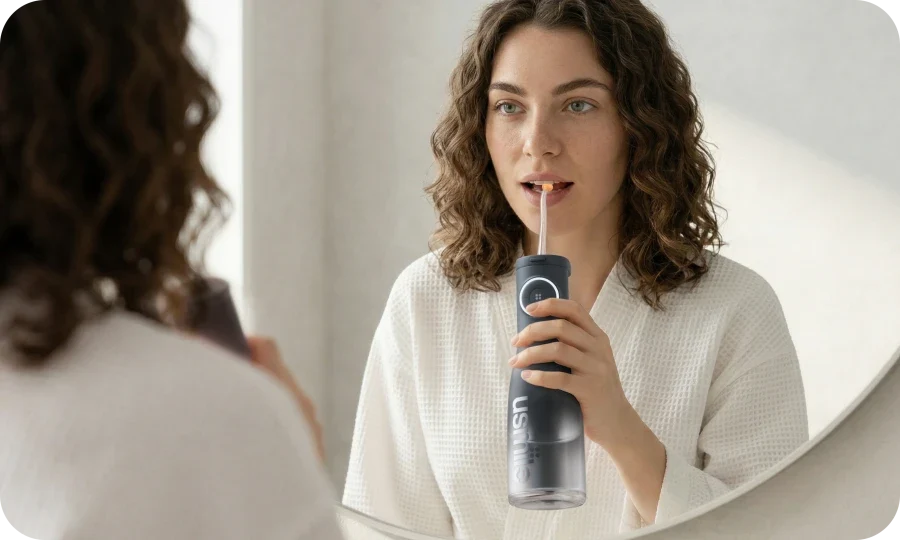
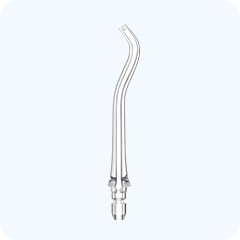
Avoid rigid toothpicks that can lever brackets off your enamel; an S-shaped orthodontic water flosser nozzle combines tapered bristles with pulsed water to clear trapped food safely.
The 30-Second Public Restroom Fix vs. The 2-Minute Complete Home Reset
If you are out at a restaurant or a relative's house without your full kit, start with the 30-Second Public Restroom Fix: take a generous sip of lukewarm water, close your lips, and swish vigorously for 20 to 30 seconds to loosen melted chocolate and soft bread crumbs. If a fibrous strand of turkey is still caught behind a wire, gently slide a soft interdental proxy brush vertically under the wire—always moving parallel to the tooth surface rather than pulling outward on the wire.
When you are at home—or carrying a high-capacity portable water flosser for braces in your bag—you can skip the frustrating 15-minute struggle of threading string floss under every single bracket slot and complete a full-mouth orthodontic reset in just 2 minutes.
Step-by-Step: The 2-Minute Braces Irrigation Sequence
- 0:00–0:10 | Prep Warm Water & Click in Your Orthodontic Tip: Fill a large 300ml reservoir with lukewarm water (especially important if your teeth feel sensitive to winter cold or a recent tightening) and attach an S-shaped slim-bristle orthodontic nozzle.
- 0:10–0:20 | Select Your Pressure Level: If your teeth are sore from a recent wire adjustment or you are new to water flossing, start in a gentle 30–50 PSI range; for everyday clearing of sticky holiday foods, step up to a comfortable 60–90 PSI setting.
- 0:20–1:05 | Flush the Upper Arch (Back Molars to Front, 45 seconds): Lean over the sink, place the tip inside your mouth before turning the unit on, and keep your lips slightly parted so water drains smoothly along the corner of your mouth into the basin without splashing. Starting at your back upper molars, guide the nozzle along the gumline and trace a quick 2-second circle around all four sides of each bracket (top, bottom, left, and right), letting the tapered bristles sweep directly under the archwire before pausing briefly between teeth.
- 1:05–1:45 | Flush the Lower Arch & Molar Hooks (40 seconds): Repeat the same methodical path across your lower teeth, paying extra attention to the back molar tubes and elastic hooks where turkey fibers and pie crust love to hide.
- 1:45–2:00 | Quick Visual Check & Follow-Up Brush (15 seconds): Spit, smile in the mirror to confirm every bracket wing and interdental space is clear, and follow up with your regular fluoride brushing routine once at least 15 minutes have passed since eating acidic or sugary treats.
When Trapped Food Won't Budge: Red Flags to Call Your Orthodontist
- A Bracket Slides or Spins on the Wire: If a piece of hard food has broken the adhesive bond and a bracket is moving freely, leave it in place, cover any irritating edges with orthodontic relief wax, and call your orthodontist for a quick rebonding appointment.
- A Poking Archwire or Bent Hook: Never try to clip a heavy archwire with household pliers; cover the sharp end with orthodontic wax and schedule a professional trim.
- A Popcorn Hull Wedged Deep Under the Gumline: If a hull or seed remains lodged beneath the gum tissue after gentle water flossing and causes localized throbbing, redness, or swelling for more than 24 hours, have your dentist or orthodontist gently remove it rather than digging into the gum yourself.
What Makes the Best Water Flosser for Braces After Holiday Meals? (The "Golden Trio" Standard)
Not every cordless water flosser is built for the reality of orthodontic brackets after a heavy holiday meal. When braces wearers say they tried a portable water flosser and still found food stuck around their wires—or got tired of refilling it three times per session—the frustration almost always comes down to three engineering bottlenecks.
1. The Runtime Problem: Why a 45-Second Tank Leaves Half Your Brackets Dirty
Cleaning a full set of 28 teeth with brackets, archwires, power chains, and molar bands takes roughly 90 to 120 seconds of methodical flushing. Most compact cordless water flossers only hold 150ml to 200ml of water and empty out in 35 to 50 seconds. Stopping mid-routine with water dripping down your chin to refill the tank two or three times breaks your rhythm and tempts you to rush through your back molars—the exact spots where holiday food traps most.
2. Nozzle Geometry: S-Shaped Slim-Bristle Orthodontic Tip vs. Straight Round Tips
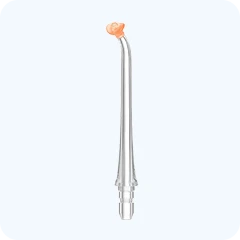
A standard straight nozzle shoots a single stream of water that easily bounces off the flat front face of a metal or ceramic bracket, missing the sticky plaque tucked underneath the archwire. An S-shaped (ergonomic elbow) orthodontic nozzle solves two problems at once: its curved neck naturally angles the stream straight into hard-to-reach back molar brackets without awkward wrist twisting, while its fine, tapered micro-bristles physically sweep sticky chocolate paste and bread dough off bracket wings as the water flushes them away.
3. Microbubble Flow + Graduated Pressure Control (30–120 PSI) for Post-Adjustment Sensitivity
Anyone with braces knows that gum sensitivity is a moving target. The day after an archwire tightening, even chewing soft pasta can feel tender—so a water flosser that only offers two or three rigid pressure jumps ("Low, Medium, High") often feels either too weak to dislodge fibrous meat or too harsh on sore gums. Pairing cushioned microbubble water flow with fine-grained, graduated pressure control lets you dial in a soothing 30–40 PSI rinse on adjustment week and step up in smooth 10 PSI increments for deep holiday meal cleanup.
How the usmile C50 Portable Dental Flosser Brings Countertop Power to Braces Care
Designed around this exact "Orthodontic Golden Trio" (Microbubble Flow + 120-Second Continuous Runtime + S-Shaped Slim-Bristle Orthodontic Nozzle), the usmile C50 Portable Dental Flosser bridges the gap between bulky plug-in countertop units and underpowered travel flossers:
- ADA Seal of Acceptance: The usmile C50 has earned the official American Dental Association (ADA) Seal of Acceptance, verifying that it meets rigorous, independent standards for safety and efficacy in removing plaque and helping prevent and reduce gingivitis.
- Up to 120 Seconds of Continuous Flow (300ml Tank + Vortex Pump): Powered by a patented High-Speed Vortex Expansion Pump inside a compact, detachable 300ml reservoir, the C50 delivers up to a full 2 minutes of uninterrupted cleaning on a single fill—matching the capacity of a 600ml countertop water flosser so you can clean every bracket in one go.
- Gentle Microbubble Technology (~1,400±200 Pulses/Min): Micron-level air-infused water droplets cushion the impact on tender gums while lifting stubborn food debris and sticky plaque. In third-party laboratory testing on tooth models, the C50 achieved >99.99% food residue removal in interdental and orthodontic areas and 99.67% plaque removal in 3 seconds on tested areas; in consumer and clinical evaluations (including a 28-day hospital clinical evaluation), it delivered 3× the plaque removal and 2.2× the soft-debris cleaning of traditional string floss, with 93.94% soft-debris reduction and 73.77% plaque improvement in teen users with zero adverse gum reactions.
- 10-Level Smart Pressure Control (30–120 PSI in 10 PSI Steps): Four dedicated modes (Massage, Soft, Normal, DIY) with 10 precise pressure settings and a real-time indicator screen let teens, adults, and post-adjustment patients find their exact comfort zone.
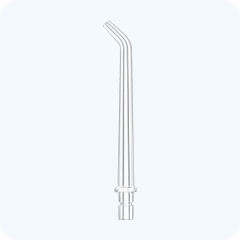
- 3 Specialized S-Shaped Nozzles Included: Comes ready with an Upgraded Slim-Bristle Orthodontic Nozzle for brackets and wires, a Dual-Stream Clean Nozzle, and a Gentle Care Nozzle, plus a hygienic tubeless antimicrobial waterway (>99% inhibition against E. coli and S. aureus) with an open wide-mouth tank that rinses and air-dries effortlessly after daily use, IPX7 waterproofing, FDA food-grade BPA-free materials, and up to 60 days of battery life via Type-C fast charging.
| Feature / Braces Need | String Floss + Floss Threaders | Standard Cordless Water Flosser | Traditional 600ml Countertop Flosser | usmile C50 Portable Dental Flosser |
|---|---|---|---|---|
| Time to Clean Full Mouth With Braces | 10–15 minutes of manual threading | 3–4 minutes (requires 2–3 tank refills) | ~2 minutes (single fill) | ~2 minutes (single 300ml fill, up to 120s flow) |
| Bracket & Under-Wire Cleaning | Reaches between teeth; misses bracket faces | Often uses straight tip; water bounces off brackets | Good with orthodontic tip, but tethered by hose | S-Shaped Slim-Bristle Orthodontic Nozzle + Microbubble Flow |
| Post-Adjustment Gum Comfort | Easy to snap string into tender gums | Limited 2–3 pressure jumps; often too harsh or weak | 10-step dial, but standard jet stream can feel sharp | Cushioned Microbubbles + 10-step pressure (30–120 PSI in 10 PSI steps) |
| Holiday Travel & Small Bathroom Fit | Pocket-sized, but tedious in guest bathrooms | Portable, but constant refilling at sink | Bulky footprint; requires wall outlet by sink | Cordless, IPX7 waterproof, 60-day battery + hygienic tubeless tank |

A 300ml cordless water flosser delivering up to 120 seconds of continuous microbubble flow lets you finish a full upper-and-lower braces clean on a single tank.
Frequently Asked Questions About Holiday Eating and Water Flossing With Braces
Can you eat Reese's, Kit Kats, or M&Ms with braces?
Yes—with a few smart checks. Room-temperature Reese's Peanut Butter Cups, Kit Kats, and Plain M&Ms are widely considered braces-friendly by orthodontists because they soften and melt quickly without pulling on brackets. However, you should skip Peanut M&Ms, Caramel M&Ms, or frozen chocolate bars, as whole nuts and hard caramel centers can snap a bracket off your tooth. Because peanut butter and wafer crumbs pack tightly under wires, flush your brackets with a water flosser right after eating.
Does a water flosser replace string floss when you have braces?
Orthodontists and the ADA recommend using an ADA-accepted water flosser as an essential daily partner to brushing and interdental cleaning—and for braces wearers after messy holiday meals, a water flosser with an orthodontic brush tip is far faster and more effective at flushing sticky food out of bracket wings and archwire gaps where string floss cannot reach. Using a water flosser after every meal and pairing it with thorough nightly brushing and interdental care gives your enamel and gums the most complete protection.
What water flosser PSI setting should I use if my teeth are sore from a braces adjustment?
If your teeth and gums feel tender during the first 2 to 4 days after an orthodontic wire adjustment, start at a gentle 30 to 40 PSI setting (such as Soft or low DIY mode) with lukewarm water. As soreness fades later in the week, you can step up in comfortable 10 PSI increments toward 60 to 90 PSI to clear dense holiday foods without irritating your gums.
Can kids and teens with braces safely use an orthodontic water flosser?
Yes. Kids and teenagers often struggle with the dexterity and patience required to thread string floss under 28 brackets every night. A cordless water flosser with an S-shaped orthodontic nozzle, a visual pressure indicator, and gentle microbubble flow starting at 30 PSI makes post-meal braces cleaning intuitive, comfortable, and fast enough that teens actually stick with the habit.
Enjoy Every Holiday Bite—And Leave the Leftovers on the Plate, Not in Your Brackets
Having braces during Halloween, Thanksgiving, and the winter holidays doesn't mean missing out on the foods and traditions you love. By choosing soft, melt-in-your-mouth sweets, cutting tender holiday proteins into bite-sized pieces, and swapping risky toothpicks for a 2-minute flush with an ADA-accepted orthodontic water flosser, you can keep your brackets intact and your enamel bright all season long. Explore the usmile C50 Portable Dental Flosser to keep your brackets spotless from Halloween night through New Year's Day.
Medical Disclaimer: This article is for informational and educational purposes only and is not a substitute for professional dental or orthodontic advice, diagnosis, or treatment. Always follow the specific dietary and appliance-care instructions provided by your orthodontist or dentist, and contact their office promptly if you experience a loose bracket, bent wire, or persistent gum pain.


Looking for something else?
Ultrasonic Toothbrush vs Electric: Which Technology Wins for Your Smile?
LEARN MORE
Best Electric Toothbrush for Sensitive Teeth (2026) — 5 Tested
LEARN MORE
Does an Electric Toothbrush Have a Lithium Battery
LEARN MORE
How to Make Brushing Teeth Fun for Kids Without Daily Battles
LEARN MORELooking for something else?
Best Toothbrush for Kids Who Hate Brushing: Parent Guide
LEARN MORE
Best Electric Toothbrush for Kids: What Parents Should Look For
LEARN MORE
How to Get a Child to Brush Teeth Without Daily Battles
LEARN MOREYou may also like
usmile Q30 Kids Electric Toothbrush

usmile C30SE Portable Dental Flosser

usmile Q30 Kids Electric Toothbrush Trio Pack


Further reading
What Candy & Holiday Foods Can You Eat With Braces? Plus How to Get Food Out of Braces in 2 Minutes
Halloween Candy Before Bed: A Kid-Friendly Cleanup Routine to Protect Kids' Teeth
I Thought My Water Flosser Made My Teeth Gaps Bigger—Here’s What May Actually Be Happening