












When Do Baby Teeth Fall Out? Most Parents Don’t Know the Full Timeline
Your kid has a wiggly tooth. Or you’re reading this because they don’t yet, and you’re starting to wonder. Either way, the same question keeps surfacing: Is what’s happening with my child’s teeth actually normal?
The short answer is probably yes. But the full answer is far more specific — and more useful — than most parents ever get told. The question of when baby teeth fall out has a real timeline, real exceptions that matter, and real signals that mean something's off, andthis Mayo Clinic overview on baby teeth covers the medical side well. Here's all of it.
At what age do kids start losing baby teeth?

Six is the average. Five is fine. Seven is fine too. Somewhere in that range, your child’s mouth starts its years-long shift from 20 baby teeth to 28 permanent ones. It doesn’t happen quickly — the whole process runs until 12 or 13.
Most Children Start Around Age 6
The first tooth to go is almost always one of the two lower front teeth — the lower central incisors. Dentists have a name for everything. What matters is that a permanent tooth has been forming in your child’s jaw since before they were born, and when it gets large enough, it pushes upward against the baby tooth root sitting directly above it. That pressure dissolves the root. Not overnight. Gradually, over weeks. By the time the tooth actually falls out, there’s almost no root left — which is why there’s barely any bleeding. Pretty efficient system, honestly.
The Process Runs Until Ages 12 to 13
This isn’t a six-month event. It’s closer to a six-year one. Children typically still have a mix of baby and adult teeth well into their tweens, and the back baby teeth — the second molars — are usually the very last to go. Don’t let anyone suggest that a 10-year-old still having baby teeth is unusual. It isn’t. Also worth knowing: girls tend to shed their baby teeth a bit earlier than boys, consistently, across most studies.
Why Do Baby Teeth Fall Out at All?
The question every child asks, usually at the worst possible moment. The actual answer is worth knowing.
Permanent Teeth Push From Below

Adult teeth have been developing in the jawbone since before birth. When a permanent tooth grows large enough, it starts pressing against the root of the baby tooth sitting above it. That upward pressure is what starts the loosening process. The baby tooth doesn’t get physically shoved out — it gets gradually disconnected from below, over the course of weeks or even months.
The Root Dissolves — That’s the Whole Mechanism
Most parents don’t know this part. The root of a baby tooth doesn’t exist whole. It dissolves. The pressure from the incoming permanent tooth triggers a biological breakdown of the root over time, which is why loose baby teeth have almost no root left by the time they fall out — and why they come out so easily and bleed so little. There’s almost nothing left holding them in.
Baby Teeth Do Real Work While They’re Around
They help children chew food properly. They shape early speech. They give the face its form. But the most overlooked function is this: baby teeth physically guide the permanent teeth into position as they erupt. Lose one too early — before the adult tooth is ready to fill that space — and the surrounding teeth can drift in and close the gap entirely. When the permanent tooth finally arrives, it finds no room. That’s exactly how crowding and misalignment begin.
Which Baby Teeth Fall Out First?
Bottom Front Teeth, Almost Without Exception
Lower central incisors. Ages 6 to 7, usually. They came in first as a baby, and they go first as a child. Your kid will spend about two weeks wiggling the thing nonstop. One day, it pops out at the dinner table. That’s just how it goes.
Top Front Teeth Follow Right Behind
The upper central incisors are next, also around ages 6 to 8. This is the gap-toothed phase every parent recognizes in kindergarten and first-grade photos. Your child’s smile will look genuinely random for a while — gaps in some places, baby teeth in others, one adult tooth that seems comically oversized. That’s the mixed dentition phase. Normal, and genuinely photo-worthy.
Molars and Canines Hold On the Longest

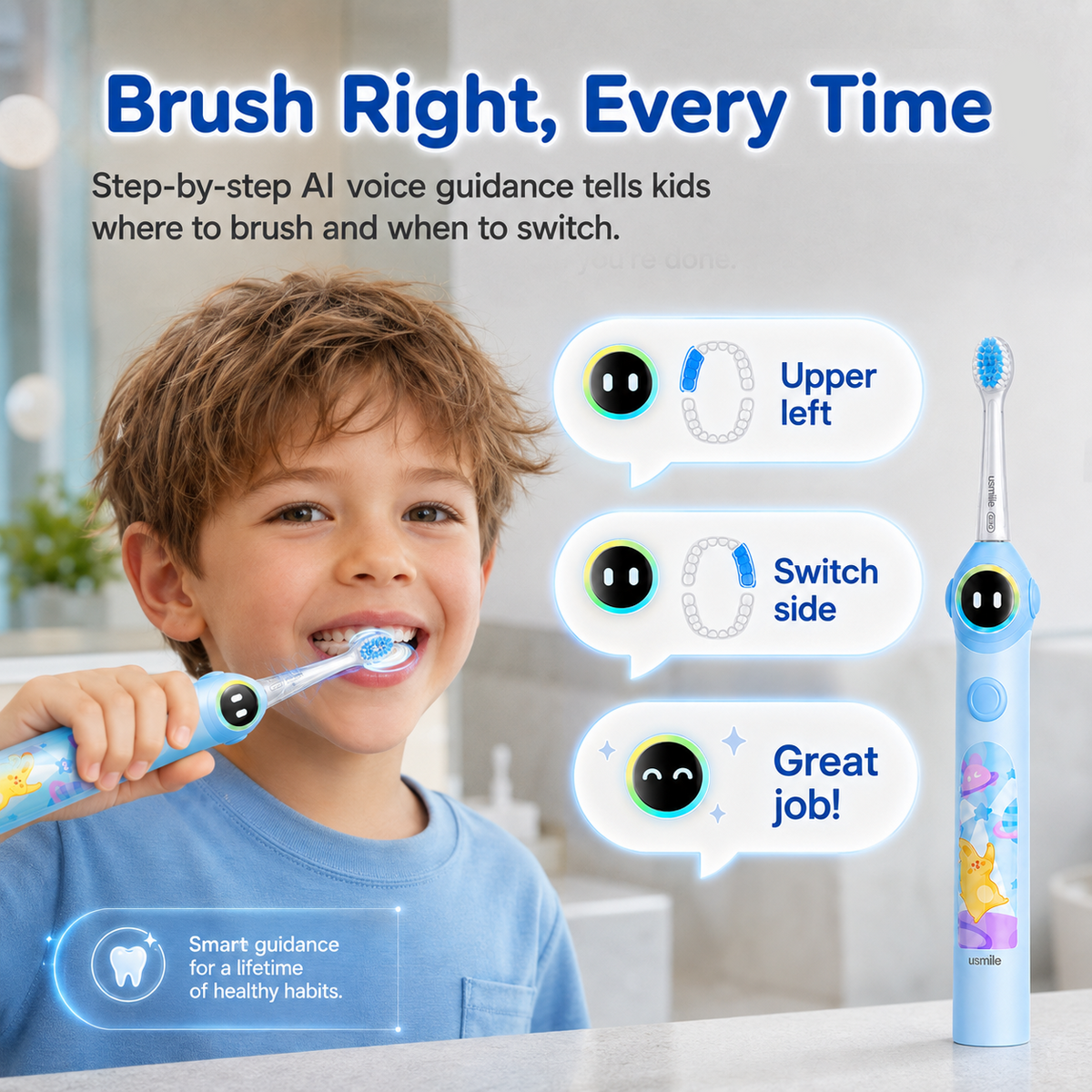
The further back in the mouth, the later the tooth goes. Canines and second molars don’t typically fall out until ages 9 through 12. These are the baby teeth parents often forget exist — until a dentist circles them on an X-ray and mentions they’re still primary teeth. Keeping those back corners clean during this long wait is harder than it sounds. Children’s brushing technique is uneven at best, and a dependable kids' electric toothbrush means even imperfect brushers still clean those back corners properly.
Baby Teeth Falling Out — The Age-by-Age Timeline

Most parents want a clear answer on when baby teeth fall out, and the short version is this: it usually happens between ages 6 and 12–13, with the process following a fairly predictable order. Here's the general sequence, based on ADA tooth eruption data. Every child varies, but this is the pattern most kids follow.
Ages 6–7: Central Incisors
Top and bottom front teeth. Most visible, most celebrated, most aggressively wiggled. The Tooth Fairy earns most of her salary in this window.
Ages 7–8: Lateral Incisors
The teeth flanking the front two. Less dramatic, but close behind. Your child’s smile looks genuinely patchy during this stretch — gaps here, a baby tooth there, an adult tooth that seems way too large for everything else around it. That’s the mixed dentition phase, and it’s completely normal.
Ages 9–11: First Molars and Canines
Back of the mouth territory now. First molars and canines loosen at slightly different rates for different children. Some lose canines first. Some lose their first molars first. Neither order is wrong — they’re just variations on the same general timeline.
Ages 10–12: Second Molars
The last baby teeth to fall out. They hold on the longest. By the time these finally come out, most of the permanent teeth are already settled in place, and the process is essentially wrapped up.
What If Baby Teeth Fall Out Too Early?

Age 5 Can Be Completely Normal
Some children run on an earlier schedule than average. If baby teeth come in early, they tend to fall out early, too. A 5-year-old with a wiggly front tooth isn’t a red flag — mention it at the next dental visit and let a dentist confirm that the permanent tooth is developing correctly underneath.
Before Age 4 Is Different
Tooth loss before age 4 almost always has a cause — a fall, a collision, or significant tooth decay. It doesn’t sort itself out. A dentist visit is necessary, not optional. The real concern isn’t just the missing tooth. It’s that without it holding the space, surrounding teeth can drift in before the permanent tooth is anywhere close to ready. By the time the adult tooth arrives, the space may be gone.
Space Maintainers: Worth Knowing About
If a child loses a baby tooth prematurely, a dentist may recommend a space maintainer — a small device that holds the gap open until the adult tooth erupts. Simple intervention, significant payoff. It prevents the kind of crowding problem that would otherwise need years of orthodontic work to fix.
What If Baby Teeth Are Hanging On Too Long?
Late tooth loss worries parents almost as much as early tooth loss. Most of the time, it’s nothing to act on.
Age 7 With No Loose Teeth Is Usually Fine
A 7-year-old who hasn’t lost a single tooth yet is, in most cases, developing exactly on their own schedule. Permanent teeth form at different rates. As long as they’re growing correctly underneath the gums, there’s no problem. A quick dental X-ray confirms this in minutes.
When Late Loss Actually Warrants Attention
Three things worth acting on: nothing has loosened by age 8, a permanent tooth is visibly erupting, but the baby tooth above it isn’t moving, or multiple primary teeth are still in place at 13. None of these automatically signals something serious — but all of them need a dentist’s evaluation rather than a wait-and-see approach.
What an X-Ray Actually Shows
An X-ray tells the whole story fast. Dentists check whether permanent teeth are present and forming normally, whether roots are correctly positioned, and whether anything is physically blocking normal eruption. The American Association of Orthodontists recommends a first orthodontic evaluation no later than age 7 because the mix of baby and adult teeth at that age provides the clearest possible view of how development is progressing. Early findings mean early options.
What Are Shark Teeth?

It sounds alarming, but it's actually fairly common. "Shark teeth" is the nickname for what happens when a permanent tooth starts erupting before the baby tooth above it has fallen out — which is really just a small hiccup in the normal baby-teeth timeline, not a sign that anything has gone wrong. The result is what looks like a double row of teeth, and most parents who notice it think something has gone badly wrong.
When They Resolve Without Intervention
If the baby tooth is even slightly loose, there’s a reasonable chance it will fall out within a few weeks, and the permanent tooth will drift forward on its own. Gently wiggling the baby tooth helps. Most shark tooth situations resolve without any involvement from a dentist.
When to Get a Dentist Involved
Three to four weeks with no movement, the baby tooth still firm and not budging, or your child in genuine discomfort — those are the signals to call. A quick extraction of the stubborn baby tooth clears the path. The adult tooth usually corrects its position over the following weeks without further work. Leaving it much longer risks pushing the permanent tooth far enough out of alignment that correction becomes a bigger project.
What to Do With a Loose Tooth

Wiggle It. Don’t Force It.
Let the tooth come out when it’s actually ready. Children can work at it with clean fingers or their tongue. When it’s ready, it takes almost no effort and causes almost no bleeding — because the root has largely dissolved already. String-on-a-doorknob is a bad idea. Pulling before it’s ready can cause pain, potential gum tissue damage, and occasionally leave root fragments behind.
If There’s Bleeding
A small amount is normal. Water rinse handles most cases. If it keeps going, clean gauze with gentle pressure for a few minutes takes care of it. Bleeding that lasts more than an hour means calling the dentist. Not panicking — just calling.
The Kid’s Perspective on All This
Some children can’t wait to lose a tooth. Others find the whole process genuinely unsettling. Both reactions are valid and common. Acknowledge whatever they’re feeling. Remind them that every person they’ve ever met went through this same thing. The Tooth Fairy mythology exists precisely for moments like this — let it do its job.
Keeping Baby Teeth Healthy Until They Fall Out
Temporary doesn’t mean unimportant. Baby teeth with serious decay can affect the permanent teeth forming directly beneath them. And tooth decay in children is not a rare edge case — it’s one of the most common chronic childhood conditions. Also, one of the most preventable causesis an important part.
Two Minutes, Twice a Day

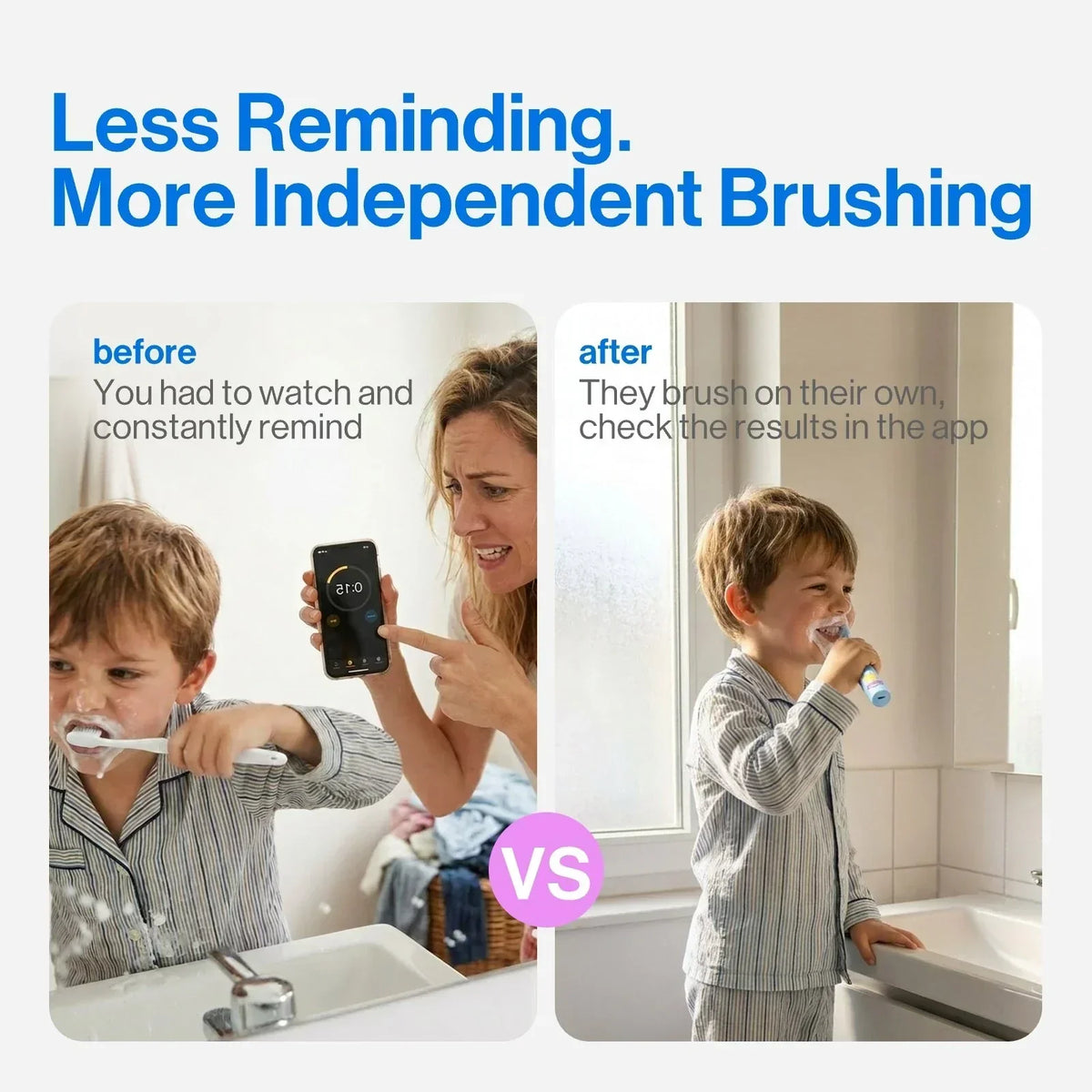
Fluoride toothpaste, twice daily, for two full minutes. Parents usually need to supervise or help until around age 7 or 8, when most children develop enough motor control to brush effectively on their own. Getting this routine established early is worth the effort, and an electric toothbrush for kids takes a lot of the pressure off technique — the brushing motion handles itself, so children who haven’t nailed their technique yet still get a thorough clean every time.
Floss When Teeth Start Touching
The moment two teeth sit adjacent to each other without a visible gap, flossing begins. Not a guideline — a rule. Food and bacteria collect at those contact points, and nothing but floss can clear them. Between-tooth cavities are just as preventable as surface cavities. They just require this one additional step that most families skip.
Sugar and Regular Dental Visits
The bacteria behind tooth decay feed on sugar, specifically on the acid they produce when metabolizing it. Less sugar means less acid production and fewer cavities. Dental checkups every six months let a dentist catch problems before they become expensive. As part of a consistentoral care routine at home, professional visits address what daily brushing inevitably misses.
When to Call a Dentist

Most of what happens during this stage sorts itself out. But these situations are worth a call, not a wait:
- Any tooth falls out before age 4
- A tooth was lost because of injury or trauma
- Nothing at all has loosened by age 8
- A permanent tooth is erupting, but the baby tooth above it won’t move
- Your child has pain around a loose or newly erupted tooth
- Gum bleeding doesn’t stop within an hour of a tooth falling out
None of these are automatically emergencies. All of them deserve a dentist’s assessment rather than a guess.
The Bottom Line
Most children start losing baby teeth around age 6. The process runs until 12 or 13. The timeline varies, and most of that variation is completely normal. So when do baby teeth fall out? Typically between ages 6 and 12–13, with plenty of normal variation in between — and as long as the sequence makes sense and nothing's stuck or painful, there's usually no reason to worry. Keep an eye on development, build consistent oral hygiene habits while the baby teeth are still present, and involve a dentist for anything outside the normal range.The wiggly-front-tooth phase is short. The habits built during it last a lot longer.
FAQs
Q: Is it normal for a 5-year-old to lose a tooth?
Yes, and it’s not uncommon. Age 6 is the average, but many children start at 5, particularly those whose baby teeth came in earlier. One loose tooth at 5 isn’t something to act on urgently. If multiple teeth are falling out before age 5, or a tooth came out due to decay or injury, that’s worth a visit to the dentist.
Q: Is it normal for a 7-year-old to still have baby teeth?
Still having all or most of their baby teeth at 7? That’s completely normal. The process of losing baby teeth spans years, from about age 6 through 12 or 13. Some children simply start later than the average. Losing a first tooth anywhere between 5 and 8 is still within a perfectly reasonable range.
Q: Can baby teeth fall out at age 3?
Not naturally, no. A tooth coming out at age 3 almost always means something caused it — a fall, a collision, or significant tooth decay. A dentist visit is necessary. The immediate concern is that surrounding teeth can drift into the space before the permanent tooth is ready, potentially blocking it from erupting correctly.
Q: How late is too late for baby teeth to fall out?
No hard cutoff, but two guideposts worth knowing: no baby teeth loosened at all by age 8 deserves a dental exam, and multiple primary teeth still in place at 13 should be evaluated. A dentist can take an X-ray and see exactly what’s happening underneath. It might be completely fine. But guessing isn’t the right approach.
Q: What is the 7-4 rule?
Not an official dental protocol, but age 7 carries real significance in children’s oral care. The American Association of Orthodontists recommends a first orthodontic evaluation no later than age 7. At that point, most children have a mix of baby and adult teeth that gives an orthodontist the clearest view of how the bite and jaw development are progressing — and whether early action would prevent larger problems down the line.
Q: Is 5 too early to start losing teeth?
Not if their baby teeth came in early. The window for losing a first tooth runs roughly from 5 to 7. A child on the early side of the tooth eruption schedule often loses their first tooth at 5. It’s their normal schedule, running a bit ahead of the average.
Q: Which deficiency causes loose teeth?
In children ages 6 to 13, loose teeth are almost always just part of the normal shedding process — not a nutritional issue. Outside that age window, vitamin C deficiency is the most cited cause of weakened gums and loose teeth. Low calcium and vitamin D affect tooth and bone strength more broadly. If loose teeth appear in a child outside the expected shedding years, both a dentist and a pediatrician are worth contacting.
Sources
- Mayo Clinic, Baby Teeth — Expert Answers on Timing and Development
- American Dental Association, Tooth Eruption Charts — Primary and Permanent Teeth
- American Academy of Pediatric Dentistry, Frequently Asked Questions for Parents
- American Association of Orthodontists, First Orthodontic Visit by Age 7
- HealthPartners, When Do Kids Lose Their First Tooth?
- Colgate Oral Health, When Do Baby Teeth Fall Out?
- Centers for Disease Control and Prevention, Children’s Oral Health


Looking for something else?
Best Electric Toothbrush for Teens (2026): Top Picks, Tested and Reviewed
LEARN MORE
Best Electric Toothbrush for Gum Disease (2026): 6 Picks Tested for Real Gum Protection
LEARN MORE
Electric Toothbrush on Plane: The Complete Travel Guide (2026)
LEARN MOREBest Sustainable Electric Toothbrush 2026: 5 Picks Tested for a Greener, Healthier Smile.docx
LEARN MORELooking for something else?
Best Sustainable Electric Toothbrush 2026: 5 Picks Tested for a Greener, Healthier Smile
LEARN MORE
Best Cheap Electric Toothbrush (2026): Top 5 Budget Picks That Actually Work
LEARN MORE
Ultrasonic Toothbrush vs Electric: Which Technology Wins for Your Smile?
LEARN MOREYou may also like

Y10 PRO Electric Toothbrush x C10 Portable Water Flosser


usmile Y20PRO Adults Toothbrush x Q30 Kids Toothbrush

usmile C30 Water Flosser Toiletry Bag Pack
Further reading
The 5 Toothbrushing Spots Kids Miss Most—and How Parents Can Help
The Back-to-School Brushing Reset: A 14-Day Plan for Kids Ages 3–8

Behind usmile D50 OralCam Toothbrush: From Motion Tracking to Visual Intelligence in Oral Care

