







Best Electric Toothbrushing Technique: How to Brush Correctly for Healthier Gums
You bought a new electric toothbrush, but now what? Most people just turn it on and scrub the same way they did with their old manual brush — and that's the exact reason their gums still bleed at every dental cleaning. What nobody tells you is that an expensive powered brush can actually cause more damage than a $3 manual one if you press too hard while brushing.
Hygienists see this problem in patients every single day. The best electric toothbrushing technique isn't a hidden trick or a special setting you need to unlock —this ADA guide on brushing walks through the fundamentals every dentist agrees on. It really comes down to four simple choices that anyone can master with a little practice — a light fingertip grip on the handle, bristles angled at 45 degrees toward the gum line, slow movement from one tooth to the next, and a full two minutes per session.
 Once you get these four things right, the change happens faster than you'd expect. Your gums start to calm down within a couple of weeks, your breath stays fresher throughout the day, and yourbrush head actually lasts the full three months it was designed for. In this guide, you'll learn nine practical brushing techniques you can start using tomorrow morning, the small habits that quietly cause gum recession over the years, and how to take care of the rest of your mouth properly.
What Is the Right Way to Brush Your Teeth?

Same recipe every major dental authority lands on. Soft-bristle toothbrush. Fluoride toothpaste. Two minutes. Twice a day. Simple on paper. The piece that matters, and the piece almost no one gets right, is what happens during those two minutes.
Bristles at 45 degrees to the gum line. Always. Short tooth-wide strokes for a manual brush. For a powered one, you glide — slow, one tooth at a time, no pressure. The goal does not change. Break up plaque. Lift food particles before they harden into tartar.
Scrubbing is the hardest habit to drop. It feels like work, which tricks the brain into thinking it works. It does not. Hard pressure flattens bristles sideways. Flat bristles miss between teeth. Years of this wear down enamel and push gums back where they cannot grow forward again. With a powered brush, scrubbing fights the motor directly — the head is already moving thousands of times a minute, and your hand is canceling it out.
Coverage is where the routine falls apart. Four quadrants, roughly 30 seconds each: upper right, upper left, lower right, lower left. The two spots almost everyone skips? Back molars and the inner side of the lower front teeth. Awkward to reach, and patience tends to run out before they get fair time. Finish with a short pass over the tongue — that is where the bacteria behind morning breath sit. None of this should feel like effort.
9 Best Electric Toothbrushing Techniques for Cleaner Teeth and Healthier Gums
The best electric toothbrushing technique isn't one single move — it's a small set of habits that work together. These nine adjustments cover the angles, timing, pressure, and follow-through that hygienists look for, and most people can put them into practice on the very next brush.
1. Hold the Brush with a Fingertip Grip

Grip is everything. A closed fist around the handle is what drives the brush too hard into the teeth — the whole forearm pushes down through the wrist. A fingertip grip kills that. Thumb plus the first two fingers. Hold it the way you hold a pen, not the way you hold a hammer. The bristles tell the story later: a brush head used with a light grip still looks tidy at three months. The same brush used in a fist looks flared and tired after six weeks. If your knuckles go white while brushing, you already know.
2. Angle the Brush 45 Degrees Toward the Gum Line

The single number to remember. Top teeth, bristles point up into the gum line. Bottom teeth, bristles point down into the gum line. They should slip just under the gum line, not stab into it. That tiny pocket between tooth and gum is where plaque parks itself first. It is also where gingivitis starts. Brush flat against the tooth — a 90-degree angle — and you miss the whole gum line, every time.
3. Let the Brush Do the Work - Don't Scrub

Switching from a manual brush is where most people go wrong. The muscle memory carries over. Hand wants to scrub, brush is already moving — two motions fighting each other, neither doing its job. With electric toothbrushes, the head makes between 8,000 and 40,000 movements per minute, depending on the model. Nothing your wrist does can match that. So stop trying. Park the head on a tooth, count to three in your head, slide to the next one. That's it. If a fresh brush head is splayed out and sad-looking inside a month, you already know the answer — still scrubbing, just with a fancier handle.
4. Brush for the Full Two Minutes, Twice a Day

The average person brushes for 45 to 70 seconds and walks away, sure it was longer. Time stretches at the sink. Most electric toothbrushes have a built-in timer that buzzes every 30 seconds and shuts off at two minutes. Use it. Morning brush clears the overnight bacterial film. Night brush matters more — that fluoride toothpaste stays in contact with enamel for hours while you sleep, which is when it does the real work.
5. Use the 30-Second Quadrant Method

The mouth splits into four quadrants. Upper right. Upper left. Lower right. Lower left. Each one gets 30 seconds, no shortcuts. Inside each section, work in the same order every time — outer, inner, and chewing top. The brush will pulse at 30 seconds to tell you to move on. Without the cue, the average person dumps 70% of their two minutes on the front teeth they can see in the mirror and rushes the molars in the back.
6. Clean All Three Tooth Surfaces

Three surfaces per tooth. The outer face the world sees. The inner face of the tongue side. The chewing surface on molars and premolars. Outers get attention because they are visible. Inners are a different story. The area behind the lower front teeth, in particular, is statistically the most neglected zone in the entire mouth, and the first place tartar shows up at a cleaning. Tip the brush vertically there and do short up-and-down strokes. For the chewing tops, lay the head flat across the grooves and let it sit a beat per tooth.
7. Pay Extra Attention to Your Back Molars
Back molars accumulate plaque faster than any other teeth in the mouth. They sit at an angle that does not cooperate with most brush heads. Strange trick that works: do not open your mouth all the way.
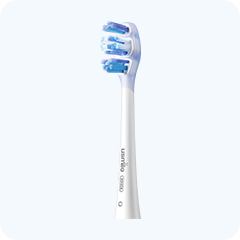
 A slightly closed jaw gives the cheek more slack and lets the brush slide further back than a wide-open jaw allows. Tilt the head. Hold it a couple of seconds longer than you do up front. Rotate it for the chewing top and the inner side. An ergonomic toothbrush head makes the rear corners much easier to reach without twisting your wrist into a painful position.
8. Use Light Pressure - Trust the Pressure Sensor

Brushing too hard is the number one cause of gum recession. Once gum tissue recedes, it does not grow back. Pressure sensors exist for exactly this reason. The fix is dull and simple: rest the brush on your teeth using only the weight of your fingertips. If the sensor light flashes red or the motor stutters and slows, the brush is telling you something. Listen to it. Years of mild over-pressure quietly expose tooth roots and leave permanent sensitivity to anything cold.
9. Finish by Brushing Your Tongue and Gum Line
The tongue holds more bacteria than anywhere else in the mouth. That is why morning breath persists after careful brushing if the tongue is skipped. Once the teeth are done, run the brush head from the back of the tongue forward for five to ten seconds.Some models have a tongue mode with softer vibrations for this. Spit afterward. Skip the big water rinse — leave a thin film of fluoride toothpaste behind, since it keeps strengthening enamel long after you have left the sink.
Common Electric Toothbrush Mistakes to Avoid

Even people who have used a powered brush for years carry small habits that quietly undo the work. Watch for these:
- Pressing too hard wears down enamel and pushes gums to recede.
- Scrubbing back and forth - cancels the brush's own motion.
- Skipping behind the lower front teeth - the most overlooked tartar zone in the mouth.
- Using an old brush head - frayed bristles miss between teeth.
- Brushing right after acidic foods - wait about 30 minutes first.
- Skipping floss or interdental brushes - bristles cannot reach between teeth.
Manual vs Electric Toothbrush: Which Is Better?

A manual toothbrush works fine in theory. The part that breaks down is the part nobody talks about — you, holding it, at 11 pm, tired, brushing for what feels like forever but is actually 38 seconds. No timer. Nothing buzzing to tell you to move quadrants. Nothing warns you that the pressure is wrong. So you finish, you go to bed, and you do the same half-brushing again tomorrow.
The numbers from the research line up with this pretty clearly. According to a Cochrane Oral Health Group review of 56 clinical trials involving more than 5,000 participants, powered toothbrushes outperformed manual ones for plaque removal and gingivitis reduction, both in the short term and over longer follow-up periods. Then there was the Greifswald cohort — 11 years of follow-up — where adults who used powered brushes ended up keeping around 20% more of their own teeth than those who used manual brushes. Not a small gap when you stretch it across a decade.
None of which means throw away the manual brush. What it actually says is that the powered one removes excuses. Two-minute timer? Already built in. Pressure sensor? Already there. Spinning or vibrating head that gets to back molars when your wrist gives up? Yeah, that too. If you have braces, sensitive gums, arthritis in the hands, or your technique just falls apart when you're sleepy — switching is where most people see the real change.
Sonic vs Oscillating-Rotating Toothbrushes

There are basically two designs out there. A sonic toothbrush — Sonicare is the brand most people know — vibrates the bristles side to side really fast—tens of thousands of times a minute. The vibrations push toothpaste and saliva around between your teeth, which does a chunk of the cleaning even where the bristles aren't quite touching. Then there's the rotating-oscillating type. That's the small round head that spins one way, then the other way, then back. You move it tooth by tooth, and the spinning hugs each one. Different sound. Different feel in the hand. Same result, more or less.
Both clean better than a manual. That much is just true at this point. Whether one is meaningfully better than the other — the Cochrane folks looked at this, and rotating-oscillation came out slightly ahead. Still, the gap was small enough that they basically said it might not matter outside of a lab. Real talk: pick the one that doesn't make you dread brushing. If sonic vibrations make your teeth itch (some people hate the feeling), get the spinning one. If the spinning feels weird, get sonic. The one you actually use twice a day, for two full minutes, is the one that wins.
How to Choose a Good Electric Toothbrush
Walking into a drugstore aisle for the first time? It's overwhelming. There's a $9 spin brush sitting next to a $300 one with an app and a charging case that looks like a perfume bottle. Most of the price difference is marketing. The stuff that actually matters is shorter than you'd think:
- A two-minute timer with 30-second quadrant alerts.
- A pressure sensor that warns when you push too hard.
- Soft bristles, in a brush head sized for your mouth.
- Balanced handle that feels right with a fingertip grip.
- Battery life of at least two weeks per charge.
- Replacement brush heads that are affordable AND easy to find.
That last bullet trips more people up than any other. They drop $150 on a brush, then realize the replacement heads are $20 each and are only sold at one weird store. By month four, they've stopped replacing them, and the whole point of buying the brush is undone. Smart models are a separate conversation.
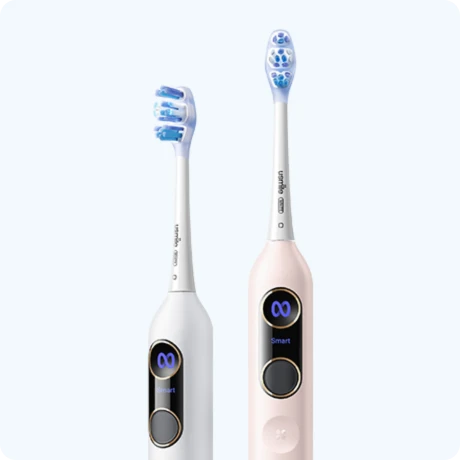
 An AI electric toothbrush can track your brushing patterns across weeks and tell you which spots you keep missing — handy if your hygienist keeps pointing at the same area every visit. Whatever model you end up with, look for the ADA Seal of Acceptance somewhere on the box. Or an equivalent independent mark. That seal isn't perfect, but it's a quick filter for the obvious junk.
Complete Oral Care Routine Beyond Brushing

Here's the part that no toothbrush ad will tell you. The brush only gets to about 60% of what's in your mouth. Everything between teeth — where most cavities start, by the way — is bristle-proof. That gap is what kills people's checkups, even when they swear they brush twice a day. Floss fills it. Old waxed string works. Water flossers work.
Tiny interdental brushes work. Whatever tool you'll actually use every night is the right one. Mouthwash is optional and usually only worth it if your dentist has given you a reason to use it. Tartar that's already hardened is a different problem — only a hygienist with a scaler can remove it, and twice a year is the standard cadence. Buying these tools together costs less than buying them separately, which is why oral care bundles tend to be the easier route — the floss sits next to the brush, you stop forgetting it, and the routine sticks.
Final Takeaway: Let the Brush Work, Focus on Coverage
Honestly, the wild thing here is how simple it is. Grown adults — people running businesses, raising kids, doing actual hard things every day — still brush wrong because nobody sat them down at age 28 and corrected the habit they picked up at age 8. Fingertips, not fist. 45 degrees, into the gum line.
Slow, one tooth at a time. Two minutes. Swap the brush head every three months (or earlier if it looks beat up—and you'll know: the bristles fan out like they've been chewed on). Floss daily, even though nobody enjoys flossing. See a hygienist twice a year. Do that, and the gums settle down, the breath stops being a thing, and you might actually leave a checkup without a lecture for once.
Bleeding gums that won't stop, real sensitivity, braces, implants, gum disease — all of those need a dentist who can look at your mouth specifically. An article on the internet cannot do that work for you. Even the best electric toothbrushing technique has to be adapted to your own mouth, and only a dentist can fine-tune it for things like crowded teeth, recession, or restorations.
FAQs
What is the best technique for an electric toothbrush?
Hold the handle like a pen. The bristles need to sit at 45 degrees against the gum line — pointing up for top teeth, down for bottom teeth. Then go slow. Park the brush on each tooth for 2 or 3 seconds, then slide to the next tooth. Get the outer side, then the inside, then the chewing top. Two minutes total. Twice a day. Fluoride toothpaste. Honestly, that's it. Everything else is just a slightly fancier version of those same steps.
Is an electric brush good for your teeth?
If you use it right, yes — significantly better than a manual brush at clearing plaque and reducing gum inflammation. Suppose you use it wrong, no. Pressing too hard wears down enamel. Sprinting through it in 40 seconds skips most of your mouth. The vibrations or rotations aren't magic. Your hand is still the thing that decides whether the brush is helping or hurting. And no electric toothbrush in the world saves you from skipping flossing.
What is the most effective type of electric toothbrush?
Both sonic and rotating-oscillating beat a manual toothbrush. That part has been studied to death. Comparing the two is messier — the studies show that rotating-oscillation has a small edge, but "small" as in small enough that researchers themselves keep going back and forth on whether it matters. The most effective brush, for you specifically, is probably the one with a two-minute timer, a pressure sensor, soft bristles, and a feel you don't actively avoid at night.
How do you make an electric toothbrush more powerful?
Don't touch the motor. People try this. It ends in a $100 paperweight. The real upgrades are five small things — keep the battery topped up, replace the brush head every three months, use fresh fluoride toothpaste each session, slow your motion across each tooth, and hold the brush at a 45-degree angle to the gum line. Stack those together and you'll out-clean any speed setting on the device. Worth more than every premium mode put together.
How do you select a good electric toothbrush?
Look for six things. Soft brush head. Two-minute timer with 30-second cues. A pressure sensor that actually does something when you push too hard. A handle balanced enough for a fingertip grip. A battery that goes at least two weeks between charges. And — easy to miss this one — replacement heads that don't cost a fortune or require a special trip to find. The ADA Seal of Acceptance on the package is a quick way to weed out the junk. Match the cleaning modes to actual issues your dentist has flagged, not to the marketing on the box.
Is it better to brush your teeth manually or with an electric toothbrush?
Both work on paper. In real life, the powered one wins for most people because almost nobody uses a manual brush correctly. The timer alone forces the two-minute habit. The pressure sensor stops the scrubbing reflex. The spinning or vibrating head reaches molars when your hand has already mentally checked out. People in braces see a huge jump. Same for sensitive gum cases, people living with arthritis, or anyone whose brushing technique gets sloppy after a long day.
Which toothbrush technique is the most widely accepted?
Modified Bass technique. Bristles set at 45 degrees against the gum line, short, gentle strokes, every surface covered. It's what dental schools teach and what the American Dental Association recommends. The reason it stuck around for decades is straightforward — it targets the gum line, where plaque first attaches and gum disease quietly starts. Not the spot that looks dirty in the bathroom mirror, which is what people instinctively scrub the hardest.
Sources
- American Dental Association MouthHealthy – Brushing Your Teeth
- American Dental Association – Toothbrushes - Oral Health Topics
- Cochrane Oral Health Group – Powered versus manual toothbrushing for oral health
- Cochrane Oral Health Group –Different types of powered toothbrushes for plaque control and healthy gums
- Pitchika V. et al., Journal of Clinical Periodontology – Long-term impact of powered toothbrush on oral health: 11-year cohort study
- Harvard Health Publishing – What's the right way to brush your teeth?
- Centers for Disease Control and Prevention – Oral Health Tips for Adults


Looking for something else?
Best Cheap Electric Toothbrush (2026): Top 5 Budget Picks That Actually Work
LEARN MORE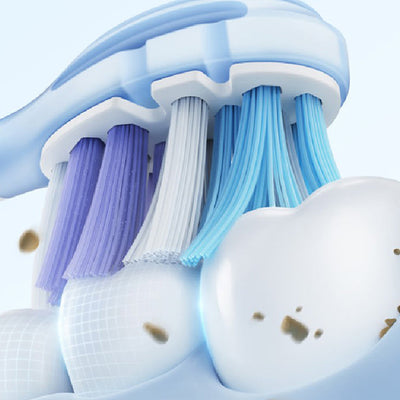
Ultrasonic Toothbrush vs Electric: Which Technology Wins for Your Smile?
LEARN MORE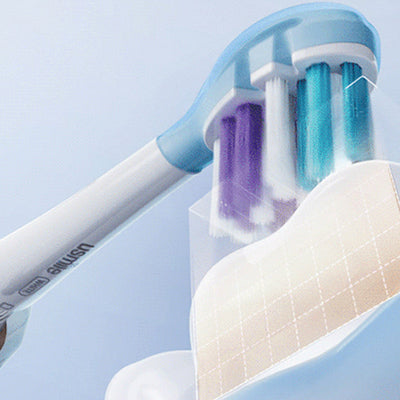
Best Electric Toothbrush for Sensitive Teeth (2026) — 5 Tested
LEARN MORE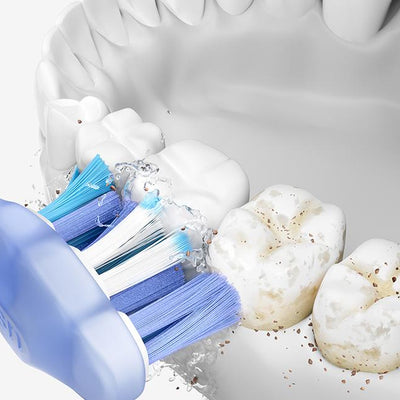
Does an Electric Toothbrush Have a Lithium Battery
LEARN MORELooking for something else?
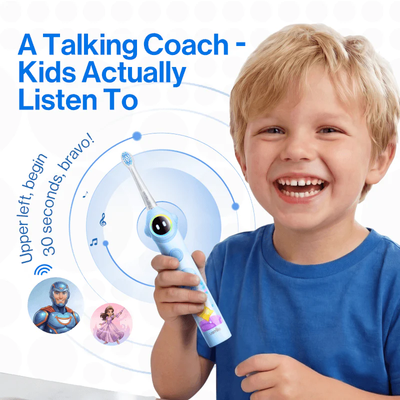
How to Make Brushing Teeth Fun for Kids Without Daily Battles
LEARN MORE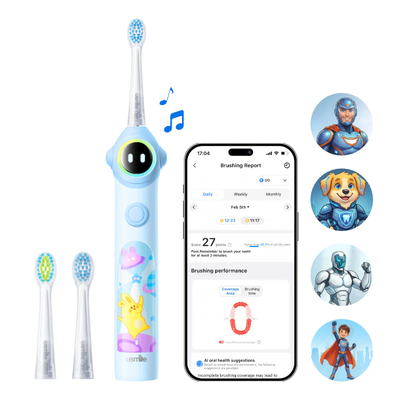
Best Toothbrush for Kids Who Hate Brushing: Parent Guide
LEARN MORE
Best Electric Toothbrush for Kids: What Parents Should Look For
LEARN MOREYou may also like

usmile Y20 PRO Upgraded AI Electric Toothbrush

usmile P10 S Electric Toothbrush

usmile Q30 Kids Electric Toothbrush

usmile C30SE Portable Dental Flosser
Further reading
Halloween Candy Before Bed: A Kid-Friendly Cleanup Routine to Protect Kids' Teeth
I Thought My Water Flosser Made My Teeth Gaps Bigger—Here’s What May Actually Be Happening

Why Teeth Look More Spaced Out After Water Flossing