










Can Water Flosser Cause Gum Recession? What You Actually Need to Know
There's a specific kind of panic that hits when you notice your gums look different.
Teeth seem longer. A ridge near the base you can feel now that wasn't there months ago. You run back through everything that's changed recently. You land on the water flosser on your bathroom shelf. You Google it.
The results don't really help — half say it's fine, half say be careful, none explain what's going on. This does. What gum recession actually is, why water flossers keep getting blamed for it, when the blame is fair, and how to build a daily smile care essentials that protects your gums rather than stressing them.
What Gum Recession Actually Is (and Isn't)

People use 'gum recession' loosely. Sore gums after flossing. Sensitivity near the base of a tooth. A gumline that looks a little lower than it used to. Some of those are recession. Some aren't.
The Actual Definition
A true recession means the gum tissue has pulled back, exposing part of the tooth root. Structural change. Not inflammation. Not temporary soreness. The gumline physically moved — and unlike most things your body fixes quietly over time, this one doesn't repair itself.
What Actually Causes It
The list is longer than people expect. Gum disease and bacterial plaque buildup are the main drivers — chronic inflammation slowly destroys the tissue and bone that anchor gums in place. But aggressive brushing, teeth grinding, thin gum tissue due to genetics, smoking, and inconsistent cleaning all contribute to it as well.
A correctly used water flosser isn't on this list. That's not a sales line — that's what randomized clinical trials consistently show.
The Swelling Confusion That Trips Everyone Up
Inflamed gums are swollen gums. Start cleaning consistently — better brushing, a water flosser, and actual daily flossing — and the inflammation drops. The tissue shrinks to its healthier, tighter size. If recession was sitting underneath that puffiness, it suddenly becomes visible.
The flosser didn't cause it. The inflammation hid it. The device was just cleaned well enough that you could finally see what was already there. Genuinely annoying to discover that way, but genuinely important to understand.
How Water Flossers Work

A water flosser sends a pulsating stream of water between teeth and along the gumline. Its job is flushing — clearing out food debris and breaking up plaque in the spots a toothbrush can't reach, especially the pockets right where gum meets tooth.
Water Flosser vs. String Floss — The Real Difference
String floss scrapes. Water flossers flush. Both are clean, but they work on different problems. String floss wins on direct contact with the tooth surface. Water flossers win on access — they reach into spaces around braces, implants, bridges, and crowns where threading string floss is awkward or nearly impossible.
|
Water Flosser |
String Floss |
|
|
How it cleans |
Pulsating water stream flushes debris |
Physical thread scrapes the tooth surface |
|
Best for |
Braces, implants, bridges, and gum pockets |
Tight contacts, direct plaque removal |
|
Gum sensitivity |
Gentler — no direct tissue contact |
It can be irritating if the technique is rough |
|
Ease of use |
Simple once you learn the angle |
Requires practice, can be tricky |
|
Reaches below the gumline |
Yes — into shallow pockets |
Limited — surface level only |
|
Daily consistency |
Most people find it easy to stick with |
Many people skip or use incorrectly |
|
Cost |
Higher upfront, low ongoing |
Very low cost, always portable |
The Consistency Argument — It's the Whole Point
There's an unsexy truth running through all of oral health: the tool you actually use beats the better tool sitting in the drawer. A lot of people who never once used string floss consistently will use a water flosser every single night without thinking, perfect, beats occasional perfect. Always.
Can a Water Flosser Cause Gum Recession? The Honest Answer

No — The Clinical Research Is Pretty Unambiguous
Randomized trials testing water flossers — some at pressures up to 100 psi — found zero increase in probing pocket depth or clinical attachment loss. Those are the two metrics dentists track to monitor actual tissue loss. Not only no damage, but consistent improvement in gingival bleeding and inflammation versus brushing alone.
What People Actually Feel: Temporary Irritation
Irritation occurs when someone starts a water flosser at the highest pressure on day one and blasts already-inflamed gum tissue. Sore, bleeding, uncomfortable. Easy to mistake for something serious.
But irritation and recession aren't the same thing. Irritation clears up in days when you lower the pressure and fix the angle. Recession is structural tissue loss that doesn't grow back. Very different situations that people keep conflating.
Why It Gets Blamed Anyway
The timeline lines up, and the brain fills in the causation. Start water flosser, gums look lower a month later, flosser gets the blame. But what's actually happening in almost every case is the inflammation reveals existing recession, not the device removing healthy tissue. These look identical from the outside and feel the same to the person experiencing them.
When a Water Flosser Can Be Hard on Your Gums
Used incorrectly, it causes real problems. These are the specific mistakes worth avoiding.
Cranking Up the Pressure Right Away
The most common mistake, by a long way. New device, day one, max pressure. Inflamed gum tissue is getting blasted by a high-pressure jet before it's had any chance to adapt. It bleeds; it's sore. The person stops and blames the flosser. Start at the lowest pressure setting. Stay there for at least two weeks. That's not excessive caution — it's basic sense.
Pointing the Stream Into the Pocket
The tip should trace along the gumline — not stab down into the gap between the tooth and gum —at roughly 90 degrees to the tooth surface, sweeping slowly along the margin. When people aim directly into the pocket on sensitive tissue, they get soreness and sometimes think they're damaging themselves. Usually, they're just using the wrong angle.
Overdoing the Frequency
Once a day is the right target. Some people go five times daily, thinking more is better. It isn't, especially on tissue that's already reactive. Consistent, gentle daily use is what brings bacterial load down over time. High-frequency high-pressure sessions add stress without adding benefit.
Using It Instead of Getting Actual Gum Disease Treatment
Persistent bleeding that doesn't improve. Deepening pockets. Loose teeth. A recession that keeps getting worse despite your best efforts. Those aren't water flosser problems to solve by changing a pressure setting. Those are clinical problems. No home device handles active periodontal infection. A dentist or periodontist does.
|
When to Stop Adjusting Settings and See a Professional Instead
|
How to Use a Water Flosser Safely When Your Gums Are Sensitive

Having sensitive or receding gums doesn't mean water flossing is off the table. It means the first two weeks matter more than usual.
Start at the Lowest Pressure Setting. Full Stop.
When the device is new, the instinct is to try the high settings to see what it does. Don't. Stay at the lowest pressure for at least two weeks. Not because the device can't go higher, but because you're giving already-inflamed tissue time to adapt before asking it for more. Then go up one notch at a time, only if it still feels comfortable.
The Four Things That Actually Matter for Technique
- Hold the tip roughly perpendicular to the tooth — that's the junction where gum meets enamel, not the gap below it.
- Move slowly from tooth to tooth. Pause for a second or two at each gap. Let the pulsation flush rather than powering through.
- Light grip. You're guiding the tip, not pushing it. The device does the work.
- Don't skip the back molars. That's where most of the neglected plaque lives and where gum disease usually starts quietly.
Daily and Gentle Beats Occasional and Intense
Two minutes every evening at low pressure keeps the bacterial load consistently low. That's actually the goal. A high-pressure weekly deep clean does less and stresses the tissue more. It's not even close to a tradeoff worth making.
It Works Alongside Brushing, Not Instead of It

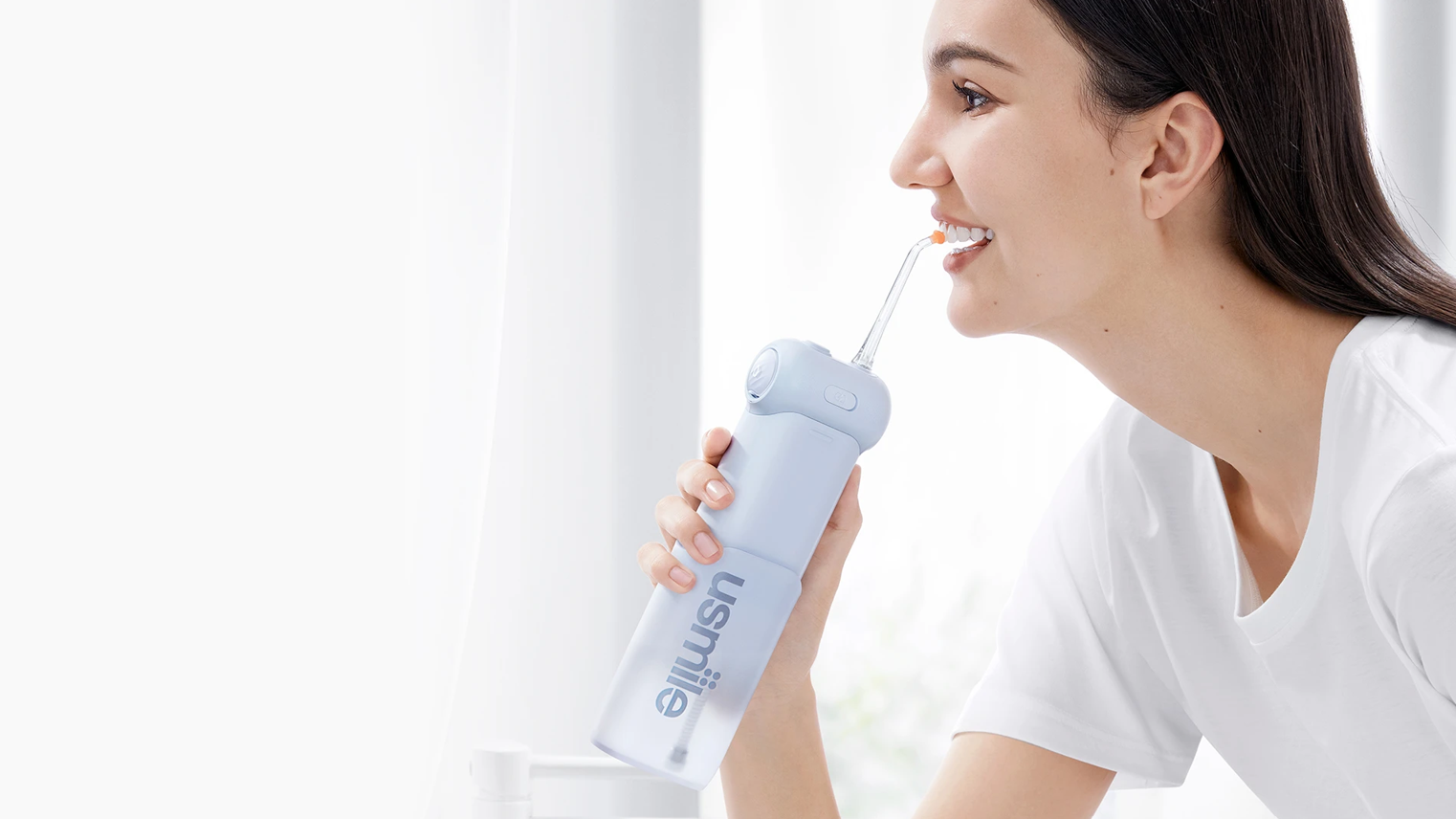
A water flosser handles between teeth and along the gumline. A toothbrush handles the flat surfaces. They clean different things. If you're building a daily oral care routine that actually sticks, a portable dental water flosser that lives permanently at the sink removes the friction that stops most people from using it consistently. That friction is the real enemy of good oral health — not the device itself.
Pressure Settings: A Practical Guide

One of the most common questions: which setting should I actually be using? It depends on where you are in the process, not on what the device is capable of.
|
Your Situation |
Recommended Setting |
Notes |
|
First 2 weeks / new to water flossing |
Lowest available |
Give tissue time to adapt, regardless of how healthy your gums feel |
|
Gums are sensitive or recently inflamed |
Lowest or second-lowest |
Inflamed tissue bleeds and hurts under high pressure — don't push it |
|
Gums are healthy, 2+ weeks in |
Low to medium, what feels comfortable |
Move up one notch at a time; stop if any soreness appears |
|
Braces, implants, or dental work |
Low to medium |
Focus on angles around hardware — pressure matters less than precision |
|
Periodontal pockets flagged by the dentist |
Medium — never max |
Water flossers reach shallow pockets well; deep pockets need clinical care |
|
Long-term healthy user |
Personal preference within comfort |
Max pressure is rarely necessary; comfortable beats powerful every time |
What Actually Protects Your Gums in the Long Run

The Enemy Is Plaque — Not Your Device
Bacterial plaque at the gumline triggers an immune response. That immune response, sustained over months and years, breaks down the tissue and bone that hold the gumline in place. Disrupting plaque consistently — every day, in the hard-to-reach spots — is what interrupts that cycle. A water flosser helps with exactly that.
Brushing Technique Matters as Much as Your Flosser Choice
Hard scrubbing with a medium or firm toothbrush is one of the most common causes of gum recession, and it rarely comes up in conversations about it. People push harder, thinking they're getting cleaner results. They're wearing their gums back. Soft bristles, light pressure, small circles. That combination does more for gum health than anything you can find in the water flosser section.
Habits That Compound the Damage Over Time
Smoking cuts blood flow to gum tissue and shuts down the immune response that fights bacterial infection. Grinding puts chronic mechanical stress on the tooth attachment that no brushing routine can offset. Breathing through the mouth at night strips away saliva — the body's built-in antibacterial layer. None of these gets fixed by adjusting a pressure dial.
Gum Recession Causes at a Glance
A lot of people who worry about water flossers causing recession are ignoring the more likely culprits. Here's the full picture.
|
Cause |
How Common |
Does a Water Flosser Help? |
|
Gum disease / bacterial plaque buildup |
Very common — the #1 driver |
Yes — directly reduces the bacterial load that causes it |
|
Aggressive toothbrushing |
Very common — often overlooked |
No — switch to soft brush + light pressure separately |
|
Teeth grinding (bruxism) |
Common, often undiagnosed |
No — requires a night guard, not a flosser |
|
Thin gum tissue (genetic) |
Moderate — depends on anatomy |
Partially — keeping gums healthy reduces further loss |
|
Smoking/tobacco use |
Significant risk factor |
Partially reduces plaque but can't restore blood flow |
|
Inconsistent oral hygiene |
Very common |
Yes — consistent daily use directly addresses this |
|
Water flosser misuse |
Rare — temporary irritation only |
N/A — fix technique, not the cause itself |
So — Does a Water Flosser Cause Gum Recession?

No. Not when used right. Every clinical study examining this comes back with the same answer: water flossers don't cause tissue loss; they reduce the inflammation that leads to it.
If your gums look like they've pulled back after you started using one, the most likely explanation is that inflammation is going down and pre-existing recession is becoming visible. That's a different thing from causing new damage, even though it looks the same in the mirror.
If recession is progressing despite real effort, the cause is almost certainly elsewhere — gum disease, brushing mechanics, grinding, or anatomy. Those need a dentist or periodontist. Not a lower pressure setting.
|
The Short Version for Safe, Long-Term Use:
|
FAQs
Why don't dentists recommend a water flosser?
Most of them actually do, either as a complement to string floss or as an alternative for patients who won't use string. The hesitation you sometimes hear is about replacement. Some dentists don't want people swapping string floss out entirely, because the physical scraping action of thread isn't fully replicated by water pressure. But recommending against using one at all? Rare. Most are completely fine with it as part of a daily routine.
What are the negatives of a water flosser?
Honest list: higher upfront cost than a pack of floss, takes up counter space, needs charging or a nearby outlet, and can splash water everywhere while you're still figuring out the angle. There's also a short adjustment period during which poor pressure or poor aim irritates. None of these are reasons to skip one, but they're worth knowing before you commit.
Can I regrow receding gums?
No, not naturally. Gum tissue that has receded doesn't regenerate on its own — that's not how the biology works. You can stop it from getting worse with good, consistent habits and regular professional cleanings. In a significant recession, a periodontist can perform gum grafting to restore tissue over exposed roots. But no device or product can reverse a recession once it's happened.
Is it normal for gums to recede after flossing?
Flossing doesn't cause recession — but it makes the existing recession visible. When gums are chronically inflamed, they're puffier than their actual healthy size. Start flossing properly, and the inflammation reduces, the tissue shrinks back to a snug, healthy fit, and the recession that was hiding underneath the swelling suddenly shows up. Not new damage. Old damage you can now see. Happens constantly and always gets blamed on the flosser.
What are Stage 4 receding gums?
Stage 4 is advanced periodontitis — the severe end of the classification scale. Extensive bone destruction, multiple deep pockets, and often teeth that have shifted or become loose. At this stage, surgical treatment from a periodontist is usually required. Improved brushing and water flossing won't move the needle. That requires clinical intervention.
What's the worst thing for receding gums?
Three things stand clearly above everything else: untreated gum disease eating away at tissue and bone over the years, aggressive brushing with a medium or hard toothbrush physically wearing the gumline back, and smoking killing off blood flow and immune response in gum tissue. Skipping professional cleanings is a close fourth — tartar below the gumline drives infection that no home tool touches.
What is Stage 1 of receding gums?
Stage 1 is gingivitis—red, swollen, easily bleeding gums — but no bone loss yet. Everything is still reversible at this point with consistent daily habits. It's also the most important stage for actually doing something, because Stage 1 doesn't quietly stay Stage 1. Bleeding when you brush is the signal. Don't wait it out thinking it'll resolve on its own.
What vitamin helps receding gums?
Vitamin C is the big one. It's essential for collagen production, and collagen is what gum tissue is largely built from. Low vitamin C makes tissue fragile, slow to repair, and more reactive to bacterial infection. Vitamin D and calcium support the underlying bone structure. Useful for maintaining healthy tissue — but these support the foundation, they don't replace the daily work of removing plaque.
Should I brush receding gums?
Yes, but the technique matters more here than anywhere else—ultra-soft toothbrush, almost no pressure, small circular motions instead of side-to-side scrubbing. The exposed root surface near a receded gumline has no enamel — it's softer than the rest of the tooth and more vulnerable. Hard brushing there doesn't just fail to help, it makes recession worse.
References and Resources
- NIDCR:Periodontal (Gum) Disease — Causes, Symptoms & Treatment — Federal clinical overview of gum disease causes, stages, and why consistent plaque removal is the primary prevention strategy.
- NIDCR:Oral Hygiene — Brushing, Flossing & Plaque Control — Official NIDCR guidance on daily habits that prevent plaque hardening, gingivitis progression, and attachment loss.
- ADA Council on Scientific Affairs:Acceptance of Waterpik Cordless Water Flossers — ADA Seal confirmation that oral irrigators are safe and effective for gum-line plaque removal and gingivitis prevention when used as directed.
- PMC / Int. J. Environmental Research & Public Health — Ren X et al. (2023):Efficacy and Safety of Oral Irrigator on Plaque and Gingivitis — RCT — 12-week RCT in 90 gingivitis patients; irrigator adjunct produced significantly better plaque and inflammation scores with no substantial safety hazards.
- PMC / Clinical & Experimental Dental Research — Sarkisova F et al. (2024):Oral Irrigation Devices: A Scoping Review — Broad review confirming oral irrigators reduce periodontal inflammation, likely via microbiota modulation; identifies gaps for future research.
- PMC / Clinical Oral Investigations — Xu X et al. (2023):Effects of Water Flossing on Gingival Inflammation and Plaque Microbiota — 12-Week RCT — Water flossing significantly reduced gingival bleeding and shifted plaque microbiota toward a healthier, more aerobic profile.
- NIDCR — Data & Statistics:Periodontal Disease in Adults (Age 30+) — National prevalence data; 42.2% of U.S. adults 30+ have some form of periodontitis, with non-flossing identified as a key behavioral risk factor.
- PMC / Comparative Review — Water Flossers in Periodontal Therapy (2023):Comparative Review of Water Flossers — Historical and clinical comparison of water flosser types against traditional floss; confirms gingival bleeding and inflammation reductions across multiple RCTs.


Looking for something else?
Best Electric Toothbrush for Teens (2026): Top Picks, Tested and Reviewed
LEARN MORE
Best Electric Toothbrush for Gum Disease (2026): 6 Picks Tested for Real Gum Protection
LEARN MORE
Electric Toothbrush on Plane: The Complete Travel Guide (2026)
LEARN MOREBest Sustainable Electric Toothbrush 2026: 5 Picks Tested for a Greener, Healthier Smile.docx
LEARN MORELooking for something else?
Best Sustainable Electric Toothbrush 2026: 5 Picks Tested for a Greener, Healthier Smile
LEARN MORE
Best Cheap Electric Toothbrush (2026): Top 5 Budget Picks That Actually Work
LEARN MORE
Ultrasonic Toothbrush vs Electric: Which Technology Wins for Your Smile?
LEARN MOREYou may also like
usmile Y20 PRO Upgraded AI Electric Toothbrush
usmile Q30 Kids Electric Toothbrush
usmile Q30 Kids Electric Toothbrush Trio Pack
Further reading
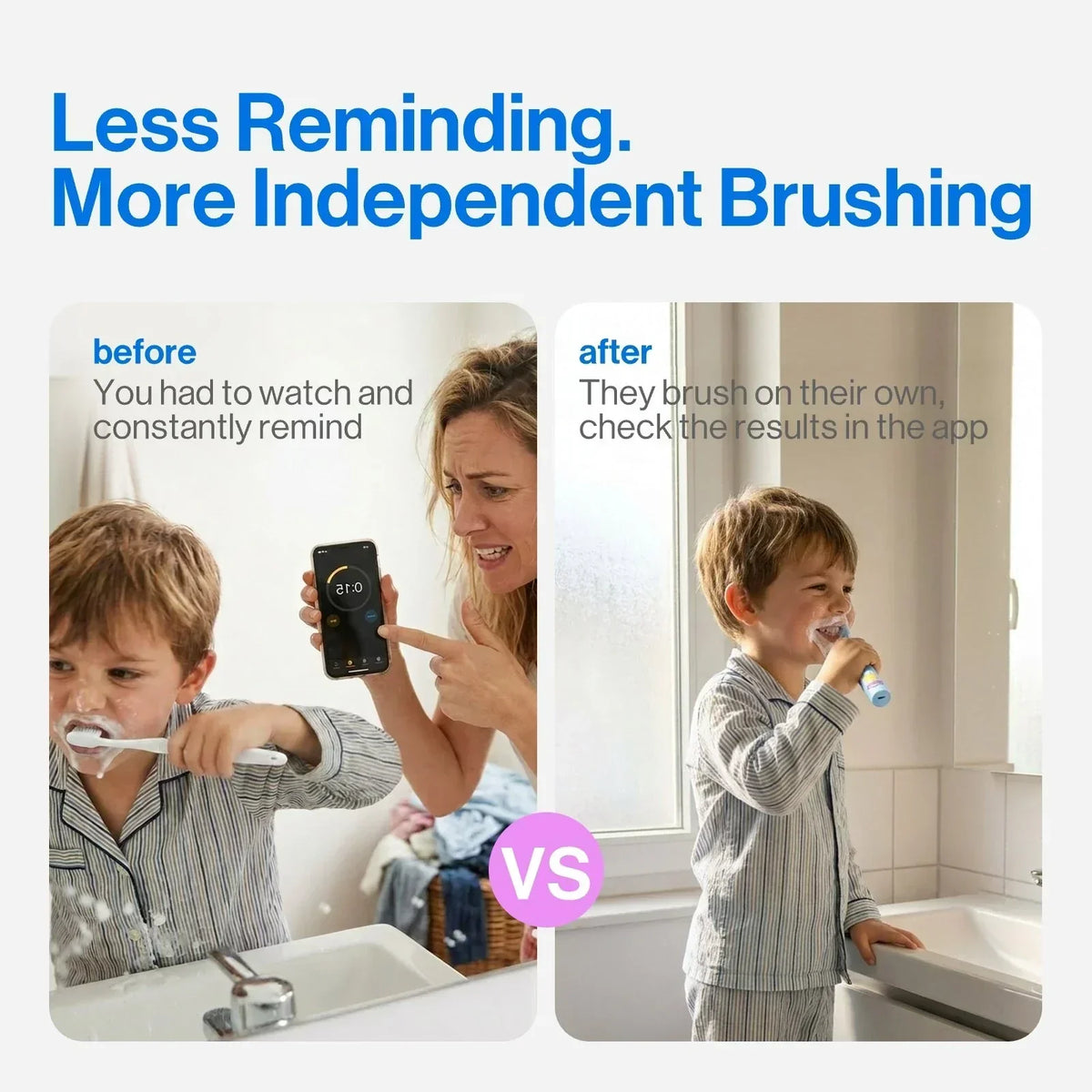
The 5 Toothbrushing Spots Kids Miss Most—and How Parents Can Help
The Back-to-School Brushing Reset: A 14-Day Plan for Kids Ages 3–8
Behind usmile D50 OralCam Toothbrush: From Motion Tracking to Visual Intelligence in Oral Care

