







Electric Toothbrush Vibrating vs Rotating: Which One Should You Actually Choose?
You pick up an electric toothbrush box, and suddenly, there are three words on it. Sonic. Oscillating. Rotating. Sometimes all three at once. Nobody explains which matters or whether they're even different things.
So people Google 'electric toothbrush vibrating vs rotating', hoping for a clear answer. And most articles either dodge the question or just reprint brand marketing dressed up as research.
Here's what's actually going on — and how to pick the one that fits your mouth without overthinking it.
What 'Vibrating' and 'Rotating' Actually Mean

Both types of electric toothbrushes vibrate in some technical sense. That's part of why the terminology is such a mess. The useful distinction isn't vibrating versus not vibrating — it's how the head moves and what that does to your teeth.
Sonic (vibrating) toothbrushes
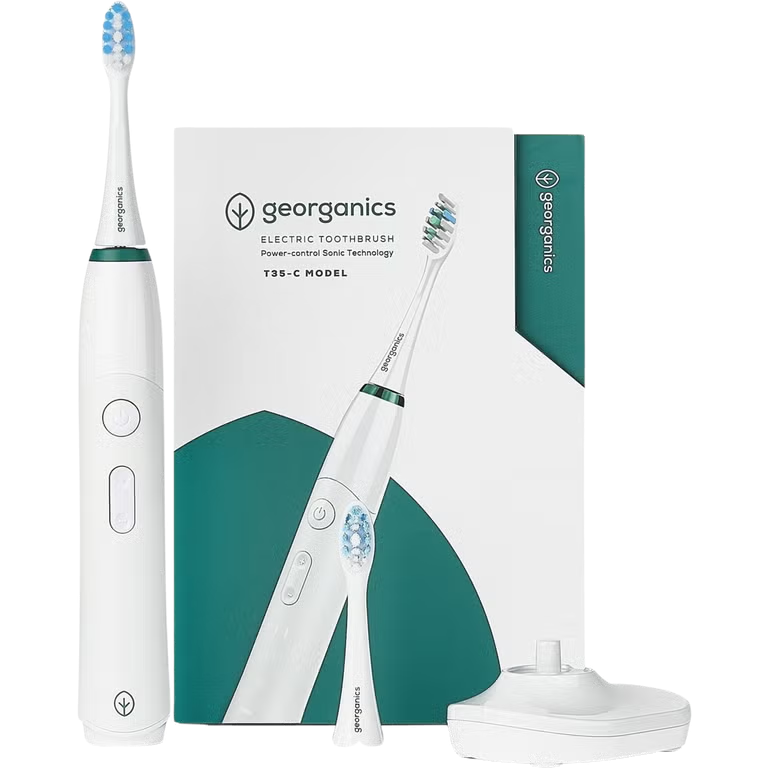
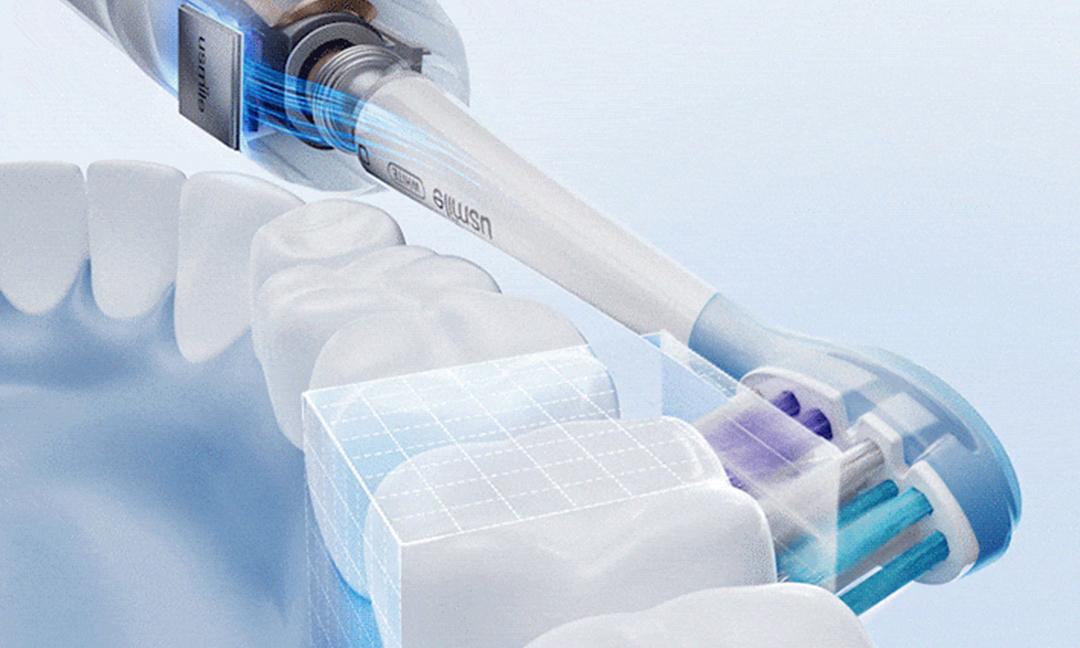
Sonic brushes have a longer, oval head, shaped much like a regular manual brush. They clean through extremely fast side-to-side vibrations. We're talking about 24,000 to 62,000 movements per minute, depending on the model. That is not a misprint.
Because the vibration is so fast, sonic brushes create what companies call a 'fluid dynamic' effect. The rapid bristle movement agitates the saliva and toothpaste in your mouth, which can help disrupt plaque in areas just past where the bristles physically land. Some independent research supports this, at least in part. Others think the practical impact is overstated. Honestly? Probably somewhere in between.
Oscillating-rotating toothbrushes
A rotating brush has a compact round head that spins one direction, then the other — back and forth, sometimes with a pulse layered on. It's slower than Sonic—more like 2,500 to 8,800 rotations per minute. But the motion is more targeted.
You don't sweep across a row of teeth. You park the head on one tooth, give it a couple of seconds, and move to the next. Oral-B makes the most recognizable versions of this style. The round head is the giveaway.
Why do the terms get jumbled online?
Nearly every electric toothbrush vibrates somehow — so 'vibrating toothbrush' isn't really a precise category. It stuck because that's how shoppers talk about Sonic brushes. 'Rotating' stuck as shorthand for oscillating-rotating. Neither label is technically wrong. But if you see someone compare 'vibrating vs rotating,' they almost always mean 'sonic' vs 'oscillating-rotating'. That's the actual debate.
How Each Type Cleans Your Teeth

The cleaning approaches really do feel different day to day. Not dramatically different — but noticeable.
With a sonic brush, you glide slowly along the teeth and gumline. The motor handles the motion. You're essentially just directing where the head goes. It takes some getting used to if you've been manually scrubbing for years, but most people adjust fast. It feels closer to what you already do with a manual brush.
A rotating brush is more deliberate. You move tooth by tooth, hold for a second or two, shift. Slower process — the mouth takes a little longer to cover. But for people with crowns, implants, or tight corners, that precision is worth the extra thirty seconds.
Neither approach is wrong. They're just different work styles for the same job.
|
Feature |
Sonic (Vibrating) |
Oscillating-Rotating |
|
Head Shape |
Long oval — closer to manual brush shape |
Small, round, compact, and focused |
|
Movement |
Side-to-side vibration at high frequency |
Back-and-forth rotation/oscillation |
|
Speed |
24,000 – 62,000 strokes/min |
2,500 – 8,800 rotations/min |
|
Brushing Style |
Glide across teeth in broader passes |
Tooth-by-tooth placement |
|
Familiar Feel |
✓ Easier jump from manual brushing |
△ Takes a short adjustment period |
|
Tight Spots |
△ Fluid action assists between teeth |
✓ Small head fits around dental work |
|
Sensitive Gums |
✓ Gliding motion tends to feel gentler |
△ Can feel more intense on the gums |
|
About the "fluid dynamics" claim Sonic brands say the fast vibration agitates the fluid in your mouth, cleaning up to 1/8 inch beyond the bristles' reach. Some independent research gives this partial credit. But it doesn't mean you can hover the brush and skip proper placement. Treat it as a bonus — real, but secondary to putting the bristles where they need to go. |
Which One Removes More Plaque? What the Research Actually Says

This is the part where things get uncomfortable — because most people don't realize that a large share of the research on this question is funded by the brands being studied.
Procter & Gamble makes Oral-B. Their funded studies show oscillating-rotating brushes win. Philips makes Sonicare. Their sponsored research says Sonic is better. Neither company is being dishonest. They're just funding trials that, somehow, keep confirming their own product is the right choice. Funny how that works.
Consumer Reports runs its own testing with no industry money involved. Their finding: no clear winner either way when tested independently.
|
"The findings of this review do not support the use of any particular mode of action for powered brushes." — Cochrane Collaboration, independent systematic review. |
.
Cochrane looked at all the head-to-head data and called it a draw. They noted a very slight statistical lean toward oscillating-rotating for plaque and gingivitis — but flagged that the difference was too small to indicate anything meaningful in real dental outcomes. That's not 'rotating wins.' That's 'we genuinely can't say.'
An analysis in the International Journal of Dental Hygiene pooled data from 38 comparison studies and found a small but statistically significant advantage for oscillating brushes. But the reviewers themselves noted that it didn't specify which specific brushes were used — a meaningful gap when you're trying to conclude. Take it as a data point, not a verdict.
|
Source |
What They Found |
Who Paid For It |
|
Cochrane (systematic review — gold standard) |
Essentially a draw. Slight lean to oscillating, not clinically confirmed. |
Independent |
|
Consumer Reports (independent nonprofit) |
No clear winner. Top picks are split evenly between both types. |
Independent |
|
Procter & Gamble / Oral-B funded research |
Oscillating-rotating removes more plaque and reduces gingivitis. |
Industry (Oral-B) |
|
Philips Sonicare sponsored studies |
Sonic brushes are better for gum health and cleaning between teeth. |
Industry (Sonicare) |
|
Int. Journal of Dental Hygiene (38 studies) |
Small but significant edge for oscillating — methodology gaps noted. |
Academic, mixed funding |
|
The honest takeaway Both types beat manual brushing. That part isn't debated. Between sonic and rotating: the real-world difference is small for most people. The brush you'll actually use consistently — for two full minutes, twice a day — wins every time. Personal comfort and daily habits matter more than which direction the head spins. |
Pros and Cons — The Honest Version

Sonic (vibrating) toothbrushes
The thing people like most about Sonic brushes is how familiar they feel. You're still moving the brush along your teeth roughly the same way you always have. The motor adds intensity but doesn't change your whole technique. If you've brushed manually for 20 years, Sonic is a much easier adjustment.
People with sensitive gums also tend to gravitate toward Sonic. The gliding motion doesn't press directly on each tooth the same way a rotating head does — so it tends to feel less abrasive. That's worth something if your gumline is already irritated.
Downsides? Price is the main one. High-end sonic models, especially Sonicare's flagship range, cost more than comparable rotating options. And the buzzing sensation genuinely bothers some people — not in a painful way, more of a ticklish weirdness. Most people stop noticing after a few days. Some never stop noticing.
Oscillating-rotating toothbrushes
The rotating brush is built for precision. That small round head reaches spots that a longer head skips — behind back molars, tight against crown margins, around orthodontic brackets. If your mouth has a lot of dental work, you'll probably prefer this.
There's also the 'just left the dentist' feeling that oscillating brushes give many users. The tooth-by-tooth polishing action creates a clean sensation that some people find more satisfying than the broader glide of a sonic brush. Not a clinical claim — just a comfort preference that matters for sticking to the habit.
The adjustment period is real, though. Parking the head on each tooth instead of sweeping feels awkward at first if you've been brushing manually. Some people adapt in a week. Others find it never quite feels intuitive. And entry-level models can be noisier than sonic equivalents, which is a small but annoying issue in a shared bathroom at 6 a.m.
|
🔊 Choose Sonic (Vibrating) When... |
⚙️ Choose Rotating When... |
|
✓ You have sensitive or receding gums ✓ You're switching from manual and want familiarity ✓ You prefer a glide-and-go brushing experience ✓ You find rotating head sensations uncomfortable ✓ You want broader coverage with less repositioning |
✓ You want focused, tooth-by-tooth precision ✓ You have braces, crowns, or implants ✓ You like the tactile 'just-cleaned' polished feel ✓ You want an affordable entry-level electric option ✓ You don't mind a short technique adjustment |
Which Type Is Better for Different Users?
Sensitive gums or early recession
Neither brush type is banned if your gums are sensitive. But technique is what actually damages or protects gum tissue — not the motion. That said, sonic brushes tend to feel gentler because the sweeping style doesn't apply the same direct mechanical pressure to individual teeth. A soft-bristled head plus a sensitive mode, and you're usually fine. Most dentists who recommend one type for this group start with a sonic toothbrush.
Braces, crowns, implants, or complex dental work

Powered rechargeable brushes are generally easier around dental appliances than manual ones — the motor does the maneuvering for you. But within the powered category, rotating brushes have a distinct edge. A small round head fits around brackets, sits cleanly against crown margins, and navigates implant surfaces more precisely than a longer oval head. If your mouth has a lot of hardware, go rotating.
Switching from a manual toothbrush
Sonic. No real contest. The longer head, the similar grip, the familiar back-and-forth motion — it's as close to what you already do as an electric brush gets. For someone who's manually brushed for years and wants to upgrade without having to rethink everything, Sonic is the smoother transition. Rotating requires learning a new technique. That's not bad, just different.
If your main concern is the budget
Don't assume rotating is always cheaper. Some are. But premium models in either category can get expensive. The smarter move is to compare total cost over a year: handle price plus replacement heads every three months. Some brands charge $30 to $40 for a four-pack of heads. Others are under $15. That difference adds up faster than the sticker price difference between handles.
|
What actually matters more than motion type Both brush types outperform manual brushing for most people. Motion type matters far less than brushing for two full minutes, twice daily. A pressure sensor is more useful than determining whether the head vibrates or spins. Replacing brush heads every 3 months keeps either type performing properly. |
How to Use Either Type Correctly

Buying a good brush is step one. Using it right is step two — and most people skip straight to using it exactly like their old manual brush. That's a waste.
The single biggest mistake with electric toothbrushes is scrubbing. The motor generates the cleaning motion. Your job is to position and move slowly, not to add force. When you scrub on top of what the motor's already doing, you're just grinding bristles into enamel.
The technique is simpler than people expect. Here's the actual sequence:
|
Step |
What to Do |
|
01 |
Angle the brush head at 45 degrees toward the gumline — not flat across the tooth. Bacteria build up in the groove where the tooth meets the gum, and that's the target. |
|
02 |
Sonic: glide slowly from tooth to tooth, letting vibrations do the work. Rotating: hold the head on each tooth individually for 2-3 seconds before moving. Don't scrub with either. |
|
03 |
Use the 2-minute timer, divided into four 30-second quadrants. Upper left, upper right, lower left, lower right. Most brushes buzz at intervals — actually use the cue instead of ignoring it. |
|
04 |
Light pressure only. Plaque is a soft biofilm. It comes off easily. Pressing harder doesn't strip it faster — it just wears down enamel and pushes your gumline back over time. |
|
05 |
Follow up with floss or a water flosser. No electric toothbrush — sonic, rotating, or otherwise — reaches the spaces between teeth. Interdental cleaning isn't optional. |
|
The pressure problem — way more common than people realize Gum recession from over-brushing is permanent. That tissue doesn't come back. Most people apply too much pressure without knowing it. A brush with a pressure sensor fixes this automatically. Quick self-test: if your bristles are splaying before the 3-month mark, you're pushing too hard. |
Can an Electric Toothbrush Help With Gum Problems?

Gum issues are one of the main reasons people finally switch to electric. Bleeding, soreness, recession — they want to know if a better brush will fix it. Sometimes yes. Sometimes no. Here's how to tell.
Can it help with gingivitis?
Genuinely, yes. Gingivitis starts with plaque accumulation at the gumline, causing inflammation. Electric toothbrushes remove plaque more consistently than most people manage with a manual brush — and that consistency reduces gingivitis over time. The research on this is pretty solid.
But here's the line: a brush prevents and maintains, it doesn't treat. The ADA endorses both brush types for gingivitis prevention when the technique is correct. If your gums are bleeding and two weeks of better brushing don't change anything, that's plaque that's hardened into tartar — and no brush removes tartar. You need a cleaning.
Is it safe for receding gums?
Yes. And for many people during a recession, an electric toothbrush is actually safer than continuing with a manual one, because it reduces the scrubbing that causes the problem in the first place.
Use soft bristles. Use a sensitive mode if your brush has one. And let the motor do the work instead of adding pressure. The gum danger isn't electricity — it's the human instinct to push harder and scrub more. A pressure sensor removes that variable entirely.
Between sonic and rotating for this group: sonic tends to feel gentler because the gliding motion distributes force more broadly rather than focusing it on each tooth. Either works if you've actually learned to use it gently.
Can receding gums grow back?
No. Once gum tissue recedes past a certain point, it doesn't regenerate on its own. The goal from here is to stop it from getting worse — not to reverse it. Severe cases may require grafting from a periodontist. But that's clinical treatment, not something a toothbrush — however good — can address.
|
What actually protects receding gums → Soft bristles. Every time. Non-negotiable. → A pressure sensor that catches you before damage occurs. → Consistent plaque removal at the gumline — not sporadic. → Professional cleanings twice a year. No brush replaces a scaler. |
Signs Your Problem Is Bigger Than a Toothbrush
A quality electric toothbrush is a genuinely useful tool. It's not a fix for everything.
If you switch to a good brush and use it consistently for two weeks — proper technique, full two minutes — and you're still seeing blood in the sink? That's tartar. Calcified plaque that bristles can't break down. That needs a professional cleaning, not a brush upgrade.
Tooth that feels loose? Cold sensitivity that's new or getting worse? Gum pain that won't settle between appointments? These aren't brush problems. Loose teeth suggest potential bone loss. New sensitivity can mean enamel wear or deeper decay. Persistent inflammation may signal periodontal disease that's moved past the surface.
None of that responds to a better toothbrush. The brush keeps your maintenance current. Your dentist reads what's underneath—both matter. Neither replaces the other.
|
See a dentist if any of these apply → Gums still bleeding after 2+ weeks of correct brushing. → Cold or heat sensitivity that's new or worsening. → Any tooth that feels even slightly loose. → Gum pain or swelling that lingers between cleanings. |
What to Look for When Buying — Beyond Motion Type
Once you've picked a side — sonic or rotating — the features on the handle matter almost as much. A few of them are genuinely useful. A few are just there to justify a higher price point.
The two-minute timer with 30-second quadrant buzzing is the most practical feature on any electric toothbrush. The average person brushes for 45 seconds. Forty-five. A timer doesn't require willpower or counting — it just runs. Get this on whatever brush you buy.
A pressure sensor is the second must-have, especially if you've ever been told you brush too hard. It slows the motor or flashes a light the moment you push past the safe threshold. You don't have to think about it — the brush tells you. For anyone with any gum history, this should be non-negotiable.
Bluetooth and app features sound impressive. They're useful for maybe 10% of buyers in the long term — the people who actually check the app after the first month. Don't pay a $60 premium for features you'll stop using by February.
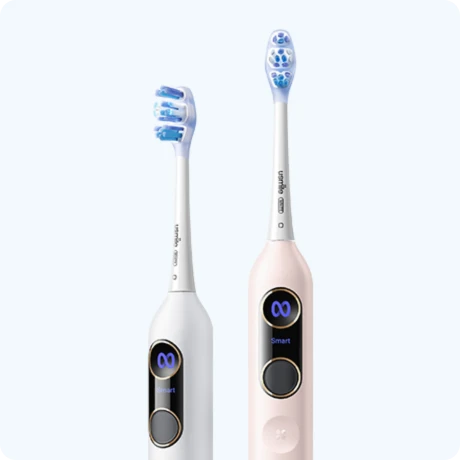
One thing people overlook: replacement head costs and availability. You're buying new heads every three months. Some brands sell proprietary heads that are hard to find in stores and cost $35 for a pack of two. That adds up quietly. Before committing to a handle, look up what the heads cost. Building a reliable oral care routine means never running out of toothpaste because you can't find it. uSmile's user-friendly electric toothbrushes feature both a timer and a pressure sensor — the features that move the needle — without the premium-brand markup. Their smart electric toothbrush for daily brushing is worth a look if you want solid fundamentals at a reasonable price.
FAQs
Are oscillating or vibrating electric toothbrushes better?
Cochrane — the independent review body most researchers trust as a tiebreaker — says neither. Their review of direct comparisons concluded that the evidence doesn't support recommending one motion over another. A slight statistical lean toward oscillating appeared, but too small to be called clinically meaningful. Both are better than manual for most people. Pick the one you'll actually use properly.
Are electric toothbrushes supposed to vibrate or rotate?
Both. Depends entirely on the type. Sonic brushes vibrate rapidly side to side. Oscillating-rotating brushes spin a round head back and forth. If you feel motion when you turn it on, it's working. Philips Sonicare = sonic. Oral-B = oscillating. Neither is broken if it doesn't do what the other one does.
Should I get a new toothbrush after norovirus?
Replace the head. It's cheap, and it removes any lingering risk, especially if your brush was stored near other people's brushes. Norovirus survives on surfaces. Not worth second-guessing. That said, the CDC's focus for norovirus prevention is handwashing and surface disinfection, not toothbrush replacement specifically.
Can an electric toothbrush help with gingivitis?
Yes — meaningfully. Gingivitis is plaque-driven inflammation. Consistent plaque removal at the gumline disrupts the cycle. Electric brushes remove plaque more consistently than most people manage manually. Studies show measurable reductions over time. But it's a prevention tool. If gingivitis is established and lingering, professional scaling is what clears it — not a brushing upgrade.
Can I regrow receding gums?
No. Gum tissue doesn't regenerate on its own once it's gone. Severe cases can be addressed with grafting by a periodontist. But no brush — electric or manual — reverses the existing recession. Focus on stopping it from getting worse: use soft bristles, apply light pressure, and keep the plaque off.
What is the 3-3-3 rule for teeth?
Non-standard. You'll see it framed as brushing three times a day, three minutes each, at three angles. It's not the clinical guideline. The ADA standard is two minutes, twice a day. Three times is fine if you do it gently, but it's not required — and the extra time can cause abrasion if you're pushing too hard.
Is an electric toothbrush ok for receding gums?
Yes — and often better than manual for this group. The motor reduces the need for manual scrubbing, which usually causes recession. Use soft bristles, keep pressure light, and use sensitive mode if available. A pressure sensor is particularly helpful here. The electricity isn't the issue — the human tendency to push harder is.
What is the 2-2-2 rule for brushing teeth?
Brush twice a day, for two minutes each time, and see your dentist twice a year. That's it. Unlike the 3-3-3 version, this one actually matches official ADA guidance. It's the minimum effective routine — not a floor to exceed, just the baseline most people still don't hit.
What's the worst thing for receding gums?
Scrubbing hard with a firm-bristle brush consistently, while also letting plaque build up between cleanings. That combination accelerates the recession fast. Tobacco compounds it further — most people don't factor that in. Switch to soft bristles and let the motor do the work. And keep professional appointments — a recession that goes unchecked between visits can progress faster than home care can slow it down.
Bottom Line
No clean winner. That's the actual answer to the electric toothbrush vibrating vs rotating question — and it's backed by the most credible independent research available.
Sonic brushes feel more familiar, tend to be easier on sensitive gums, and offer a smoother transition from manual brushing. Rotating brushes are more precise, often more affordable at the entry level, and have a modest average edge in some comparisons. Both beat manual brushing for most people. Both have the ADA's approval—both work.
What doesn't work is buying either type and using it for 40 seconds, skipping the gumline, pressing too hard, and going 5 months without changing the head. That's not a brush problem — that's a habit problem. And habits matter more than specs.
|
Quick recap before you buy → Both sonic and rotating brushes beat manual brushing for most people. → Sonic: easier adjustment, gentler on sensitive gums, familiar brushing feel. → Rotating: precise tooth-bcleaning is often more than cheaper entry-level options. → Prioritize a 2-minute timer and pressure sensor over motion type or brand. → Change brush heads every 3 months. No exceptions. Frayed bristles don't clean. → Neither brush replaces daily flossing or twice-yearly professional cleanings. |
Resources & References
- Prostho Endo Dental:Rotating vs. Sonic Electric Toothbrushes — Which Is Better for Your Dental Health? — Patient-facing breakdown from a prosthodontic specialist practice; pros and cons of each motion type, technique-over-technology angle, and specific guidance for people with dental work.
- Electric Teeth:Sonicare vs Oral-B — 2026 Head-to-Head Comparison — Independent in-depth testing of both leading brush types over more than a decade; covers real-world cleaning differences, industry funding bias in research, and the practical conclusion that neither type is measurably superior in daily use.
- TechRadar:Sonic vs Rotating Toothbrushes: Which Is Better? — Independent editorial review explaining the motion distinction between sonic and oscillating brushes; references a meta-analysis of 38 studies showing a small but noted edge for oscillating on plaque reduction, along with practical cost and upgrade considerations.
- Cochrane Collaboration:Different Types of Powered Toothbrushes for Plaque Control and Gingival Health — Direct head-to-head review comparing oscillating-rotating and side-to-side sonic brushes specifically; concludes the evidence does not support favoring one mode of action over another, though rotation-oscillation showed a slight short-term advantage.
- Oclean:Sonic Electric Toothbrushes vs. Rotating-Oscillating Toothbrushes — Which Is Better? — Feature-by-feature comparison covering strokes-per-minute data, fluid dynamics claims for sonic brushes, and scenario-based user guidance for sensitive gums and high-plaque situations.
- Mayo Clinic:Gingivitis — Symptoms, Causes, and Prevention — Clinical overview of gingivitis as a plaque-driven condition; explains the reversibility window, the role of consistent daily brushing at the gumline, and the limits of home care once plaque hardens to tartar.
- PMC / Dentistry Journal (2021):Efficacy of Powered Oscillating vs. Sonic Action Toothbrushes — Narrative Review — 12-trial review including 1,433 participants comparing oscillating-rotating and sonic action heads; found comparable plaque results overall, with a slight lean toward sonic in longer-term gingival inflammation studies — illustrating why the research doesn't produce a clean winner.


Looking for something else?
Best Cheap Electric Toothbrush (2026): Top 5 Budget Picks That Actually Work
LEARN MORE
Ultrasonic Toothbrush vs Electric: Which Technology Wins for Your Smile?
LEARN MORE
Best Electric Toothbrush for Sensitive Teeth (2026) — 5 Tested
LEARN MORE
Does an Electric Toothbrush Have a Lithium Battery
LEARN MORELooking for something else?
How to Make Brushing Teeth Fun for Kids Without Daily Battles
LEARN MORE
Best Toothbrush for Kids Who Hate Brushing: Parent Guide
LEARN MORE
Best Electric Toothbrush for Kids: What Parents Should Look For
LEARN MOREYou may also like
usmile C10 Portable Dental Flosser
usmile Y20 PRO Upgraded AI Electric Toothbrush
usmile P10 S Electric Toothbrush
usmile Q30 Kids Electric Toothbrush
Further reading
Halloween Candy Before Bed: A Kid-Friendly Cleanup Routine to Protect Kids' Teeth
I Thought My Water Flosser Made My Teeth Gaps Bigger—Here’s What May Actually Be Happening

Why Teeth Look More Spaced Out After Water Flossing