







How to Use an Electric Toothbrush: A Step-by-Step Guide
|
2 Min Recommended brush time |
45° Correct brush angle |
3–4 Mo Head replacement interval |
Most people get an electric toothbrush, plug it in, and then just... keep brushing exactly the way they always have. Same back-and-forth motion. Same death grip on the handle. Same 45-second sprint to call it done. The brush costs more, hums louder, and the teeth are probably about as clean as they were before.
This happens because nobody really sits down and explains what actually changes. The technique shift isn't complicated — honestly, it's easier than manual brushing once you get the hang of it. But it's different enough that old habits genuinely get in the way.
So, here's what you're supposed to do, why it matters, and how to build a consistent oral care routine around it. Nothing complicated. Just the stuff that actually moves the needle.
How to Use an Electric Toothbrush: The Short Version

Charge the brush. Put on a soft hat—small pea of Florida small pea paste. Angle the head at 45 degrees — meaning tilt it toward the gumline, not flat against the middle of the tooth. Go slowly, tooth by tooth. Two minutes. Light pressure. That's basically it.
The thing that trips people up is that last part—light pressure. With a manual brush, you have to generate the scrubbing motion yourself, so it feels natural to push. With an electric one, the head is already doing all that work. Pushing harder doesn't add anything — it just flattens the bristles and makes them worse at their job.
Why Brushing Technique Still Matters Even with an Electric Brush
There's a Cochrane review — one of the bigger ones, pulling together 56 clinical trials — that found powered brushes reduce plaque by roughly 21% and gingivitis by around 11% compared to manual brushing after three months. People like to quote this as proof that electric brushes are just better. And look, they kind of are. But that's not really what the number means. It measures the gap between most people actually brushing manually (badly, for under a minute, with too much force) and how they use an electric toothbrush. It's not comparing perfect technique to perfect technique. So if you bring all your bad manual habits to your new electric brush, that 21% advantage quietly disappears.
The brush doesn't fix bad habits automatically. It just makes good habits much easier to maintain — which is actually a big deal for most of us.
|
What actually changes when you go electric: With a manual brush, your hand creates the cleaning motion. With an electric brush, the motor handles that. Your only job is to put the brush head in the right place and stay there long enough. That's it. Guide, don't scrub. |
Before You Start: Get the Brush Set Up Right

A few things to sort out before you even start brushing — not because they're complicated, but because getting them wrong creates problems that quietly undermine everything else.
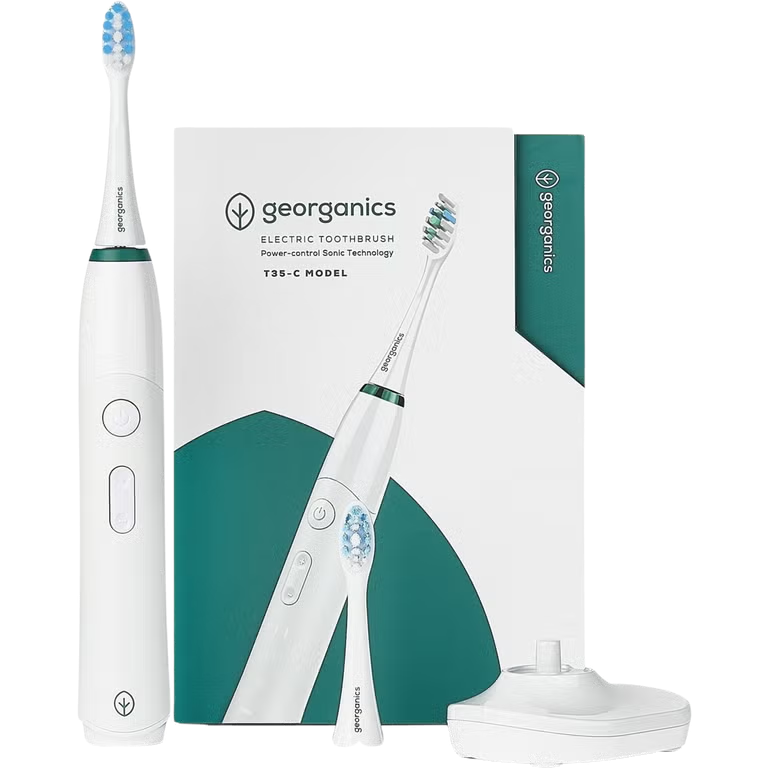
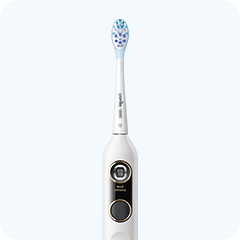
Keep the brush charged. A low-battery brush still turns on but loses consistency — and a brush that feels off is one you'll start skipping. If you haven't bought yet and you're still deciding what to get, looking through a proper range of electric toothbrushes — ones with pressure sensors, timers, different mode settings — makes a difference. Having the right features for your actual habits matters more than just picking whatever's cheapest.
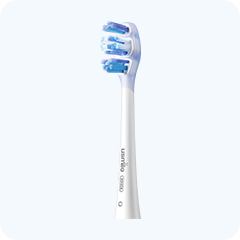
Brush head choice matters too, and it's one people don't think about much. For most people, soft bristles are the right call. They feel gentler, especially if your gums are at all sensitive, and they don't sacrifice any cleaning when used properly. Check that the head fits your mouth comfortably — if it's too big to reach your back molars without strain, you'll end up rushing that area every single time.
And watch the bristles. Once they start looking bent outward or frayed, the head's done. The ADA says every three to four months, or earlier if they look wrecked. Worn bristles can't get into the gumline the way they're supposed to. It's not a small thing.
Toothpaste — pea-sized amount. That's all. The instinct is to load the whole brush head, but it's unnecessary, and it makes a mess when the brush starts vibrating. A small amount of fluoride toothpaste is applied to the bristles.
Step by Step: How to Brush with an Electric Toothbrush

Step 1: Hold the brush at a 45-degree angle
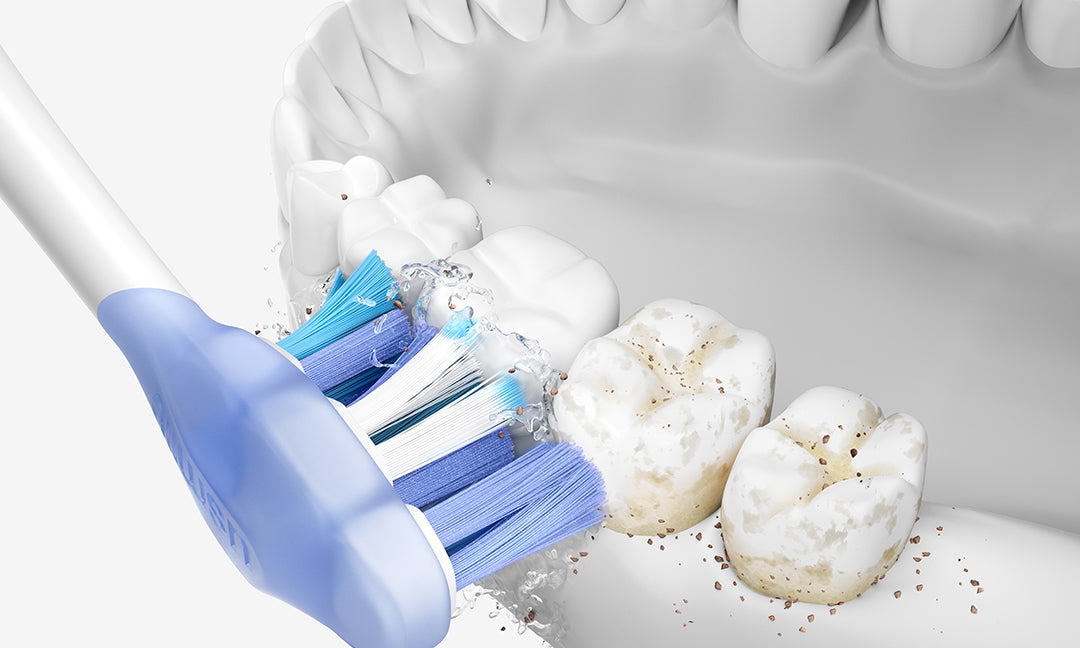
This is honestly the most important part, and it's also where most people are getting it wrong. They put the brush flat against the middle of the tooth and run it around. That cleans the broad tooth surface but completely misses the gumline, which is exactly where plaque builds up first. Tilt the head so the bristles are pointing toward the gum, not perpendicular to it. 45 degrees. You want the bristle tips to just slip under the gum margin.
Step 2: Hold the brush lightly — fingertips, not fist
Sounds obvious until you notice you've been white-knuckling it for years. Hold the handle with your fingertips. Loose, relaxed. This does two things: it physically prevents you from pressing hard (you need a tighter grip to apply real force), and it gives you finer control as you move around. When people grip tight, they almost always push too hard. It's a reflex.
Step 3: Guide slowly across outer surfaces
Start with the outer faces of your teeth — the side you see when you smile. Slow. Tooth by tooth, or in small groups. Don't sweep the brush across five teeth in one motion like you're spreading butter. Let it sit for a second or two per tooth. That's what gives the oscillation or vibration time actually to break plaque loose. Rush it, and you're basically just decorating your teeth with toothpaste.
Step 4: Do the inner surfaces — don't skip them

Inner surfaces are where most people are the least thorough. Especially the insides of the lower front teeth — the angle is awkward for your dominant hand, and it's easy just to rush past. Dental hygienists notice this. If someone's always told they have buildup in one specific spot, it's almost always a place they're consistently skipping. Tilt the brush nearly vertical for the lower front teeth. Slow down here more than anywhere else.
Step 5: Clean the chewing surfaces
Tops of the molars, the premolars. These are easier to reach, so people tend to do them quickly and move on. That's fine as long as you're actually covering them — food and bacteria lodge in those grooves pretty easily. Flat head on the chewing surface, slow pass along each tooth. Nothing fancy here.
Step 6: Brush the tongue briefly
Ten seconds. Gentle. The tongue hosts bacteria that contribute to bad breath and to the overall bacterial load in your mouth. You don't need to scrub — a light pass is enough. This is the last thing you do, not the first.
How Long to Brush and How Much Pressure to Use

Two minutes. Twice a day. That's the ADA recommendation, and it's worth taking seriously — not because it's an arbitrary number, but because research has actually tested different brushing times. One study found that brushing for two minutes removed up to 26% more plaque than brushing for 45 seconds. The average person brushes for around 45 seconds. So most of us are leaving a quarter of the cleaning on the table every single morning.
The easiest way to hit two minutes is a brush with a built-in timer. Most modern ones have this. Some pulse at the 30-second mark to nudge you to move to the next quarter of your mouth — outer top, outer bottom, inner top, inner bottom, roughly. If your brush doesn't have a timer, your phone has one.
Pressure — less is better. The motor is providing the motion, so adding force doesn't add cleaning. What it does add is flattened bristles, potentially irritated gums, and, over time, enamel wear. The brush should feel like it's resting against the tooth with gentle contact. Not pressed in. Not grinding. Just... touching.
Electric Toothbrush vs Manual: What Changes, What Stays the Same
A few things remain constant, no matter which type you use. Others genuinely differ. Here's the breakdown:
|
Feature |
Manual Toothbrush |
Electric Toothbrush |
|
Cleaning motion |
Your hand creates it |
Motor creates it |
|
Correct angle |
45° toward gumline |
45° toward gumline |
|
Time required |
2 minutes, twice daily |
2 minutes, twice daily |
|
Pressure needed |
Light (same principle) |
Light sensor helps catch mistakes |
|
Fluoride toothpaste |
Required |
Required |
|
Flossing |
Still needed daily |
Still needed daily |
|
Plaque removal |
Good with perfect technique |
Small but consistent edge on average |
|
Head replacement |
Every 3–4 months |
Every 3–4 months |
|
Built-in timer |
No |
Usually yes |
Common Mistakes People Make with Electric Toothbrushes
Scrubbing like it's a manual brush
This is the big one. The one that probably describes most new electric brush users for the first month or two. You're used to generating the motion yourself, so you keep doing it — fast strokes, back and forth, covering everything quickly. But with a powered brush, all that hand movement is extra. The head's already vibrating or oscillating. What you want to do is almost the opposite of scrubbing: slow, deliberate guidance. One spot at a time.
Pressing too hard
If your bristles are fanning out sideways after a month, that's pressure damage. It should take three to four months for a head to reach that point. When bristles splay early, they can't get into the gum margin properly, which is the whole point. And if your gums are regularly sore after brushing? Also pressure. Not technique, not toothpaste. Pressure.
Skipping the gumline and the back molars
Plaque doesn't care about the middle of your teeth. It builds up at the gumline, in the pockets where gum meets tooth, and behind the back molars where the brush barely reaches. These are the places that lead to gingivitis when they're consistently missed. Coverage matters more than speed—every time.
Using a worn-out brush head for too long
Three to four months. That's the interval. Most people go longer, and the bristles end up looking like a broom that's seen too many floors. A frayed brush head can't reach into the gumline the way it's supposed to. The ADA notes this clearly — worn bristles lose their shape and cleaning effectiveness drops. If it looks bad, replace it. Don't wait for the calendar.
Can an Electric Toothbrush Help with Gingivitis?

Short answer: yes, as part of a real routine — not on its own. Gingivitis starts when plaque isn't removed from the gumline. It shows up as redness, swelling, and bleeding when you brush. An electric brush is genuinely better at disrupting that plaque buildup than most people manage with a manual one. The Cochrane data backs this up.
But here's where a lot of people hit a wall — the spaces between teeth. No toothbrush, electric or otherwise, gets in there. That's where floss and interdental brushes come in. And once plaque hardens into tartar, brushing does nothing. You need a dental cleaning for that. The CDC emphasizes that managing gum disease takes a layered approach: brushing, interdental cleaning, and professional care working together.
|
Gum health isn't one habit — it's three: Daily brushing (with good technique,+ daily flossing or interdental cleaning, and + regular professional cleanings. Miss one leg and the whole thing wobbles. Electric brushes significantly improve the first leg. The other two are still on you. |
How to Clean, Store, and Replace Your Electric Toothbrush Head
After every session, remove the head and rinse it under warm water. Loose toothpaste, plaque debris, all of it washes off. Then store it upright, uncovered. Bristles need to air dry. A closed travel case sitting damp on a shelf is a very hospitable environment for bacteria. Open, upright, not touching anyone else's brush.
Replace the head every three to four months, sooner if it looks worn. Frayed bristles don't clean the gumline — they just move debris around on the tooth surface. If you're spending two minutes twice a day on this, you'd probably like the brush actually to be doing something useful during that time.
Norovirus or similar illness — replace the head. It's a small thing, and public health guidance on norovirus cleanup specifically recommends it. The virus is resilient and contagious enough that removing the toothbrush from the equation is worth it. And again: don't share heads. Ever.
Who Gets the Most Out of an Electric Toothbrush?
Anyone brushing manually with perfect technique twice a day for a full two minutes? Honestly, the electric brush upgrade gives them relatively little extra. Most people aren't that person.
If you rush — which most people do — the timer fixes that. If you press too hard without realizing it, the pressure sensor detects it. If you have braces, limited dexterity, or arthritis that makes fine wrist movements painful, the oscillating head handles the work your hand struggles to do consistently.

Kids, too. They haven't developed consistent brushing habits yet, and most of them find an electric brush more fun to use than a manual one. That alone actually makes them more likely to do it.
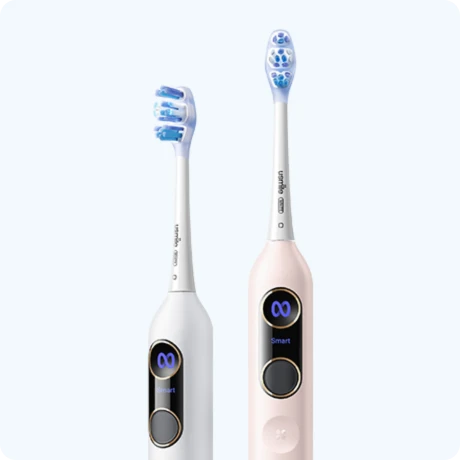
If you're in any of those groups, the upgrade is worth it — especially with a model built for daily reliability. A smart electric toothbrush for daily brushing with a timer and pressure feedback removes the two most common failure points in one shot. Position it right, let it run, move slowly. That's the whole job.
FAQs
Is there a correct way to use an electric toothbrush?
Yes. Angle at 45 degrees toward the gumline, fingertip grip, slow tooth-by-tooth guidance. Two minutes. Let the motor do the motion — you handle the placement. That's really the whole method.
Can an electric toothbrush help with gingivitis?
It helps, but it's not the whole answer. Electric brushes remove plaque at the gumline more effectively than most people can manually, which slows the progression of gingivitis. But they can't reach between teeth, and they can't remove tartar. Flossing and professional cleanings still have to happen.
What is the 3-3-3 rule for brushing teeth?
It's a memory trick — brush 3 times daily, for 3 minutes, within 30 minutes of eating. Not the clinical standard. The ADA's actual recommendation is 2x2: twice a day, two minutes each time.
Should I change my toothbrush after norovirus?
Yes. Norovirus is resilient and spreads easily — public health decontamination guidance recommends replacing toothbrushes as a standard precaution. It's a cheap step that removes a potential source of reinfection.
What kills viruses on toothbrushes?
Nothing household-grade is reliably safe and effective on the bristles. The practical answer is prevention: thorough rinsing after every use, upright open-air storage, and replacement after illness or every 3–4 months.
What is the 2-2-2 rule for teeth?
Brush twice a day for 2 minutes each time, and visit the dentist twice a year. The visit frequency is a guideline — some people need to go more often, some less, depending on their actual risk profile.
What food kills mouth bacteria?
No single food does this reliably. Reducing sugar limits what bacteria feed on. Staying hydrated helps keep saliva flowing, which has natural antibacterial properties. But nothing replaces brushing.
What happens if I don't brush twice a day?
Plaque forms continuously on your teeth. Miss brushing sessions regularly, and it hardens into tartar — which only a professional cleaning removes. From there, gingivitis, decay, and eventually more serious periodontitis are on the table.
How many 70-year-olds still have all their teeth?
More than you'd expect. NIDCR data show that about 1 in 10 adults aged 65–74 have lost all their teeth. Tooth retention in that age group has improved noticeably since 2000, meaning most older adults are keeping more of their natural teeth than previous generations did.
|
The short version of everything above: Angle at the gumline. Fingertip grip. Slow. Two full minutes. Let the brush work. The habits that make an electric toothbrush actually worth having aren't complicated — they just take a couple of weeks to replace the old ones. |
Here is the complete verified reference list for this article — all links confirmed live, bold formatting matched to the previous structure, and every reference is unique (none repeated from previous articles):
References and Resources
- American Dental Association (ADA) / MouthHealthy:Brushing Your Teeth — ADA patient guidance on correct brushing angle, pressure, timing, and toothbrush selection for daily oral hygiene.
- Cochrane Collaboration (Yaacob M et al., 2014):Powered vs. Manual Toothbrushes for Oral Health — Meta-analysis of 56 clinical trials demonstrating a 21% plaque reduction and 11% gingivitis reduction with powered toothbrushes versus manual brushing at three months.
- Centers for Disease Control and Prevention (CDC):About Periodontal (Gum) Disease — National public health data on gingivitis prevalence, the role of daily brushing and flossing in prevention, and the progression from gingivitis to periodontitis.
- National Institute of Dental and Craniofacial Research (NIDCR):Tooth Loss in Seniors — Federal data on edentulism rates in adults 65 and older, confirming improved tooth retention over the past two decades but persistent disparities among some population groups.
- American Academy of Periodontology (AAP):Gum Disease Prevention — Clinical guidance on the three-part prevention approach: daily brushing at the gumline, flossing, and annual comprehensive periodontal evaluation.
- NHS (National Health Service):How to Keep Your Teeth Clean — UK national health guidance on the two-minute twice-daily standard, the 45-degree brush angle, soft vs. medium bristle choice, and the case for electric brushes for people who struggle with manual technique.
- AAP / Gum Disease Information:What Is Gingivitis and Periodontitis? — Explains how untreated plaque at the gumline drives the progression from reversible gingivitis to irreversible bone loss; reinforces why consistent technique matters beyond aesthetics.
- NIDCR / Oral Health in America (2022):Older Adults — Tooth Retention Trends — Evidence that edentulism in adults 65+ has declined from roughly 32% to 17% over two decades, driven by better preventive care and improved brushing habits across generations.


Looking for something else?
Best Cheap Electric Toothbrush (2026): Top 5 Budget Picks That Actually Work
LEARN MORE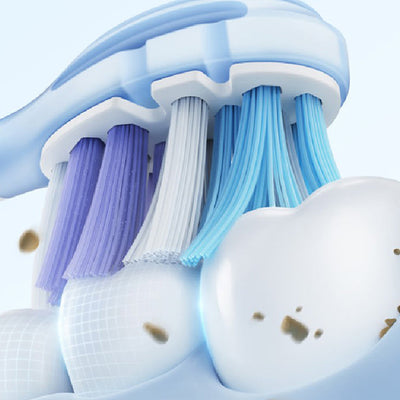
Ultrasonic Toothbrush vs Electric: Which Technology Wins for Your Smile?
LEARN MORE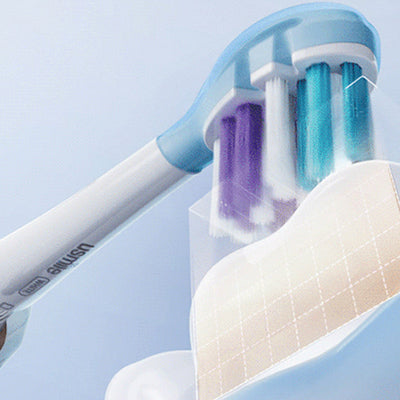
Best Electric Toothbrush for Sensitive Teeth (2026) — 5 Tested
LEARN MORE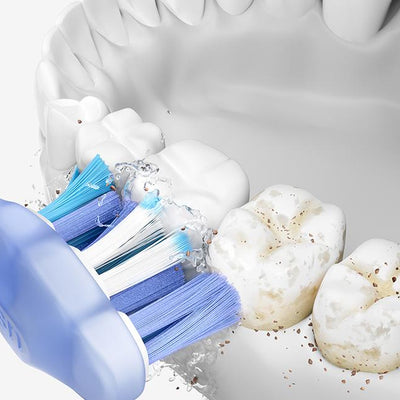
Does an Electric Toothbrush Have a Lithium Battery
LEARN MORELooking for something else?
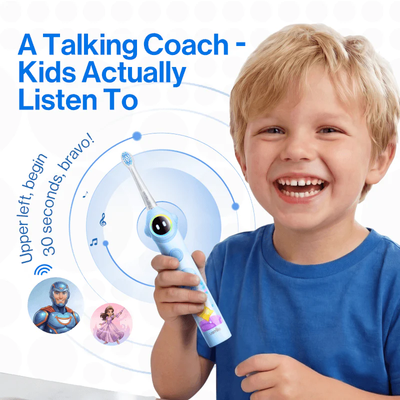
How to Make Brushing Teeth Fun for Kids Without Daily Battles
LEARN MORE
Best Toothbrush for Kids Who Hate Brushing: Parent Guide
LEARN MORE
Best Electric Toothbrush for Kids: What Parents Should Look For
LEARN MOREYou may also like

usmile C10 Portable Dental Flosser


usmile Y20 PRO Upgraded AI Electric Toothbrush

usmile P10 S Electric Toothbrush

usmile Q30 Kids Electric Toothbrush
Further reading
Halloween Candy Before Bed: A Kid-Friendly Cleanup Routine to Protect Kids' Teeth
I Thought My Water Flosser Made My Teeth Gaps Bigger—Here’s What May Actually Be Happening

Why Teeth Look More Spaced Out After Water Flossing