







Best Water Flosser for Implants: 6 Picks for Cleaner Gumlines
Implants don't maintain themselves. Plaque builds at the implant collar the same way it does around natural teeth — except the surrounding gum tissue is structurally different and more vulnerable to the kind of bacterial damage that leads to implant failure over time.
String floss is awkward around crowns and fixed restorations. A water flosser that works around crowns and restoration margins works more effectively in those areas. Six picks below, organized by what each does best — because the right device depends on how many implants you have, whether you travel, and whether the Plaque Seeker tip is relevant to your setup.

|
Quick picks at a glance #1 Waterpik Aquarius — Best implant-specialist home pick (Plaque Seeker tip included) #2 Waterpik Ion — Best overall countertop pick for everyday home use #3 Philips Sonicare Power Flosser 3000 Cordless — Best cordless for serious daily cleaning #4 Waterpik Cordless Advanced 2.0 — Best Waterpik portable option #5 usmile C10 Portable Dental Flosser — Best compact portable with long battery life #6 Oclean A10 AirPump — Best ultra-portable travel pick |
|
Model |
Best for |
Type |
Reservoir |
Pressure levels |
Price range |
|
Waterpik Aquarius |
Implant-specialist home pick |
Countertop |
22 fl oz |
10 |
$99.99 |
|
Waterpik Ion |
Best overall countertop |
Countertop |
26 fl oz |
10 |
$89.99 |
|
Philips Sonicare Power Flosser 3000 |
Best cordless |
Cordless |
8 fl oz |
3 levels / 2 modes |
$79.96 |
|
Waterpik Cordless Advanced 2.0 |
Waterpik portable option |
Cordless |
7 fl oz |
3 |
$99.99 |
|
usmile C10 Portable Dental Flosser |
Compact portable + long battery |
Cordless |
180ml |
4 |
$59.99 |
|
Oclean A10 AirPump |
Ultra-portable travel |
Cordless |
Travel-compact |
3 |
$64.99 |

6 Best Water Flossers for Implants by Use Case
Six picks organized by what they actually do best for implant users. As CNN Underscored's testing noted, the Ion leads on everyday countertop use, the Philips 3000 leads among cordless models, and the Oclean A10 is the compact travel option. The braces review notes draw on those findings, along with implant-specific considerations.
#1 — BEST IMPLANT-SPECIALIST HOME PICK

Waterpik Aquarius $99.99
Countertop · 22 fl oz · 10 pressure settings · 7 tips including Plaque Seeker · ADA Seal · 3-year warranty
Why we picked it:
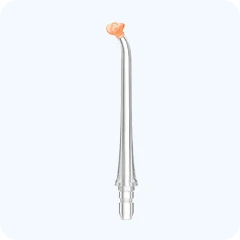
The Aquarius ships with the Plaque Seeker tip — the one Waterpik's clinical guidance specifically names for implant care. That tip's three bristle tufts reach the collar area between the crown and gumline, capturing plaque that a standard jet flush misses. Ten pressure settings handle the range from post-surgical sensitivity to full daily cleaning. For someone managing one or more implants at home, this is the most complete out-of-the-box setup.
Pros:
- Plaque Seeker tip included — three bristle tufts access the implant collar and restoration margins
- 10 pressure settings give genuine fine control across different gum conditions
- 22 fl oz reservoir: full session without stopping
- Two modes (floss + massage) for gum stimulation
- ADA Seal; 3-year warranty; backed by implant-specific clinical research
Cons:
- Loud — standard countertop noise, but noticeable in a quiet bathroom
- Bulky footprint; power cord required
- Harsh on the highest settings if you don't start low
Key focus for implant users:
The Plaque Seeker tip is the reason to choose this over the Ion, specifically for implant users. It gets into the collar margin that a standard jet flows past. Use the massage mode on sensitive days, especially in the weeks after placement or a crown adjustment.
#2 — BEST OVERALL COUNTERTOP PICK

Waterpik Ion $89.99
Countertop + rechargeable base · 26 fl oz · 10 pressure settings · 6 tips · ADA Seal · 3-year warranty
Why we picked it:
The Ion is the strongest everyday countertop recommendation across independent testing. Not because of implant-specific features — but because the stream is gentler than the Aquarius at comparable settings, the 26 fl oz reservoir is the largest tested, and the rechargeable base means no permanent wall cord. Add the Plaque Seeker tip separately,y and this becomes nearly as complete an implant setup as the Aquarius, with better everyday usability.
Pros:
- 26 fl oz reservoir — largest tested; rarely needs refilling mid-session
- Rechargeable base: no permanent cord; sits anywhere stable on the counter
- Gentler stream than the Aquarius at comparable pressure settings
- 10 pressure settings; ADA Seal; 3-year warranty. The magnetic handle dock is a small but daily-useful design detail
Cons:
- Plaque Seeker tip not included — add-on purchase needed for implant-specific use.
- Still loud — comparable to the Aquarius
- Larger footprint than cordless options
Key focus for implant users:
Better every day pick for implant users who find the Aquarius's stream too harsh. The Plaque Seeker tip, sold separately, completes this implant-care setup. Most people with implants would do just as well here as with the Aquarius.
#3 — BEST CORDLESS FOR SERIOUS DAILY CLEANING

Philips Sonicare Power Flosser 3000 Cordless $79.96
Cordless · 8 fl oz · 2 modes / 3 intensity levels · 360° nozzle · Quad Stream tip · ADA Seal
Why we picked it:
The strongest cordless model across major independent review panels. An 8 fl oz reservoir covers a full session for most mouths without stopping. The Quad Stream tip fans water across a wider margin area than a single-stream tip, which works reasonably well around implant crowns even without a dedicated Plaque Seeker-style bristle design. Three intensity levels and two cleaning modes give enough range for both normal sessions and sensitive days.
Pros:
- 8 fl oz reservoir: usually enough for a full session without refilling
- Quad Stream tip covers more surface area per pass around crown margins
- 360-degree nozzle rotation helps with posterior implants
- Quieter than most countertop units — meaningful if you share a bathroom
- ADA Seal; good independent testing pedigree
Cons:
- Heavier when the reservoir is full — less ergonomic than some competitors
- 14-day battery life (shorter than the Waterpik Cordless Advanced)
- No Plaque Seeker compatibility — Philips tip ecosystem differs from Waterpik
Key focus for implant users:
The pick for implant users who prefer cabinet storage over a countertop unit. The Quad Stream tip isn't the Plaque Seeker, but it covers the crown margin area better than a standard jet. For users managing complex multi-implant situations, a Waterpik with the Plaque Seeker is still the stronger specialist choice.
#4 — BEST WATERPIK PORTABLE OPTION

Waterpik Cordless Advanced 2.0 $99.99
Cordless · 7 fl oz · 3 modes · Ergonomic contoured grip · ADA Seal · 2-year warranty
Why we picked it:
The ergonomic case for this over the Philips 3000 is real: the contoured, narrow neck and textured grip make it easier to maneuver around posterior implants, where angle matters. More importantly, staying within Waterpik's accessory ecosystem means Plaque Seeker compatibility, which is the one reason to choose this over the technically stronger Philips model when implant-specific tip access is the priority.
Pros:
- Contoured neck: easier to reach posterior implants and crown margins
- Compatible with Waterpik tips, including the Plaque Seeker
- Three cleaning modes: ADA Seal
- Month-long battery life on a single charge
Cons:
- Water pressure is lower than that of the Philips Power Flosser 3000 in head-to-head testing
- 7 fl oz reservoir: one refill is typical for a full mouth session
- Reservoir is difficult to remove for cleaning — consistent complaint across reviews
Key focus for implant users:
Choose this over the Philips if Plaque Seeker compatibility in a cordless format is the priority. That tip access is the main practical reason to accept slightly lower stream pressure.
#5 — BEST COMPACT PORTABLE WITH LONG BATTERY LIFE

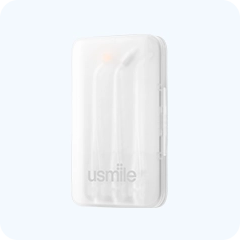
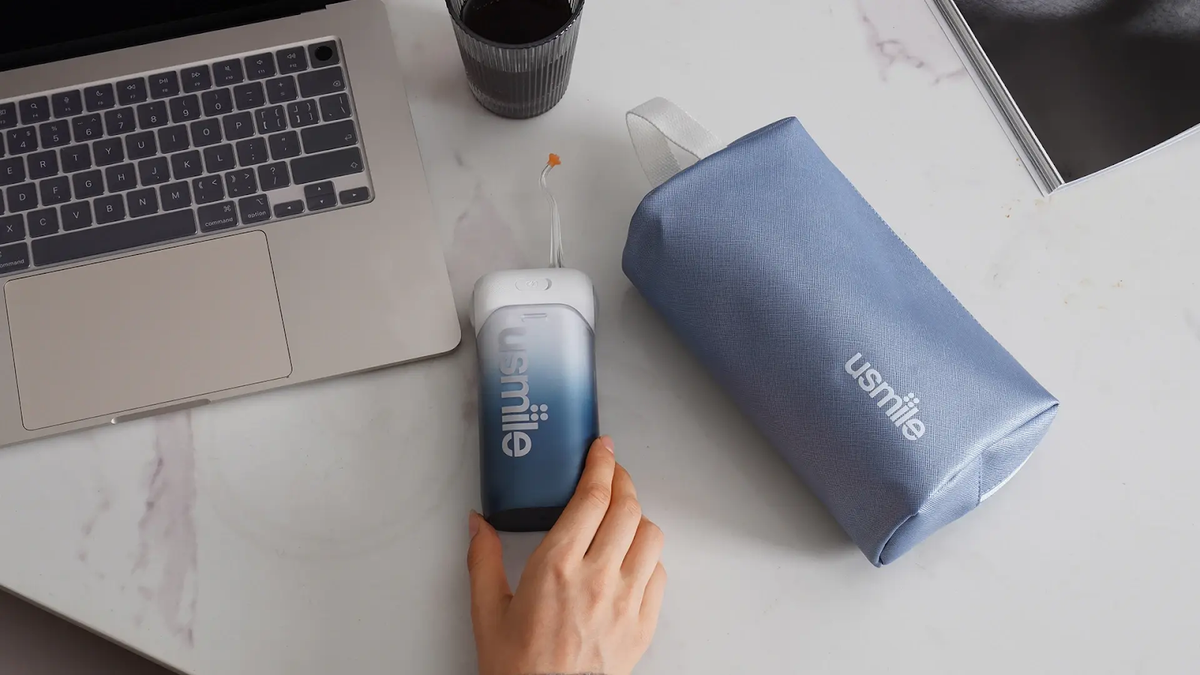
usmile C10 Portable Dental Flosser $59.99
Cordless · 180ml · 4 pressure modes (40–105 PSI) · 95-day battery · IPX7 · 3 tips included
Why we picked it:
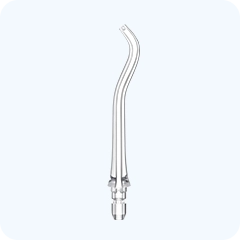
The C10 solves one specific friction point that causes implant users to skip sessions: charging anxiety. Most cordless models need charging every two to four weeks. The C10 lasts 95 days on a single charge. Pick it up. Use it. Put it back. The Guidance Tip Nozzle positions the water stream more precisely between teeth and around restoration margins than a standard round jet — not the Plaque Seeker, but more targeted than a flush.
Pros:
- 95-day battery life — longest of any model on this list by a wide margin
- 4 pressure modes from 40 PSI to 105 PSI: covers healing tissue through full daily cleaning
- Guidance Tip: Nozzle positions stream around restoration margins and tight contacts
- IPX7 waterproof; shower-safe; pull-out design for travel
- BPA-free removable water tank; easy to fill and clean
Cons:
- 180ml reservoir: one refill is typical for a full mouth session
- No Plaque Seeker compatibility — best for general implant-margin cleaning rather than specialist bristle access
- Less brand familiarity than Waterpik for users coming from that ecosystem
Key focus for implant users:
Best for implant users who need a reliable,e daily portable that won't sit dead in the cabinet. The 95-day battery means the device is always ready when you reach for it. The Guidance Nozzle delivers more targeted margin cleaning than a standard round tip without requiring a specialized accessory ecosystem.
#6 — BEST ULTRA-PORTABLE TRAVEL PICK

Oclean A10 AirPump Water Flosser $64.99
Cordless · Travel-compact · 3 modes · Mold-resistant body · 40-day battery · 2 tips
Why we picked it:
The A10 is genuinely pocket-sized — a different product category from the other five, not a smaller version of the same thing. Short bursts replace a sustained stream, producing less water per session but enough to flush debris around implant margins when you're away from home. The mold-resistant body is a practical detail for a device that travels in a bag.
Pros:
- Genuinely compact: fits in a bag without dominating the compartment
- 40-day battery; simple one-button operation
- Mold-resistant body; nonslip finish
- Bristled orthodontic nozzle included alongside standard tip
Cons:
- Not a substitute for full-depth home cleaning
- Short-burst jets are less effective than sustained pulsation for gum pocket flushing
- No dedicated implant tip compatibility
Key focus for implant users:
Best as a travel backup rather than a primary device. If you have a countertop or cordless flosser at home, the A10 keeps implant cleaning consistent on the road. As a sole device, it leaves a gap in cleaning depth that matters over time.
Why Implants Need More Daily Care Than Most People Expect

Implants require at least as much daily care as natural teeth. As Waterpik's implant page explains, long-term implant success depends on the health of the gum tissue and bone surrounding the implant — not just the titanium post or the crown. Plaque and bacteria accumulate at the collar between the crown and gumline. The surrounding tissue is more susceptible to inflammatory damage once bacteria establish themselves there than natural gum tissue is.
What peri-implant disease actually means
Two conditions. Peri-implant mucositis is the earlier form — inflammation of the soft tissue only, similar to gingivitis, and reversible with treatment. Peri-implantitis goes further: bone loss around the implant, often requiring surgery, and is one of the primary reasons implants fail. Up to half of implant patients develop peri-implant disease at some stage. Daily cleaning is the main thing that slows that progression.
Why is string floss harder to use around implants?
The crown sits on a metal post anchored into the jaw. The margin between the crown and gum tissue doesn't behave like the contact between two natural adjacent teeth. String floss catches at crown edges, can't navigate under fixed bridges, and requires threading around posterior implants in genuinely awkward ways. Most people clean the accessible surfaces and leave the collar margin. That's where problems develop.
Where water flossers fit in
A pulsating water stream enters the collar area, below the crown margin, and around adjacent teeth without threading. It's not a full replacement for string floss at tight natural tooth contacts — but for the implant sites specifically, it addresses exactly the space that's hardest to clean otherwise.
The Tip That Matters Most for Implant Cleaning

Tip selection matters as much as the device body for implant cleaning. A Tufts University study found that the Waterpik water flosser with the Plaque Seeker tip was more than 2x as effective as traditional dental floss at improving gum health around dental implants. The Plaque Seeker tip is what makes the Aquarius the specialist pick on this list — not the pressure range or the reservoir size. Three thin tufts of bristles access the implant collar and break up plaque that a standard jet simply flows past.
|
Tip type |
What it does |
Best suited for |
|
Plaque Seeker (Waterpik) |
Three bristle tufts disrupt plaque at implant collars, crown margins, and restoration edges |
Implants, crowns, bridges, veneers — any restoration with a gum margin |
|
Implant Denture (Waterpik) |
Accesses under fixed implant bridges and dentures where standard tips can't navigate |
Full-arch implant bridges and implant-supported dentures |
|
Quad Stream (Philips) |
Fans water across a wider area per stroke; covers more surface with fewer passes |
General gumline cleaning; reasonable margin coverage without bristles |
|
Guidance Tip Nozzle (usmile C10) |
C-shaped positioning guides water into tight gaps with more precision than a round jet |
Every day, implant-margin cleaning and restoration contacts |
|
Standard jet tip |
General everyday gumline flushing |
Works around implants but misses collar-level plaque that the specialist tips target |
What to Look for in the Best Water Flosser for Implants
|
Feature |
Why it matters for implants |
What to prioritize |
|
Tip compatibility |
The implant collar needs a specialized tip, not just pressure |
Confirm Plaque Seeker or equivalent is compatible or included |
|
Pressure range |
Implant gum tissue is more pressure-sensitive than natural tissue |
At least 3 levels; ideally 5–10 for fine-tuning |
|
Reservoir size |
Larger = uninterrupted full-mouth session; multiple implants need more time |
22+ fl oz countertop; 150ml+ cordless |
|
Format fit |
Daily compliance matters more than peak specs |
Match the format to a realistic daily habit |
|
Battery reliability |
A dead device means a skipped session |
A long battery or always-plugged-in removes this friction entirely |
|
Device cleaning ease |
Wet reservoir bacteria are a problem near the implant tissue |
Wide-mouth removable reservoir; tip ejector button |
Are Water Flossers Good for Implants?
Yes — consistently, across clinical guidance and dental practice. The caveat is technique.
Why water flossers suit implant care
String floss is awkward at crown margins, can't navigate under fixed bridges, and most people stop using it consistently around dental hardware. A pulsating water stream reaches the implant collar, clears debris beneath fixed restorations, and reaches a few millimeters below the gumline, where bacteria accumulate in the peri-implant sulcus. That daily flushing prevents early inflammation from progressing to the point where it requires clinical intervention.
What they can't fully replace
Tight contacts between natural adjacent teeth still benefit from the direct scraping action of string floss. Water flossers flush and disrupt biofilm — they don't scrape contact surfaces the same way. For someone managing implants alongside natural teeth, string floss at the natural contacts and a water flosser for the implant sites gives more complete coverage than either alone.
What 'gentle pressure' actually means here.
Implant gum tissue doesn't have the same biological seal as tissue around natural teeth. Excessive pressure applied to the collar can irritate rather than clean. The consistent recommendation across all sources: start with a low-to-medium setting, hold the tip at 90 degrees to the gumline rather than angling it into the tissue, and spend about 3 seconds per implant site. The benefit comes from consistent daily flushing, not from the strongest available setting.
How to Use a Water Flosser Around Implants Without Irritating the Gumline
|
# |
Step |
What to do |
|
1 |
Lukewarm water only |
Cold water against an implant collar is uncomfortable, especially in the first months after placement. Room temperature or slightly warm is the right call. Some people add a mild rinse; check with your dentist first. |
|
2 |
Start at low or medium pressure |
Always, regardless of how long you've had the implant. Peri-implant gum tissue responds differently to pressure than natural gum tissue. Harsh settings aren't more effective — they're just more likely to irritate. |
|
3 |
Lean over the sink, lips mostly closed |
Leave a small gap at one corner of your mouth. The water exits there. The first few sessions are messy. The third one usually isn't. |
|
4 |
Hold the tip at 90 degrees, trace the collar |
Angle the stream at the gum margin and implant collar — not directly into the tissue. Spend about 3 seconds per implant site. Go all the way around: front, back, both sides. |
|
5 |
Clean adjacent teeth and gumline too |
The natural teeth next to an implant are part of the same gum health picture. Don't stop at the implant crown. |
|
6 |
Water flosser before brushing |
Flosser first to loosen debris, brush immediately after. Avoid rinsing right after brushing — let fluoride toothpaste stay in contact with your teeth. |
|
7 |
Empty and dry the device after |
Takes 20 seconds. A damp reservoir that sits full between sessions grows bacteria quickly. Not ideal near implant tissue. |
When a Water Flosser Is Helpful — and When It's Not Enough
Daily water flossing supports implant health. It doesn't replace professional evaluation when something changes. According to the American Academy of Periodontology, signs of peri-implant disease — bleeding that recurs at the same site, visible gum recession around the crown, persistent bad taste, or any change in how the crown feels — require clinical assessment, not an adjustment to home care.

Signs that mean see a dentist, not switch devices
Bleeding at the same spot every time you floss. Gum tissue is visibly pulling away from the crown. The crown feels different when you bite down. Bad taste localized near one implant. None of these are technique problems or pressure-setting problems. They need probing, possibly X-ray, and professional cleaning of the subgingival implant surface.
What home care realistically does
It reduces bacterial load at the implant collar. It helps keep the surrounding gum tissue healthier between professional cleanings. It removes debris from under fixed restorations before it hardens into calculus. The benefit is cumulative — six months of consistent daily flossing changes the picture of the gum tissue. Six months of irregular use doesn't, regardless of which device you own.
Maintenance schedules your dentist cares about
Implant patients typically need professional cleanings every 3 to 4 months, not every 6 months — especially in the first year after placement. Home water flossing reduces what accumulates between those appointments. It doesn't make them optional.
Final Verdict: Match the Device to Your Routine
The implant user who cleans consistently with a mid-range cordless model every day achieves better long-term outcomes than one who owns a premium countertop unit that sits unused on the counter three days a week.
|
Your situation |
Best pick |
Why |
|
Single implant, home routine, want specialist setup |
Waterpik Aquarius |
Plaque Seeker included; 10 settings; complete implant home setup out of the box |
|
Multiple implants or complex restorations |
Waterpik Aquarius or Ion + Plaque Seeker tip |
Tip ecosystem + reservoir depth for longer daily sessions |
|
Want gentle everyday home use, no harsh stream |
Waterpik Ion + Plaque Seeker add-on |
Gentler than Aquarius; 26 fl oz; rechargeable base; same tip outcome |
|
Prefer cordless for cabinet storage |
Philips Sonicare Power Flosser 3000 |
Best cordless pressure: 8 fl oz, Quad Stream tip |
|
Want Waterpik tips in cordless format |
Waterpik Cordless Advanced 2.0 |
Plaque Seeker compatible; ergonomic; 3 modes |
|
Need a long battery, compact, for travel |
usmile C10 Portable Dental Flosser |
95-day battery; 4 pressure modes; Guidance Nozzle for margins |
|
Travel backup, ultra-compact only |
Oclean A10 AirPump |
Pocket-sized; 40-day battery; mold-resistant; maintenance only |
Who should choose a countertop model?
You have one or more implants, your own bathroom, and want the most thorough daily setup available. The Waterpik Aquarius with the Plaque Seeker tip is the most directly evidence-backed combination. The Ion is the gentler alternative for users who find the Aquarius's stream uncomfortable.
Who should choose a cordless mode?l
Shared bathroom, frequent travel, or any setup where a countertop unit won't realistically stay set up permanently. The Philips Power Flosser 3000 leads in cleaning power. The Waterpik Cordless Advanced 2.0 leads in tip compatibility. Both handle daily implant maintenance well.
What matters more than brand recognition
Tip compatibility for your specific implant situation, a pressure range that starts low, and a format you'll use every single day. Protect the investment you've made in your implant with consistent daily cleaning — the device brand matters far less than whether you actually pick it up.
FAQs
What is the best water flosser for implants?
For the most implant-specific setup, the Waterpik Aquarius with the Plaque Seeker tip is the most evidence-backed combination. A Tufts University study found it to be more than 2x as effective as string floss at improving gum health around implants. For gentler everyday use, the Waterpik Ion with the Plaque Seeker tip (sold separately) yields nearly identical results.
Is a Waterpik better than string floss for implants?
With the Plaque Seeker tip, yes — that combination outperforms string floss specifically at the implant collar, per clinical research. String floss is still more effective at the tight contacts between natural adjacent teeth. The case for water flossing is strongest at the implant site itself.
What tip is best for cleaning around implants?
The Waterpik Plaque Seeker tip is the most implant-specific option with published research behind it. Three thin bristle tufts access and disrupt plaque at the collar in a way a standard jet tip doesn't. The Implant Denture tip handles fixed bridges and dentures. If your device isn't Waterpik-compatible, the Philips Quad Stream and the usmile Guidance Nozzle are the next best options for margin-level access.
Are cordless water flossers strong enough for implants?
Yes, for daily maintenance. The Philips Sonicare Power Flosser 3000 Cordless delivers the strongest cordless pressure in independent testing. The trade-off between countertop and reservoir models is reservoir size and compatibility with the Plaque Seeker tip. For users managing multiple implants, the countertop Waterpik has a clearer implant-tip story.
Can a water flosser help prevent peri-implantitis?
It supports prevention by reducing bacterial load at the collar and improving peri-implant gum tissue health over time. It doesn't reverse established disease and doesn't replace professional cleanings. Daily water flossing combined with regular professional follow-up is an effective combination — neither alone is sufficient.
What pressure setting should I use for dental implants?
Start at low to medium. Peri-implant gum tissue can be more reactive to pressure than natural tissue, especially in the months after placement or after a crown adjustment. Work up gradually over the first week or two. If gums feel irritated after a session, drop back a level.
How often should I water floss around implants?
Once daily at a minimum. After the main meal of the day, a practical choice since that's when the most debris accumulates around the crown and collar margin, a second quick pass after lunch is fine when food is visibly caught.
Is a travel water flosser enough for daily implant care?
As a backup when away from your home device, yes. As your sole device, it leaves a gap in cleaning depth. The Oclean A10 maintains routine during travel. Relying on it as the primary implant-care tool for months is a different situation — one that countertop or serious cordless models address better.


Looking for something else?
Best Cheap Electric Toothbrush (2026): Top 5 Budget Picks That Actually Work
LEARN MORE
Ultrasonic Toothbrush vs Electric: Which Technology Wins for Your Smile?
LEARN MORE
Best Electric Toothbrush for Sensitive Teeth (2026) — 5 Tested
LEARN MORE
Does an Electric Toothbrush Have a Lithium Battery
LEARN MORELooking for something else?
How to Make Brushing Teeth Fun for Kids Without Daily Battles
LEARN MORE
Best Toothbrush for Kids Who Hate Brushing: Parent Guide
LEARN MORE
Best Electric Toothbrush for Kids: What Parents Should Look For
LEARN MOREYou may also like

usmile P10 S Electric Toothbrush

usmile Q30 Kids Electric Toothbrush

usmile C30SE Portable Dental Flosser
usmile Q30 Kids Electric Toothbrush Trio Pack
Further reading
Halloween Candy Before Bed: A Kid-Friendly Cleanup Routine to Protect Kids' Teeth
I Thought My Water Flosser Made My Teeth Gaps Bigger—Here’s What May Actually Be Happening

Why Teeth Look More Spaced Out After Water Flossing