







6 Best Water Flossers for Braces: Top Picks by Use Case
Keeping braces clean is genuinely hard. String floss requires a threader, takes 15-20 minutes done properly, and most people quietly stop within a month. A water flosser changes the math: under two minutes, no threading, reaches spots floss can't get to around brackets.
But which one? Not every model is the same fit for orthodontic hardware. Here are 6 picks by use case — water flossers designed for orthodontic use come in different formats, and the right choice depends on your bathroom, your routine, and how sore your gums are after adjustments.

|
Quick picks at a glance #1 Waterpik Aquarius Professional — Best overall for home use #2 Philips Sonicare Power Flosser 3000 — Best quieter countertop option #3 Waterpik Cordless Advanced — Best cordless for travel and dorms #4 Waterpik Cordless Express — Best budget entry point #5 usmile C10 Portable Dental Flosser — Best compact portable with long battery life #6 Waterpik Ultra / Complete Care — Best for families or shared use |
|
Model |
Best for |
Type |
Reservoir |
Pressure levels |
Price |
|
Waterpik Aquarius Professional |
Best overall |
Countertop |
22 fl oz |
10 |
$99.99 |
|
Philips Sonicare Power Flosser 3000 |
Quieter option |
Countertop |
18.6 fl oz |
10 |
$79.96 |
|
Waterpik Cordless Advanced |
Best cordless |
Cordless |
7 fl oz |
3 |
$99.99 |
|
Waterpik Cordless Express |
Best budget |
Cordless |
5 fl oz |
2 |
$39.99 |
|
usmile C10 Portable Dental Flosser |
Best compact portable |
Cordless |
180ml |
4 |
$59.99 |
|
Waterpik Ultra / Complete Care |
Best for families |
Countertop |
22 fl oz |
10 |
$69.99 |
6 Best Water Flossers for Braces by Use Case
Six picks organized by what they actually do best — not a straight 1-to-6 ranking. Tested by Forbes Vetted across multiple models; the summary below draws on those findings and braces-specific considerations.
 #1 — BEST OVERALL FOR BRACES
Waterpik Aquarius Professional$99.99
Countertop · 22 fl oz reservoir · 10 pressure settings · 7 tips included · ADA Seal · 3-year warranty
Why we picked it:
The Aquarius has been the consistent best overall recommendation in independent testing for years. For braces, that's not just reputation: 10 pressure settings mean real control on sore post-adjustment days when lower settings matter. The 22 fl oz reservoir covers a full session without stopping. The included orthodontic tip — with its small, tapered brush — gets into bracket corners and behind archwires in a way a standard tip can't.
Pros:
- 10 pressure settings give genuine fine-tuning across different gum conditions
- Orthodontic tip included — tapered brush reaches bracket edges effectively
- 22 fl oz reservoir; rarely needs refilling during a session
- Two cleaning modes (floss + massage) for gum stimulation alongside debris removal
- ADA Seal; 3-year warranty
Cons:
- Loud — noticeably so in a quiet bathroom or shared space
- Bulky footprint; countertop-only
- A power cord means it stays in one place
Key focus for braces users:
The combination of bracket-level tip access, 10 adjustable pressure settings, and 22 fl oz of uninterrupted water makes this the most thorough at-home setup for most brace wearers. On post-adjustment days when both brackets and gums are tender, use the massage mode at a low setting rather than skipping the session entirely.
#2 — BEST QUIETER COUNTERTOP OPTION

Philips Sonicare Power Flosser 3000 $79.96
Countertop · 18.6 fl oz reservoir · 10 pressure settings · Flexible Quad Stream tip · ADA Seal · 2-year warranty
Why we picked it:
The clearest alternative to the Aquarius for users who find countertop flossers uncomfortably loud. Independent testing consistently rates it as noticeably quieter, especially at lower pressure settings. The flexible rubber Quad Stream tip distributes water in a fanned pattern that some users find more comfortable against inflamed gum tissue than a single stream.
Pros:
- Noticeably quieter than most countertop models — a real daily-life differentiator
- 10 pressure settings; two cleaning modes
- The flexible rubber tip is gentler on sore gums than a rigid nozzle
- ADA Seal; compatible with aftermarket orthodontic tips
Cons:
- Smaller reservoir (18.6 fl oz) than the Aquarius
- No dedicated orthodontic tip included — needs to be purchased separately
- Slightly less maximum stream pressure than Waterpik models
Key focus for braces users:
Better fit than the Aquarius for shared bathrooms and early-morning routines. Orthodontic tips are sold separately for this model — factor that into the purchase, because it's the one tip that makes a real difference around bracket hardware.
#3 — BEST CORDLESS WATER FLOSSER FOR BRACES

Waterpik Cordless Advanced $99.99
Cordless · 7 fl oz reservoir · 3 pressure settings · Waterproof · 4 tips included · ADA Seal · 2-year warranty
Why we picked it:
Three pressure settings are the main differentiator from the Cordless Express below it. That extra range matters for braces — post-adjustment days genuinely need a lower setting than normal cleaning days, and having only two levels forces an awkward compromise. The Cordless Advanced is also fully waterproof, which opens up shower use as a routine-building option that many brace wearers find surprisingly easier to stick with.
Pros:
- Waterproof — usable in the shower, which improves daily compliance
- Ergonomic contoured handle with textured grip; easier to maneuver around back molars
- 3 pressure settings cover post-adjustment soreness through full cleaning
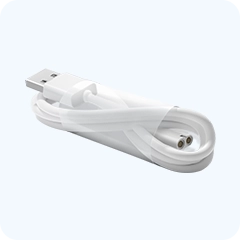
- Travel accessories included: magnetic charger
- ADA Seal
Cons:
- 7 fl oz reservoir: one refill mid-session for most mouths
- Reservoir is difficult to remove for cleaning — consistent design complaint
- Not as powerful at maximum settings as any countertop model
Key focus for braces users:
The waterproof design is a genuine differentiator. For anyone who's tried and abandoned a countertop flosser because of the sink mess — shower-based water flossing removes that friction entirely. Three settings cover the range that wearers actually need.
#4 — BEST BUDGET OPTION FOR BRACES

Waterpik Cordless Express $39.99
Cordless · 5 fl oz reservoir · 2 pressure settings · Battery-powered · 2 tips · 1-year warranty
Why we picked it:
The simplest and cheapest entry point. Two pressure settings are limiting but workable. The 5 fl oz reservoir needs one refill for most mouths. Battery-operated rather than rechargeable, which some people dislike,e and others find reassuring when traveling. Compatible with all Waterpik tips — so an orthodontic tip can be added for under $10, which it should be.
Pros:
- Lowest price point; clear 'try before committing' entry
- Simple controls; essentially no learning curve
- Battery-operated: no charging required
- Compatible with the full Waterpik tip range
Cons:
- Only 2 pressure settings — limited adjustment for post-adjustment soreness
- 5 fl oz: one refill per session, typical
- Ongoing battery cost; 1-year warranty (shorter than mid-range Waterpik models)
- Orthodontic tip not included.
Key focus for braces users:
Fine as a starting point if you're unsure whether water flossing will stick. The one missing piece is the orthodontic tip — add that purchase alongside the device, because the standard tip is less effective around brackets.
#5 — BEST COMPACT PORTABLE FOR DAILY BRACES CLEANING

usmile C10 Portable Dental Flosser $59.99
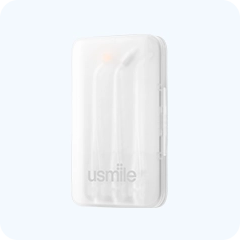
Cordless · 180ml reservoir · 4 pressure modes (40–105 PSI) · 95-day battery · IPX7 waterproof · 3 tips included
Why we picked it:
The C10 earns its place through two specific advantages that matter for braces. First: the Guidance Tip Nozzle — a C-shaped positioning tip that seats between teeth and directs water precisely into bracket gaps, which standard round nozzles tend to miss at the corners. Second: a 95-day battery on a single charge. Most cordless models need charging every 2–4 weeks. The C10 is genuinely a pick-up-and-use device without charge anxiety, which is exactly the friction point that causes people to skip sessions.
Pros:
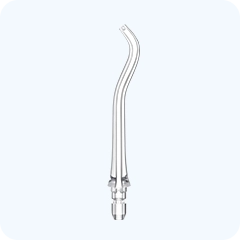
- Guidance Tip Nozzle directs water into tight gaps and bracket corners — better bracket-edge access than a standard tip
- 4 pressure modes from 40 PSI to 105 PSI: covers gentle post-adjustment through full cleaning
- 95-day battery life — strongest on this list by a wide margin
- IPX7 waterproof; shower-safe
- Pull-out handle design is compact; easy to travel with
- BPA-free removable water tank; easy to fill and clean
Cons:
- The 180ml reservoir is comparable to other cordless models — one refill is typical for a full mouth session
- 4 pressure modes versus 10 on the Aquarius: less fine-tuning on a spectrum
- Less brand recognition than Waterpik for buyers who've only researched one name
Key focus for braces users:
The Guidance Nozzle is the real reason to choose this for braces over other portables. It positions the water stream more precisely at the bracket corners than a round tip does, where plaque accumulates most around orthodontic hardware. The 95-day battery removes the biggest daily maintenance friction of any cordless option.
#6 — BEST FULL-ROUTINE HOME SETUP

Waterpik Ultra / Complete Care $69.99
Countertop · 22 fl oz reservoir · 10 pressure settings · 6 tips + storage rack · ADA Seal · 3-year warranty
Why we picked it:
Essentially, the Aquarius's sibling — same reservoir size, same 10 pressure settings, comparable cleaning performance. The practical difference is tip storage: the Ultra has a built-in tip rack that holds multiple tips for different users. For a household where two or more people have braces, that storage solves a real daily friction point. The Complete Care version pairs the water flosser with an electric toothbrush in a single counter unit.
Pros:
- 22 fl oz reservoir; comparable performance to Aquarius
- Built-in tip storage for multiple users; better household sharing setup
- 10 pressure settings; ADA Seal; 3-year warranty
- The Complete Care version simplifies the counter for brush + flosser users
Cons:
- Lid not permanently attached to tank — slightly more awkward to refill than Aquarius.
- Louder; no quieter variant at this reservoir size
- More counter space than mid-range options
Key focus for braces users:
Best for families or setups where multiple people need to use the device daily. The tip storage rack means each person keeps their orthodontic tip separate, so they don't have to hunt for it. For solo users, the Aquarius is usually a better value
Why Braces Are So Hard to Clean With Regular Floss
 The problem isn't willpower. It's mechanics.
Flossing around braces with string requires threading wax floss under each archwire, one gap at a time. Done right, it takes 15 to 20 minutes. According to the AAO, plaque buildup around brackets is directly linked to decalcification — the permanent white spots that can appear on teeth after braces come off. That risk is highest when cleaning gets skipped because it's genuinely difficult.
Why does food get trapped around brackets and wires?
Brackets create overhangs and corners that don't exist on natural teeth. Food catches behind wires, under bracket edges, and in the small triangle between each bracket base and the gumline. A toothbrush reaches the surface. String floss, threaded correctly, reaches the contacts between teeth. Neither reliably clears the bracket corners and underwire spaces — exactly where the most problematic plaque accumulates during treatment.
Why a floss threader feels slow and frustrating
Threading under an archwire at each interdental gap, one at a time. Then flossing that gap. Then moving to the next. For 28 teeth. Most people quit within a month. The frustration is completely reasonable — and it's why orthodontists hand out water flosser recommendations at the start of treatment rather than just telling patients to floss better.
Why plaque control matters more during orthodontic treatment
Hardware makes plaque removal harder at exactly the time when the stakes are highest. Brackets trap debris. Plaque builds up around them faster than on clean tooth surfaces. And the decalcification risk is cumulative — poor cleaning during 18 months of treatment can leave marks that don't go away after the braces come off. The brief window of orthodontic treatment is when consistent daily cleaning matters most.
What a Water Flosser Does Better for Braces
An optimal combination of pressure and pulsation — not just pressure — is what makes the difference. Clinical testing by Waterpik found its water flosser to be up to 3x more effective at removing plaque around braces than brushing and string floss combined. The mechanism: pressurized water slips under archwires, around bracket bases, and a few millimeters below the gumline — areas that require a threader and significant effort to reach with string.
How a stream of water helps remove debris
The pulsating stream disrupts the soft bacterial biofilm that makes up plaque. It's more than a rinse. Below the gumline — which matters particularly during orthodontic treatment when gum tissue is already under stress — the pulse dislodges bacteria that brushing alone misses entirely.
Why pressure and pulsation matter
A steady stream without pulsation is closer to a mouth rinse than a cleaning tool. The combination is what produces clinical results. For braces, adjustable pressure is important, too: the gums the day after an adjustment are different from those mid-treatment on a normal day. A pressure range lets the user match the tool to the situation.
Why do braces wearers often use it more consistently than dental floss
Under two minutes. No threading. Works in the shower. The most effective cleaning tool is the one you use every day — and water flossers have meaningfully higher long-term compliance than floss threaders for orthodontic patients. That consistency over a full course of treatment is what protects enamel and gum health.
Countertop vs Cordless Water Flosser for Braces

|
Factor |
Countertop |
Cordless |
|
Cleaning power |
Stronger; more pressure settings |
Good; typically less max pressure |
|
Reservoir size |
Large (20–22 fl oz); rarely refills mid-session |
Small (5–7 fl oz); usually one refill per session |
|
Daily convenience |
Sits on the counter; always ready |
Charges separately; cabinet-storable |
|
Travel/dorms |
Not portable |
Good for travel, dorms, shared bathrooms |
|
Noise level |
Louder |
Quieter |
|
Best for braces |
Thorough home sessions |
Consistent daily habit |
|
Best user type |
Adults with their own bathroom |
Teens, travelers, small bathrooms |
Why countertop models usually clean more thoroughly
More settings, a larger reservoir, and uninterrupted water for a full session. For an adult doing a dedicated braces cleaning routine twice daily in their own bathroom, this is the better cleaning tool. The trade-offs — counter space, cord, noise — are fixed once the device is set up and don't change day to day.
Why cordless models are easier for travel and small bathrooms
Charges overnight, stores in a cabinet, and travels easily. No cord to work around. For anyone whose bathroom is shared, whose schedule involves regular travel, or who simply doesn't want another appliance permanently on the counter, the cordless format produces better daily compliance even at slightly lower power.
Which type fits teens, adults, and busy routines best
Teens generally stick with cordless better: no cord, simpler setup, feels less clinical. Adults with their own bathroom tend to get more from a countertop unit. Busy schedules or frequent travel tip the balance toward cordless, regardless of age.
What to Look for in the Best Water Flosser for Braces
|
Feature |
Why it matters for braces |
What to prioritize |
|
Orthodontic/tapered tip |
Gets into bracket corners and behind archwires — standard tips miss these |
Included or confirmed compatible; replace every 3 months |
|
Pressure settings |
Post-adjustment days need low settings; full cleaning needs higher ones |
At least 3 levels; ideally 5–10 for fine control |
|
Reservoir size |
Larger = fewer refills; important for countertop models |
22+ fl oz countertop; 150ml+ cordless |
|
Countertop vs cordless |
Shapes daily use pattern — format drives compliance |
Match to a realistic daily routine, not an ideal scenario |
|
Battery life (cordless) |
Short battery life creates skip-day friction |
Check real-world battery, not claimed max |
|
Tip rotation |
Helps reach back molars and behind lower front teeth |
Useful but compensable with technique |
Is a Water Flosser Enough if You Have Braces?
Very effective — but not a complete replacement for every cleaning step. The ADA recommends daily interdental cleaning because different tools address different surfaces. A water flosser covers the gumline and brackets well. It doesn't fully replicate the contact-scraping action of string floss at the tight points between adjacent teeth.
What can it replace
The floss threader, in most cases. For braces wearers who use a threader inconsistently because it's too slow, a water flosser covers the gumline and inter-bracket cleaning that the threader was supposed to handle in under two minutes. It becomes the primary daily cleaning tool.
What it still cannot do as well as string floss
Make direct physical contact at tight contacts between adjacent teeth. That contact scraping removes plaque in areas where water pressure doesn't fully replicate the action. For braces wearers, those contacts are harder to access anyway — but skipping them entirely for 18 months creates a real cavity risk.
Why brushing and flossing still work best together
Water flosser for gumline and brackets. Brushing twice daily for surfaces. String floss at tight contacts a few times a week when access allows. None of these completely replaces the others. The water flosser handles the braces-specific challenge; the other tools handle what remains.
How to Use a Water Flosser With Braces Without Making a Mess

|
# |
Step |
What to do |
|
1 |
Fill with lukewarm water |
Cold water on recently adjusted brackets is uncomfortable. Lukewarm is the right temperature. Some people add a small amount of mouthwash — that's fine, but plain water works just as well. |
|
2 |
Start at the lowest setting |
Always. Even if you've used a water flosser before, braces change how the stream feels. Low pressure first, then increases over the next few days. |
|
3 |
Lean over the sink |
Close your lips most of the way around the tip, leaving a gap at one corner. Water flows out — that's correct, not a failure. The first two sessions are messy; the third one isn't. |
|
4 |
Trace the gumline, pause at brackets |
Guide the tip along the gumline at roughly 90 degrees, pausing 1–2 seconds at each bracket. Then trace the archwire—front and back, top and bottom. |
|
5 |
Use before brushing |
The Waterpik first loosens the debris. Brush immediately after to clear any remaining residue. Don't rinse right after brushing — leave fluoride toothpaste in contact. |
|
6 |
Dry the device afterward |
Empty the reservoir, run clean water through it, and let the tip air-dry. A wet reservoir left full between uses grows bacteria faster than most people realize. |
Common Mistakes Bracers Wearers Make With Water Flossers

|
Mistake |
What actually happens |
The fix |
|
Starting on max pressure |
Gum soreness; device gets abandoned after 3 days |
Start at the lowest setting; move up one level every 3–5 days |
|
Skipping the orthodontic tip |
Standard tips miss bracket corners and under-wire spaces |
Use the orthodontic tip every session; add as a separate purchase if not included |
|
Replacing string floss entirely |
Tight contacts between teeth go uncleaned; cavity risk climbs |
Water flosser daily for gumline; string floss for contacts a few times a week |
|
Not drying the device after use |
A wet reservoir grows bacteria; it defeats the purpose of hygiene |
Empty, run clean water through, air-dry after each session |
|
Holding the stream in one spot |
Gum irritation without better cleaning |
Move steadily — 1–2 seconds per bracket, trace along gumline |
|
Skipping sessions after adjustments |
Brackets are freshly stressed; debris accumulates fastest then |
Use on the lowest pressure setting on adjustment days — more important than, not less |
Final Verdict: Choose the Flosser You Will Actually Use Every Day
The best water flosser for braces is the one that gets used consistently for the full length of treatment. That's not a cliché — a mid-range cordless used daily for 18 months does more for enamel and gum health than a premium countertop model used twice a week because setup feels like too much.
|
Your situation |
Best pick |
Why |
|
At-home adult with a dedicated bathroom |
Waterpik Aquarius Professional |
Maximum settings, thorough cleaning, orthodontic tip included |
|
Sensitive to noise or shared bathroom |
Philips Sonicare Power Flosser 3000 |
Noticeably quieter; 10 settings; ADA Seal |
|
Teen, traveler, or small bathroom |
Waterpik Cordless Advanced |
Waterproof, ergonomic, 3 settings, portable |
|
Budget-first, getting started |
Waterpik Cordless Express |
Lowest cost; add orthodontic tip separately |
|
Want la ong battery + compact portable |
usmile C10 Portable Dental Flosser |
95-day battery, 4 modes, Guidance Nozzle for bracket access |
|
Family / multiple braces wearers |
Waterpik Ultra / Complete Care |
Tip storage rack for multiple users, large reservoir |
Who should choose a countertop model?
You have your own bathroom, you're home most evenings, and maximum cleaning depth matters more than convenience for adults mid-treatment who want the most thorough at-home option. The cord and counter space are fixed trade-offs that don't change once the device is in place.
Who should choose a cordless model?
Shared bathrooms, frequent travel, or inconsistent schedules where setup friction is a factor. A charged cordless device picked up every day has a bigger cumulative effect than a premium countertop unit that gets skipped because the routine is complicated.
What matters more than brand name
Orthodontic tip availability, a pressure range that includes genuinely low settings, and whether the reservoir size matches your patience for refilling. Brand recognition is a reasonable proxy for reliability — but feature fit matters more than the logo. Start a cleaner daily oral care habit, and the specific device becomes less important than the consistency.
FAQs
What is the best water flosser for braces overall?
The Waterpik Aquarius Professional is the most consistent and best overall pick in independent testing. Ten pressure settings, an included orthodontic tip, and a 22 fl oz reservoir cover the full range of at-home braces cleaning. For portability, the Waterpik Cordless Advanced or the usmile C10 are the better fits.
Is a cordless water flosser good enough for braces?
Yes, for most users. The Waterpik Cordless Advanced has three pressure settings and a waterproof design. The usmile C10 adds four pressure modes, a Guidance Nozzle for bracket-edge access, and a 95-day battery. Neither cleans quite as deeply as a 10-setting countertop model — but both are genuinely effective for daily braces maintenance, and daily compliance usually matters more than occasional thorough cleaning.
Do you still need string floss if you use a water flosser with braces?
Not every day for everything — but occasionally yes. Water flossers handle gumline and bracket debris well. String floss is better at the tight contact points between adjacent teeth, where cavities form. The practical approach: water flosser daily, string floss at contacts a few times a week when access allows.
What pressure setting should you use on braces?
Always start at the lowest available setting. Increase slowly over the first week or two. On post-adjustment days when gums are sore, drop back to the lowest comfortable level — discomfort is the main reason people abandon the habit, so avoiding it is more valuable than hitting a target pressure number.
Can a water flosser break brackets or wires?
No. Water pressure isn't strong enough to damage bonded brackets or properly fitted archwires. If something feels loose after water flossing, it was already partially detached. Contact your orthodontist rather than assuming the flosser caused it.
Is an orthodontic tip really necessary?
Strongly recommended. A standard round tip handles gumline cleaning. The orthodontic tapered tip fits into bracket corners and under the archwire — exactly where plaque builds up most. If your model doesn't include one, it's a cheap add-on that makes a real difference.
How often should you use a water flosser if you have braces?
Once daily is the standard recommendation. After the biggest meal of the day is ideal — that's when the most debris sits around brackets. More frequent use is fine; there's no downside to a quick 30-second rinse when food is visibly caught in the hardware.


Looking for something else?
Best Electric Toothbrush for Gum Disease (2026): 6 Picks Tested for Real Gum Protection
LEARN MORE
Electric Toothbrush on Plane: The Complete Travel Guide (2026)
LEARN MOREBest Sustainable Electric Toothbrush 2026: 5 Picks Tested for a Greener, Healthier Smile.docx
LEARN MORE
Best Sustainable Electric Toothbrush 2026: 5 Picks Tested for a Greener, Healthier Smile
LEARN MORELooking for something else?
Best Cheap Electric Toothbrush (2026): Top 5 Budget Picks That Actually Work
LEARN MORE
Ultrasonic Toothbrush vs Electric: Which Technology Wins for Your Smile?
LEARN MORE
Best Electric Toothbrush for Sensitive Teeth (2026) — 5 Tested
LEARN MOREYou may also like


usmile Y20 PRO Upgraded AI Electric Toothbrush

usmile P10 S Electric Toothbrush

usmile Q30 Kids Electric Toothbrush
usmile C30SE Portable Dental Flosser
usmile Q30 Kids Electric Toothbrush Trio Pack
Further reading
Plaque, Stains, or Food Debris? How to Interpret What a Toothbrush Camera Shows
The 5 Toothbrushing Spots Kids Miss Most—and How Parents Can Help
The Back-to-School Brushing Reset: A 14-Day Plan for Kids Ages 3–8