






Does the usmile Water Flosser Remove Plaque? Myth vs. Fact

On This Page
Quick Answer
Yes—a water flosser removes soft dental plaque, though it cannot remove hardened tartar. Its pulsating stream flushes sticky plaque biofilm from between teeth and along the gumline before it hardens. Paired with twice-daily brushing, it supports healthier gums, while hardened tartar still requires a professional dental cleaning.
Plaque vs. Hardened Tartar: What a Water Flosser Can—and Cannot—Remove
When people first try a water flosser for plaque removal, most confusion comes down to mixing up two very different deposits: soft plaque and hardened tartar (also called calculus).
Soft plaque is that fuzzy, sticky, nearly colorless film of bacteria that builds up on your teeth every day as oral bacteria feed on sugars and starches. Brushing twice a day with fluoride toothpaste cleans the front, back, and chewing surfaces well, but bristles still miss tight spaces between teeth and just under the gumline. A 2024 systematic review in the Journal of Indian Society of Periodontology notes that effective brushing removes only about 60% of plaque on tooth surfaces, leaving interdental spaces unprotected unless you clean between them daily.
If soft plaque sits undisturbed—often for just 24 to 72 hours—it absorbs minerals from saliva and hardens into tartar, as explained by the Cleveland Clinic. Once plaque calcifies into a hard crust bonded to enamel, no water flosser, toothbrush, or string floss can remove it. Both the American Dental Association (ADA) confirm that hardened tartar can only be removed safely by a dentist or hygienist during a professional cleaning.
Safety Note: Never try to scrape hardened tartar off at home with metal picks or harsh DIY remedies—doing so can scratch enamel, injure your gums, and raise the risk of cavities or infection.
| Deposit Type | What It Feels & Looks Like | How to Remove It Safely |
|---|---|---|
| Soft Plaque | Fuzzy, sticky, colorless or pale yellow | Daily brushing + water or string flossing |
| Hardened Tartar | Rough, hard yellow, brown, or dark crust | Professional dental scaling only |
A water flosser's real job is stopping plaque before that hardening happens. Clearing soft biofilm every night keeps new tartar from building up in the first place.
5 Common Myths vs. Facts About Water Flossers for Plaque Removal
Even people who already own an oral irrigator hear conflicting advice from friends, social feeds, and dental visits. Clearing up five common myths makes it much easier to know what to expect.
Myth 1: Water Flossers Only Rinse Out Loose Food—They Don't Remove Sticky Plaque
Fact: Water flossers remove sticky soft plaque—not just loose food. Unlike swishing tap water, an oral irrigator pairs steady pressure with rapid pulsation to create a gentle shearing action that breaks up plaque biofilm along the gumline and between teeth. When you trace each tooth systematically instead of spraying randomly, clinical studies show measurable drops in plaque rather than just cleaner post-meal gaps.
Myth 2: Turning Up the Pressure Can Blast Away Hardened Tartar
Fact: No—even at the highest setting, a water flosser cannot remove hardened tartar. Once plaque mineralizes onto enamel, no safe home water pressure can strip it away, and blasting sensitive or inflamed gums on maximum only causes stinging and soreness. Water flossing helps control tartar strictly through daily prevention before soft plaque hardens.
Myth 3: Water Flossing Completely Replaces Brushing—or String Floss for Everyone
Fact: No—a water flosser never replaces twice-daily brushing with fluoride toothpaste, and it complements rather than universally replaces string floss. Each interdental tool handles different spaces best:
- Very tight tooth contacts: String floss physically hugs and scrapes flat surfaces where teeth press tightly together.
- Wider gaps or gum recession: Small interdental brushes sweep open spaces effectively, per ADA interdental cleaning guidance.
- Braces, bridges, implants, or stiff hands: A water flosser flushes around brackets, under wires, and along gum margins where threading string floss feels tedious.
Many everyday users find that pairing string floss with a water flosser gives the cleanest feel, while others weighing whether a water flosser is as good as flossing discover that switching simply turns a skipped chore into a nightly habit.
Myth 4: Higher Water Pressure Always Removes More Plaque
Fact: No—higher water pressure does not automatically remove more plaque. Real-world plaque control is a consistency and access problem, not a max-PSI contest. Holding the tip at the right angle, covering both the cheek and tongue sides of every tooth, and spending a calm 1 to 2 minutes matter far more than cranking up intensity, which often causes discomfort and makes beginners quit within days.
Myth 5: Cordless Water Flossers Are Too Weak or Run Out Too Fast
Fact: Modern cordless water flossers have enough power and runtime for full-mouth plaque control. While older pocket units with tiny tanks and uneven pumps earned a weak reputation, newer cordless designs with 300 mL detachable reservoirs, pressure-stabilization chips, and 60 to 120 seconds of steady flow easily handle a daily routine without crowding your sink with hoses.
[[Collection Card]]
What Clinical Research Says About Water Flossing and Plaque (Before & After)
If you want a straight answer on whether a water flosser actually removes plaque—beyond bold ad headlines—here is what independent research shows, in plain English.
What Dental Studies Actually Find
A the same 2024 review of seven adult clinical trials found that both water flossers and string floss significantly reduced plaque after use. In four of the seven studies, water flossers removed more plaque overall—especially in tight back-tooth areas—while the other three showed comparable results between both methods (with one braces study noting cleaner back molars using a water flosser).
It helps to keep two realistic caveats in mind:
- Most trials lasted anywhere from a single session to six weeks, and an earlier Cochrane review summarized by the ADA noted that long-term studies on cavities and gum disease are still limited.
- Popular "up to 99.9% plaque removal" claims come from controlled lab tests on directly sprayed tooth surfaces. They prove pulsating water disrupts biofilm, but they do not mean a rushed 15-second pass at home leaves your mouth 100% plaque-free.
Bottom line: daily water flossing meaningfully cuts down soft plaque and supports calmer gums when you use it consistently alongside brushing.
What Changes Over Time: Realistic Before-and-After Expectations
Real improvement does not look like an overnight whitening ad, and it will not make old yellow tartar vanish overnight. Instead, most everyday users notice steady progress in stages:

- Right away (Day 1): Trapped food and soft film between teeth flush out immediately, leaving your gumline feeling smoother when you run your tongue across it.
- Weeks 1 to 2: If plaque has irritated your gums, mild tenderness or light spotting of blood can show up at first—a common beginner worry—and usually fades as daily inflammation settles down.
- Weeks 3 to 4 and dental checkups: Gumlines typically look calmer and feel less puffy, bleeding during brushing drops off, and there is less new tartar for your hygienist to scale at six-month cleanings.
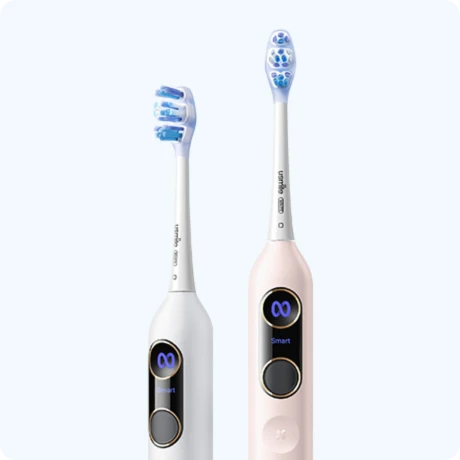
How to actually see missed plaque at home: Because fresh plaque is nearly colorless, it is hard to judge by eye alone. Affordable over-the-counter disclosing tablets temporarily dye leftover biofilm so you can see where to slow down. If you prefer built-in visual feedback while brushing, the usmile D50 OralCam Toothbrush uses six 405 nm violet LEDs (QLF fluorescence imaging) and a 300K intraoral camera to highlight mature plaque directly on its 1.65-inch handle screen, processing images locally on the device without requiring an app. Keep in mind that thin or freshly formed plaque, lighting, and camera distance affect what glows—this feature is for daily cleaning feedback only, not a medical diagnosis for cavities or gum disease.
[[Product Card]]
How to Remove Plaque From Teeth Effectively: A Step-by-Step Routine
Learning how to remove plaque from teeth does not require a complicated 20-minute routine—just the right order and a couple of steady minutes each day.
The Complete Daily Plaque-Control Stack
- Brush twice daily for 2 minutes with a soft-bristled brush and fluoride toothpaste, angling the bristles gently along the gumline.
- Clean between teeth once daily with a water flosser, string floss, or both. Should you water floss before or after brushing? The ADA notes either order works if you are thorough, though many dentists like water flossing first so loosened interdental plaque clears away and fluoride toothpaste reaches between teeth better.
- Keep six-month professional cleanings—or visit more often if your dentist recommends it for faster tartar buildup.
Proper Water Flossing Technique (Without Splashing)

- Fill the tank with lukewarm water. Warm water feels much more comfortable on sensitive teeth. Plain water already does the plaque-disrupting work; if you add a splash of diluted, alcohol-free mouthwash for freshness, flush a full tank of plain warm water through the unit afterward so residue does not clog the valves.
- Start on the lowest comfortable setting (30–35 PSI). Let your gums adapt for one to two weeks before stepping up to medium or stronger levels.
- Place the tip in your mouth before pressing power. Lean over the sink, aim the nozzle roughly 90° toward your gumline, and partially close your lips so water drains neatly into the sink—the simplest way to use a water flosser without making a mess on your bathroom mirror.
- Trace systematically for 1 to 2 minutes. Start at your back molars and glide slowly along the gumline toward the front, pausing about two seconds between each tooth. Cover both the cheek side and the tongue side—especially behind your lower front teeth, where plaque hardens fastest.
- Empty and air-dry after use. Pour out leftover water and open a detachable tank to dry so moisture does not linger. In hard-water areas, flush monthly with a 1:2 white vinegar and warm water mix, then rinse with a full tank of plain water as part of cleaning a water flosser regularly.
Common Mistakes That Leave Plaque Behind (And When to See a Dentist)
- Stopping after 15–20 seconds: Quick passes clear loose food but leave sticky gumline biofilm behind.
- Skipping the tongue side of lower front teeth and back molars: These blind spots collect salivary minerals and build tartar fastest.
- Spraying randomly instead of tracing the gumline: Steady 90° gumline tracing beats high pressure every time.
- Using a water flosser instead of brushing: Water flossing cleans interdental spaces, not the broad chewing and enamel surfaces your toothbrush handles.
When to See a Dentist Promptly: Book a dental exam if gum bleeding continues past one to two weeks of gentle daily care, if you feel a hard rough ridge or pieces of tartar breaking off, or if you have gum swelling, recession, persistent bad breath, or tooth pain.
How the usmile Water Flosser Targets Plaque Along the Gumline and Molars
Because consistency and back-tooth access drive real results, the design of a water flosser for plaque removal often decides whether it becomes a nightly habit or sits untouched under the sink.
Engineering Details That Support Consistent Daily Plaque Control

- Pulsed and microbubble water flow: usmile cordless flossers pair high-frequency pulsed streams (WaveFlow on C10/C30, CoreJet on C30SE) with vortex-powered microbubble flow on the C50 to flush interdental gaps and gumline margins gently and thoroughly.
- Stable pressure and gentle 30–35 PSI starts: An internal control chip keeps water pressure steady even as battery charge drops, while gentle starting levels help sensitive gums adapt comfortably.
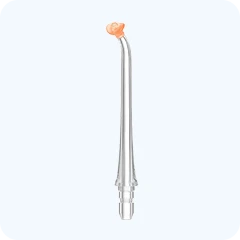
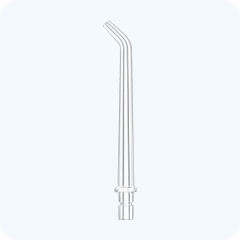
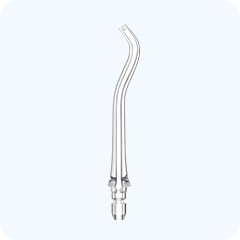
- 360° rotating S-shaped nozzle: Curved like a dental mirror to reach behind rear molars and along tongue-side gumlines with less wrist twisting. Standard (0.6–0.66 mm stream), Orthodontic (fine tapered bristles for brackets), and Guidance (soft silicone collar) tips fit across the C10, C30, and C50 with no mandatory subscription.
- Detachable 300 mL tanks for cleaner upkeep: Removable reservoirs on the C30, C30SE, and C50—plus antibacterial internal water paths—make rinsing and air-drying quick, addressing a common everyday concern about damp tanks.
[[Product Card]]
Matching a usmile Cordless Water Flosser to Your Routine

| Model & Best Fit | Tank & Continuous Flow | Pressure & Battery |
|---|---|---|
| usmile C50 (Braces & deep clean) | 300 mL removable · Up to 120s | 10 levels (30–120 PSI) · Up to 60 days |
| usmile C30 (Everyday precision) | 300 mL removable · ~60s | 5 levels (30–110 PSI) · Up to 60 days |
| usmile C10 (Travel & frequent trips) | 180 mL retractable · ~45–50s | 4 modes (35–110 PSI) · Up to 95 days |
| usmile C30SE (Simple starter) | 300 mL removable · ~75s | 4 modes, 1-button (30–120 PSI) · Up to 75 days |
- Choose C50 if you wear braces, crowns, or implants or want countertop-length flow without a countertop unit: its vortex pump delivers up to 120 seconds from a 300 mL tank across 10 incremental settings (30–120 PSI). In controlled 28-day laboratory testing, the C50 recorded a 64.17% reduction in plaque index, an 84.93% reduction in bleeding sites, and a 52.99% improvement in gingival index (individual results vary with daily technique and baseline oral health).
- Choose C30 for balanced everyday home use with five clear pressure levels starting at 30 PSI, a 60-second fill, USB-C charging, and a travel lock.
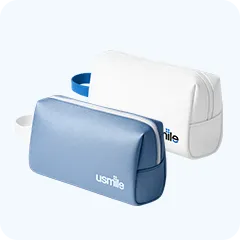
- Choose C10 if you travel often or take frequent business trips: it has the smallest tank in the lineup (180 mL) so the body stays genuinely compact. When retracted, it measures just 5.8 × 2.9 × 1.8 inches (146.8 × 72.5 × 44.5 mm, 300 g), slips easily into a toiletry pouch or carry-on, and runs up to 95 days per charge—just expect one quick refill during an unhurried full-mouth or braces session.
- Choose C30SE if you want an easy, one-button 300 mL cordless starter.
[[Product Card]]
All four models are IPX7 waterproof for shower use and carry adults-only safety labeling; teenagers wearing braces can use them under adult supervision starting at the lowest pressure setting.
Frequently Asked Questions About Water Flossing and Plaque
Why do my gums bleed when I first use a water flosser—am I damaging them?
Light bleeding during the first few days usually signals existing plaque-related gum inflammation rather than injury from gentle water flossing. Use lukewarm water on the lowest setting (30–35 PSI) and glide along—never forcefully into—the gumline. Bleeding should ease within one to two weeks; if it continues or hurts, see your dentist.
How often should I use a water flosser to keep plaque from hardening?
Once a day for 1 to 2 minutes, ideally before bed. Because soft plaque can begin hardening into tartar within 24 to 72 hours and gets stickier when left alone, consistent nightly use works far better than occasional high-pressure sessions.
Is one water tank enough to clean plaque from my whole mouth?
That depends on tank size, pressure level, and dental work. Compact 180 mL travel tanks (45–50 seconds) often take one refill for thorough full-mouth or braces cleaning, while 300 mL cordless tanks delivering 60 to 120 seconds of steady flow are designed to finish most sessions in a single fill.
Is a water flosser safe for braces, crowns, veneers, and dental implants?
Yes, when used at a comfortable pressure with the right tip—such as a slim-bristle orthodontic nozzle around brackets or a gentle low-PSI stream around implants, crowns, and veneers. Avoid aiming maximum pressure straight under delicate gum tissue, and check with your dentist before resuming use after oral surgery.
How often should I replace water flosser nozzles—and can family members share one device?
Replace nozzles every 3 to 6 months, or sooner if orthodontic bristles begin to splay, to keep hygiene and water-stream focus at their best. Family members can share one handle as long as each person uses and stores their own personal S-shaped nozzle separately.
Ready for a daily plaque-control habit that feels easy to keep up with? Explore the full usmile cordless water flosser to compare tank runtime, pressure ranges, and S-shaped nozzles side by side.
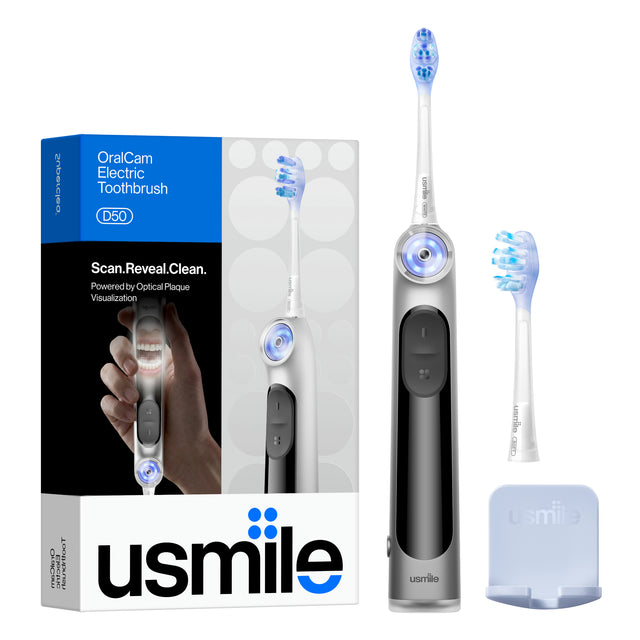
usmile D50 OralCam Toothbrush
Built-in OralCam for real-time plaque visibility and targeted adaptive cleaning for clinical-grade care
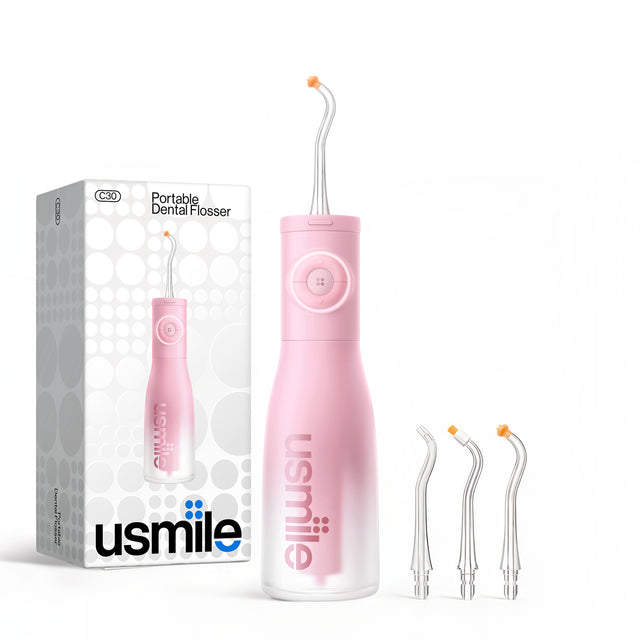
usmile C30 Cordless Water Flosser – Portable Oral Irrigator
For a complete, uninterrupted clean—at home or on the go.
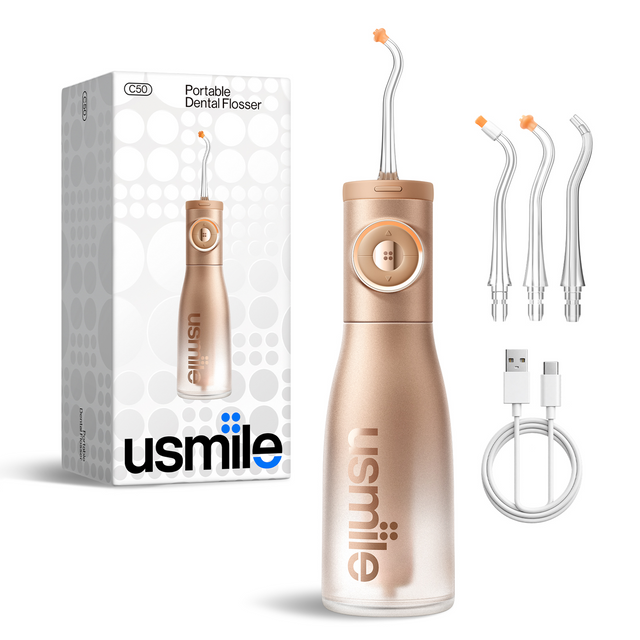
usmile C50 Portable Dental Flosser
MaxClean Efficiency Flow - Deep cleans hidden back teeth vwith the power of a countertop device.
Portable Water Flossers & Oral Irrigators
From an easy first clean to ultra-portable power and pro-level control, find the water flosser built for your routine.
Water FlosserDisclaimer
This article is intended for general informational and educational purposes only and is not a substitute for professional dental advice, diagnosis, or treatment. Oral care needs vary from person to person. Always consult a qualified dentist or healthcare professional with questions about your oral health, symptoms, or treatment options.