




Why Teeth Look More Spaced Out After Water Flossing
You started using a water flosser to clean between your teeth. But now you're noticing something unexpected: the spaces between some of your teeth look bigger than before.
Did the water pressure push your teeth apart? Did cleaning expose a gap that was already there? Or could something be happening to your gums?
A more visible gap after water flossing doesn't necessarily mean your teeth have moved. Removing trapped food can uncover an existing space, and changes in gum swelling can affect how your teeth look. But gum recession, gum disease, and actual tooth movement can also change the spaces between teeth.
The important question isn't just whether the gap looks bigger. It's whether you're noticing other changes, such as bleeding, sensitivity, gum recession, or a loose tooth.

Why Do My Teeth Look More Spaced Out After Water Flossing?
Removing Food Debris Reveals Existing Spaces
Imagine that a small piece of food is stuck between two back teeth. While it's there, you may not be able to see the space clearly. Once your water flosser rinses it away, the opening becomes more noticeable.
That doesn't mean the water created a new gap. It may simply have uncovered one that was already there.
Dental plaque can also collect between teeth and along the gumline. According to the American Dental Association (ADA), interdental cleaning helps remove trapped debris and plaque from areas a toothbrush cannot effectively reach.
However, there's an important limit: a water flosser cannot remove hardened tartar. Once plaque hardens into tartar, professional dental cleaning is needed.
So, if a gap looks clearer immediately after you rinse away food, that may be a change in visibility rather than tooth position. It's not enough, by itself, to tell you whether your gums are healthy.
Reduced Gum Swelling Can Change How Gaps Look
Inflamed gums often become red, puffy, or swollen. That extra swelling can change the shape of the gum tissue between adjacent teeth.
When plaque-related gingivitis improves through appropriate oral hygiene and dental care, swollen tissue may settle down. As a result, a space that previously looked partly filled by swollen gums may become easier to see.
This is a possible explanation, not something you can confirm by looking in the mirror. Reduced swelling and gum recession can sometimes look similar to someone who isn't trained to evaluate the gums.
If the change continues or you're unsure what you're seeing, have your dentist examine it.
Gum Recession Can Also Make Spaces More Visible
Gum recession is not the same as healthy gums becoming less swollen.
Gum recession happens when gum tissue pulls away from the teeth, exposing more tooth surface or root. It may make the teeth look longer and reveal spaces near the gumline, sometimes described as black triangles.
You may also notice greater sensitivity to cold drinks, a different-looking gumline, or food getting trapped in new places.
Gum recession can be associated with periodontal disease, aggressive brushing, tissue injury, and other factors. The Cleveland Clinic's gum recession guide explains why recognizing these changes early matters.
If you notice recession after starting water flossing, don't immediately assume the device caused it. Equally, don't dismiss the change as a normal result of cleaner teeth. A dental examination can help identify what's happening.

Can a Water Flosser Actually Make Gaps Between Teeth Bigger?
Can Water Pressure Push Teeth Apart?
A water flosser uses a directed stream of water to clean between teeth and around the gumline. It's not designed to reposition teeth like braces or clear aligners.
Seeing more space after water flossing is not evidence that water pressure has pushed your teeth apart.
At the same time, research on interdental cleaning does not establish that every device, pressure setting, or technique is harmless under all circumstances. The ADA notes that evidence for some oral irrigator outcomes remains limited, with differences among studies and devices.
If you're seeing an actual, progressive change in tooth spacing, it needs a dental assessment. An underlying periodontal problem or a change in tooth position may be involved, and a visual impression alone cannot establish the cause.
Can Improper Water Flossing Irritate Your Gums?
Yes. A stream that feels too forceful, a nozzle pressed into gum tissue, or repeatedly aiming at a sore area can cause discomfort and may irritate the gums.
Using the highest pressure isn't a requirement for a good cleaning routine.
If you're a beginner, choose a comfortable lower setting and follow your water flosser's instructions. Guide the stream along the gumline instead of forcing the tip beneath the gums.
Occasional bleeding can have several explanations, including existing gum inflammation. Don't automatically assume that bleeding means your gums are getting cleaner or that you should keep increasing pressure.
If you experience sharp pain, tissue injury, repeated bleeding, or worsening tenderness, stop the irritating technique and contact your dentist.
What About Traditional Dental Floss?
You may have seen the question, does dental floss cause gaps? Traditional string floss and a water flosser use different cleaning methods, but neither is intended to move teeth apart.
String floss can clean the contacting surfaces between tightly spaced teeth. A water flosser uses water to help clean areas between teeth and along the gumline, which some people find easier around braces or other dental work.
The ADA recommends cleaning between your teeth daily, but the right tool depends on the spaces between your teeth, your dental restorations, your gum health, and your ability to use it effectively.
If you're worried about signs of over-flossing, focus on symptoms such as ongoing soreness or injury rather than assuming that seeing a gap means you've cleaned too much.
Is the New Gap Normal or a Sign of a Dental Problem?
Changes That May Reflect Previously Hidden Spaces
A visible gap is not automatically a dental emergency.
For example, you might notice an opening right after washing away a piece of food. If it looks the same over time and there are no other concerning symptoms, an existing space may simply be easier to see.
But there's no reliable at-home visual test that proves a gap is harmless.
Rather than repeatedly probing the space with your nozzle or dental floss, pay attention to whether the appearance changes and whether you develop other symptoms.
Warning Signs You Should Not Ignore
The symptoms accompanying the gap matter more than the gap's appearance alone.
| What you notice | What it could suggest | What to do |
|---|---|---|
| A space becomes visible immediately after food is removed | An existing gap may be easier to see | Continue gentle cleaning; discuss persistent concerns with your dentist |
| Gums look less puffy | Gum inflammation may have changed | Don't assume this proves healing; seek evaluation if concerned |
| Teeth look longer or the gumline appears lower | Possible gum recession | Schedule a dental examination |
| Bleeding, swelling, or tenderness keeps happening | Gum inflammation or another dental problem | Contact your dental office |
| A permanent tooth feels loose or seems to shift | A problem involving tooth support or another condition | Seek prompt dental evaluation |
| A gap continues to widen | Possible change in gum tissue or tooth position | Arrange an examination rather than guessing at the cause |
The National Institute of Dental and Craniofacial Research (NIDCR) identifies bleeding or receding gums, loose teeth, and painful chewing among signs associated with periodontal disease.
A loose permanent tooth, quickly changing spacing, or significant swelling is not something to treat as a routine effect of water flossing.
Why You Cannot Diagnose Gum Recession at Home
A mirror or photo can show you that something looks different. It can't reveal the condition of the tissues or bone supporting your teeth.
During an examination, your dentist or dental hygienist may check the gumline, measure periodontal pockets, assess tooth mobility, and take X-rays if needed.
If you're unsure whether your gums have receded or your teeth have shifted, a professional assessment is more useful than trying to judge the gap from photos alone.
What Should You Do If You Notice Gaps After Water Flossing?
Review Your Water Flossing Technique
Start by checking that you're using your device comfortably and according to its instructions.
- Fill the reservoir. Use lukewarm water if your device instructions allow it.
- Begin with a gentle setting. Select a lower pressure, especially if water flossing is new to you.
- Position the tip correctly. Lean over the sink and bring the nozzle near the gumline as directed by the manufacturer.
- Guide the stream steadily. Move along the gumline and pause briefly between teeth without pressing the tip into the gums.
- Pay attention to discomfort. Lower the pressure or stop if the stream causes pain.

If you have periodontal pockets, recent oral surgery, implants, braces, or other dental work, ask your dental professional whether you need a particular tip or technique.
Water flossing should be part of a sensible cleaning routine, not a way to test how much pressure your gums can tolerate.
Start Gently and Adjust Pressure for Comfort
There is no need to jump to the strongest setting.
A pressure level that feels comfortable can make it easier to clean consistently. If you have sensitive areas, an adjustable device gives you a way to begin gently.
Don't mistake discomfort for effectiveness. If you cannot use a low setting comfortably, stop and get advice from your dentist before continuing.
When to Stop and Contact Your Dentist
Book a dental appointment if you notice a new or enlarging gap, persistent bleeding, increasing sensitivity, or changes in your gumline.
Seek prompt dental advice if a permanent tooth feels loose, your teeth appear to be shifting, or you have pain when biting.
Severe or rapidly spreading facial swelling, especially with fever or difficulty swallowing or breathing, requires urgent medical attention.
These symptoms should be evaluated rather than managed by using a stronger water jet.
Choosing a Water Flosser With Adjustable Pressure
Why Adjustable Pressure Matters for Comfort
An adjustable water flosser lets you choose a setting that fits your comfort and cleaning routine.
That's useful when you're learning the technique, have an area that feels sensitive, or prefer more control over the stream. It doesn't mean higher pressure is always better.
Importantly, adjustable pressure is a usability feature, not a treatment for gum recession, loose teeth, or growing gaps. If you're seeing those symptoms, selecting a new device isn't a substitute for seeing a dentist.
USMILE C10 vs. C30: Which Fits Your Routine?
USMILE offers two cordless options that suit different priorities: the compact C10 and the higher-capacity C30.
| Feature | USMILE C10 | USMILE C30 |
|---|---|---|
| Pressure options | 4 modes | 5 pressure levels |
| Advertised pressure range | 35–110 PSI | 30–110 PSI |
| Water reservoir | 180 mL | 300 mL |
| Practical advantage | Compact pull-out design for packing and storage | Larger reservoir for fewer interruptions |
| Consider it if... | You prioritize travel and a small bathroom footprint | You prioritize a longer cleaning session and finer pressure adjustment |
Specifications reflect USMILE's published US-market product information. Pressure ranges are manufacturer specifications, not a clinical measure of gum safety.
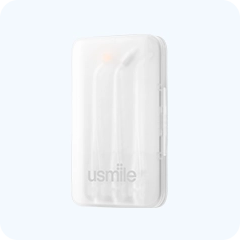
The USMILE C10 Portable Dental Flosser may be more convenient if you travel frequently or have limited counter space.
The USMILE C30 Cordless Water Flosser has a larger tank and an additional pressure level, which may suit someone who prefers fewer refills and more adjustment choices.
Neither device can be expected to close a tooth gap, restore receded gums, or treat periodontal disease. If your gums or tooth spacing have changed, get that checked before treating a product choice as the solution.
You can compare USMILE water flossers to find a model that fits your routine.
If your teeth look more spaced out after using a water flosser, don't immediately blame the water pressure. An existing space may be easier to see after cleaning, but gum recession or tooth movement can also change your smile. Use a gentle technique, watch for accompanying symptoms, and have persistent or changing gaps checked by a dental professional.
Medical note: This article provides general oral-health information and is not a diagnosis or substitute for professional dental care. A dentist should evaluate persistent symptoms, loose teeth, or changing tooth spacing.
Frequently Asked Questions
Will the Gaps Between My Teeth Close Again?
That depends on why they're visible. Removing trapped food doesn't change the position of your teeth, so an existing space won't close just because it has been cleaned. If recession, gum disease, or tooth movement is involved, your dentist can evaluate the cause and explain whether treatment is appropriate.
Can a Water Flosser Cause Gum Recession?
Gum recession has several possible causes, and noticing it after water flossing doesn't establish that the device caused it. Incorrect or uncomfortable use can irritate gum tissue, but there isn't enough evidence to conclude that routine water flossing causes recession in general. Have any new gumline changes examined rather than relying on a home diagnosis.
Why Do My Teeth Feel Loose After Water Flossing?
A loose feeling doesn't prove the water flosser moved your teeth. Actual mobility in a permanent tooth, however, can signal a problem involving the supporting tissues or another dental condition. Contact your dentist promptly if a tooth feels loose.
Is It Safe to Use a Water Flosser Every Day?
For many people, a water flosser can be part of daily interdental cleaning when used according to its instructions. The ADA recommends cleaning between teeth once a day and brushing twice a day. If your gums bleed persistently, you're recovering from dental treatment, or you have an ongoing periodontal condition, ask your dentist for personalized guidance.
Is a Water Flosser Better Than String Floss for Gaps?
Neither is universally better. String floss is useful for tightly contacting tooth surfaces; water flossers may be more convenient around certain orthodontic appliances or restorations. The evidence comparing interdental devices varies by outcome and study quality, so choose the approach your dental professional recommends for your particular mouth.


Looking for something else?
2026年最佳牙周病电动牙刷:6款经实测的护龈优选
LEARN MORE
飞机上使用电动牙刷:完整旅行指南(2026年)
LEARN MORE
2026年最佳平价电动牙刷:真正好用的5款高性价比之选
LEARN MORE
超声波牙刷与电动牙刷:哪种技术更适合您的笑容?
LEARN MORELooking for something else?
You may also like

usmile Q30 儿童电动牙刷三支装

usmile Q30 儿童电动牙刷双支装 - 买二赠三(仅限美国)

usmile Y20PRO AI 电动牙刷 & C30 无线冲牙器

usmile Y20PRO 成人电动牙刷 x Q30 儿童电动牙刷
usmile 经典款旅行洗漱包—Y20 PRO AI 电动牙刷 x C10 冲牙器
usmile C10 冲牙器 x Q30 儿童电动牙刷
Further reading
Why Teeth Look More Spaced Out After Water Flossing
2026年最佳可持续电动牙刷:5款经测试产品,助您实现更绿色、更健康的笑容
牙菌斑、牙渍还是食物残渣?如何解读牙刷摄像头拍摄的内容