






Soft Bristle Electric Toothbrushes Explained: Why High-Frequency Motors Never Need Firm Bristles
A soft bristle electric toothbrush uses sonic motion, flexible filaments, and gentle pressure to remove plaque while reducing gum abrasion.

On This Page
Quick Answer
High-speed electric motors vibrate over 30,000 times per minute, using rapid micro-sweeps and fluid motion rather than stiff bristles to clear soft plaque safely. Pairing that motor speed with a hard bristle toothbrush wears down enamel and gums, making a soft bristle electric toothbrush the universal toothbrush recommended by dentist guidelines and the safest soft bristle toothbrush for sensitive teeth.
The Physics of High-Speed Brushing: Why Soft Bristle Electric Toothbrushes Don't Need Firm Filaments
Switching from a manual brush to an electric model requires unlearning a common household instinct. When scrubbing a tile floor or a cast-iron pan, stiffer bristles and heavier elbow grease remove stubborn grime faster. Inside your mouth, that same logic works against you—especially when a motor multiplies every movement by a factor of a hundred.
Stroke Frequency (30,000+ VPM) and Hydrodynamic Fluid Micro-Shear vs. Manual Scrubbing
A sonic toothbrush moves over 100 times faster than a manual brush, replacing downward scrubbing force with high-frequency tip motion and fluid turbulence. While a typical manual brusher makes roughly 300 strokes per minute, a modern sonic electric toothbrush with soft bristles generates between 33,600 and 70,800 vibrations per minute (VPM).
At that speed, gentle cleaning relies on two physical mechanisms working together:
- High-Frequency Micro-Sweeps: Soft filament tips glide across the tooth surface hundreds of times per second, lifting sticky deposits through rapid repetition rather than heavy hand pressure.
- Hydrodynamic Fluid Shear: Rapid bristle oscillations whip saliva, water, and toothpaste foam into tiny turbulent currents that flush loosened bacteria out from tight spaces between teeth.
If you mounted a firm bristle toothbrush head onto a 30,000+ VPM motor, those rigid filaments would refuse to bend on contact. Every vibration would concentrate intense friction onto tiny points of enamel and delicate gum tissue, acting like a power sander rather than a daily hygiene tool.
Dental Plaque Is a Soft Gel Biofilm—Wait, Why Do Stiff Bristles Miss the Gumline?
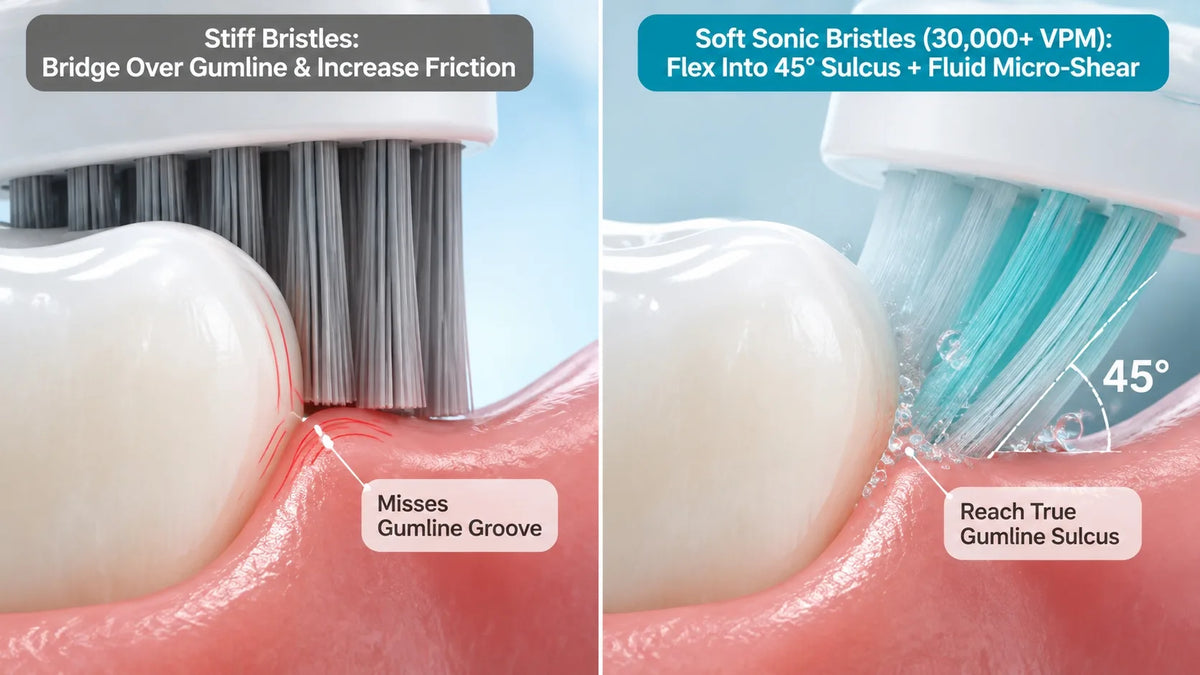
Stiff bristles miss the gumline because rigid nylon bridges straight over curved tooth grooves, whereas flexible soft bristles bend directly into the shallow gum sulcus where soft plaque hides. Many people reach for firmer bristles chasing a "squeaky-clean" feeling, yet according to the American Dental Association (ADA) toothbrush guidelines, fresh dental plaque is a soft, gel-like bacterial biofilm similar in texture to yogurt. Disrupting it requires thorough surface contact, not stiff scrubbing. Once unbrushed plaque absorbs minerals from saliva and hardens into tartar (calculus), no toothbrush—soft or hard—can brush it off; only a dental professional's scaling tools can remove it safely.
Because teeth narrow where the crown meets the gumline, pressing a stiff brush against a curved tooth causes rigid bristles to skip right over the recessed crease. Flexible filaments on a soft bristle electric toothbrush yield under light contact, curving smoothly into the 45-degree gumline groove and interdental spaces to sweep biofilm out of hiding.
What Clinical Studies Show: Hard vs. Soft Bristles on Enamel, Dentin, and Gums
Clinical trials consistently show that soft bristles clean just as thoroughly as stiffer bristles—and up to 4.5 times better at light pressure—while cutting gum lesions and long-term gum recession in half. Decades of laboratory and patient studies confirm that firmer filaments add tissue trauma without removing extra plaque.
The Cleaning Efficacy Myth: Soft vs. Medium Bristles Under Load (1 N to 4 N)
Pressing harder or choosing stiffer bristles provides zero extra plaque removal across a standard two-minute brushing cycle. In a 2023 controlled laboratory study on bristle stiffness and brushing force, researchers tested cleaning performance across loads ranging from a feather-light 1 Newton (1 N, roughly 100 grams of weight) up to a heavy 4 Newtons (4 N), finding no statistically significant cleaning gain as force increased (p > 0.05).
What changed dramatically between bristle grades was how the filaments behaved on the tooth surface:
- 4.5x Better Cleaning at Gentle Pressure (1 N): At a light 1 N touch, soft bristles cleaned 4.5 times more effectively than medium bristles (2.44% vs. 0.54% cleaned area, p < 0.05) because longer, flexible tips conformed to the natural curve of the tooth.
- Built-In Overload Buckling (4 N): When hand pressure spiked to an excessive 4 N, soft bristles bent and laid flat, causing less dentin wear than at 3 N. By contrast, a medium or firm bristle toothbrush stayed upright under heavy loads, carving progressively deeper grooves into the tooth as pressure rose.
Gingival Lesions, Cervical Abrasion, and the 2.0 N Force Threshold
Brushing with hard bristles causes up to 10 times more gum lesions in eight weeks and doubles the long-term risk of gum recession compared to soft bristles. While outer tooth enamel is the hardest tissue in the human body (around 5 on the Mohs hardness scale), your gums and underlying root dentin (Mohs hardness ~2 to 2.5) are far softer. A systematic review of 13 randomized clinical trials on bristle stiffness found that using a hard bristle toothbrush produced 20 gum tissue lesions after eight weeks, compared to 6 with medium bristles and just 2 with soft bristles (p < 0.01). Long-term patient data from a clinical study on ultra-soft toothbrushes further confirms that habitual hard-bristle users experience twice the rate of gum recession as soft-bristle users.
A comprehensive 2025 clinical review on toothbrushing wear and gingival recession tracked how escalating hand pressure damages gumlines over time:
- Healthy gums without recession: Average brushing force of 2.1 ± 0.3 N (the ideal gentle zone is 1.0–2.0 N).
- Minor gum recession: Average force rises to 2.4 ± 0.4 N.
- Wedge-shaped gumline notches: Average force reaches 2.9 ± 0.4 N.
- Severe gum recession: Average force climbs to 3.8 ± 0.5 N.
Once gums pull back, the softer root surface is left exposed to daily friction. Switching right away to a soft bristle toothbrush for receding gums—or pairing a soft bristle toothbrush for gum recession with a gentle soft toothbrush for sensitive teeth—prevents V-shaped notches from wearing into exposed roots.
| Bristle Grade & Diameter | 1 N–4 N Cleaning & Wear | Gum Risk & Clinical Use |
|---|---|---|
| Ultra-Soft (0.09–0.125 mm) | Gentle biofilm sweep at 1.0–1.5 N; minimal dentin wear | Lowest lesion risk; ideal for post-surgery, kids, or severe sensitivity |
| Soft (0.15–0.20 mm) | 4.5x better cleaning than medium at 1 N; buckles safely at 4 N | Dentist-recommended standard (2 gum lesions in 8 weeks) |
| Medium (0.18–0.19 mm) | Poor conformity at 1 N (0.54%); wear rises linearly with load | 3x more gum lesions than soft (6 in 8 weeks); unsuitable for sonic motors |
| Hard / Firm (0.20–0.30 mm) | Bridges over grooves; severe dentin gouging above 2.5 N | 10x gum lesions (20 in 8 weeks) & 2x gum recesion risk |
Decoding Types of Toothbrush Bristles: Diameter, Material, End-Rounding, and Cushion Engineering
True brush head gentleness depends on four physical details working together: micro-fine filament diameter (0.09–0.20 mm), flexible trim length, over 90% polished end-rounding, and a shock-absorbing cushioned back. Many electric toothbrush users have experienced buying a refill pack labeled "Soft," only to find the bristles still feel stiff and poky against their gums. Looking closely at the engineering behind different types of toothbrush bristles reveals why two heads with the same label can feel completely different in your mouth.
[[Collection Card]]
Bristle Diameter (0.09 mm to 0.30 mm), Filament Length, and Nylon vs. PBT Chemistry
A brush head labeled "Soft" can still feel stiff if its filaments are cut short, packed into dense flat blocks, or stiffened by cold tap water. What your gums actually feel on contact comes down to three filament specs:
- Filament Thickness (Diameter): Standard soft bristles measure 0.15 to 0.20 mm across, while extra soft toothbrushes step down to micro-fine filaments between 0.09 and 0.125 mm. Because bending stiffness drops sharply as a cylinder gets thinner, shaving just 0.05 mm off a bristle makes it dramatically softer against tender gums.
- Bristle Trim Length: Even when two brush heads use identical 0.20 mm filaments, a shorter trim (10.5 mm) resists bending much more than a slightly longer trim (12.0 mm). Compact heads with short, tightly packed tufts have less room to flex—especially when rinsed under cold tap water before brushing.
- Nylon vs. PBT Material: Premium brush heads typically use Nylon 6.12 (such as DuPont Tynex), which offers balanced flexibility and relaxes slightly in warm water. Other heads use PBT (polybutylene terephthalate) polyester filaments, which absorb less water and keep a firmer spring-back when wet.

End-Rounded vs. Tapered Bristle Tips and ANSI/ADA Standard No. 119
Unpolished bristle tips act like microscopic saws at sonic speeds, which is why dentist-recommended brush heads polish their filament tips into smooth, rounded domes. When raw bristles are sliced to length in a factory, their tips are left with sharp, jagged edges under a microscope. To qualify as a safe toothbrush recommended by dentist standards (ANSI/ADA Standard No. 119), filaments must go through diamond-polishing discs that round off those sharp corners. While basic clinical standards require at least 40% to 50% rounded tips to reduce gum abrasion, usmile replacement brush heads are engineered with over 90% end-rounded DuPont Tynex soft bristles so the tips glide smoothly across delicate gum tissue.
Depending on your oral care goals, soft heads use two main tip profiles:
- End-Rounded (Dome) Tips: Smooth hemisphere tips maximize surface contact on tooth enamel while protecting gums from microscopic scratches.
- Tapered (Feathered) Tips: Ultra-fine tapered ends reach deeper into narrow gumline pockets, though their pointed tips cover less flat surface area per stroke.
This polishing step also explains why many shoppers regret buying ultra-cheap, unbranded refill packs online: budget factories frequently skip tip rounding, leaving rough cut nylon edges that irritate gums at 30,000+ vibrations per minute.
Multi-Level Tuft Geometry (+12–15% Interproximal Reach) and Shock-Absorbing Backings
Angled, multi-level bristle tufts clean 8% to 15% more effectively between teeth than flat-trimmed heads, while silicone-wrapped backs prevent painful plastic bumps behind back molars. When all bristles are cut to a single flat height, they bunch together and block one another from slipping between teeth. Arranging tufts at slight angles improves between-teeth reach by 12% to 15%, and alternating high-low tuft heights adds 8% to 9% overall plaque removal efficiency.
Finally, a well-designed soft bristle toothbrush for gums softens the back of the brush head itself. When guiding a vibrating brush into tight spaces behind wisdom teeth or back molars, a thick hard-plastic head can easily tap against neighboring teeth or sore gums. Combining an ultra-slim 4.3 mm head profile with a soft silicone-wrapped back, biomimetic shock-absorbing fins, or an internal air cushion absorbs stray vibrations for a noticeably gentler feel.

Who Needs Extra-Gentle Bristles Most? Matching Bristle Design to Sensitive Teeth, Gums, and Braces
Anyone dealing with bleeding gums, receding roots, orthodontic brackets, or developing baby teeth needs ultra-gentle, cushioned soft bristles to clear plaque without triggering pain or tissue wear. While soft filaments benefit every brusher, choosing the right electric toothbrush for sensitive teeth and fragile gums makes filament engineering critical.
Bleeding Gums and Gingivitis: Disrupting Sulcus Biofilm Without Micro-Tears
Gums bleed during brushing because trapped plaque bacteria inflame the gumline—and gentle 45-degree brushing with soft rounded bristles clears that bacteria without tearing fragile tissue. Seeing pink foam in the sink often tempts people to either skip the gumline completely or scrub harder with a firm brush. Both choices worsen gingivitis.
Using a soft bristle toothbrush for bleeding gums—which also acts as a targeted soft bristle toothbrush for gingivitis—breaks that cycle safely. Guided lightly at a 45-degree angle along the gum margin, flexible rounded tips sweep bacteria out of the shallow sulcus so inflamed blood vessels can heal, following dental professional guidance on sensitive teeth and gums.
Receding Gums, Sensitive Dentin, and Non-Brushing Co-Factors (Bruxism & Thin Biotypes)
Exposed tooth roots lack protective enamel, requiring soft bristles and light pressure (<2.0 N) to clean open dentin tubules without carving gumline notches. When gums pull back, microscopic fluid channels in the root dentin react sharply to cold water, sweet foods, and bristle friction. Pairing a soft bristle toothbrush for receding gums with a cushioned soft bristle toothbrush for sensitive gums cleans these tender root necks without stripping away their natural protective layer.
It is also reassuring to know that brushing is not the sole cause of gum recession. Nighttime teeth grinding or clenching (bruxism) places heavy flexing stress on tooth necks, and a naturally thin gum biotype makes gum margins more delicate from birth. Even when clenching or genetics contribute to recession, eliminating heavy brushing force stops daily mechanical wear from accelerating the problem.
Orthodontic Braces and Kids' Developing Enamel
Braces wearers and children ages 3 to 12 need compact, flexible soft brush heads that bend around brackets and protect thin developing enamel.
- Orthodontic Braces: Metal or ceramic brackets, hooks, and archwires create dozens of tiny ledges where food and plaque collect. Stiff bristles cannot bend under wires and can tug on ligature ties. A slim, multi-level soft bristle toothbrush for braces slips smoothly under archwires and around bracket wings while soothing ortho-inflamed gums.
- Kids (Ages 3–12): Children's primary (baby) teeth have much thinner enamel than adult teeth, and gums are often tender as new molars erupt. Kids need mini ultra-soft brush heads made with certified non-toxic filaments and soft silicone bumpers—never scaled-down firm bristles.
Why Soft Bristles Alone Aren't Enough: Active Pressure Control, Toothpaste RDA, and Technique
Soft bristles only protect your teeth when paired with three daily habits: keeping brushing force below 2.0 N, using low-abrasion toothpaste (RDA ≤ 70), and waiting 30 to 60 minutes after acidic drinks. How hard you press and what paste sits on your bristles matter just as much as the filaments themselves.
Passive Warning Lights vs. Active Auto-Deceleration Sensors (And Why Sonic Beats Manual on Force)
Sonic electric toothbrushes cut average hand pressure nearly in half compared to manual brushing (0.9 N vs. 1.6 N), and active auto-deceleration motors automatically drop vibration speed when you press too hard. Many brushers assume manual brushing gives them gentler control, yet in vivo force tracking shows manual brushers press at an average of 1.6 ± 0.3 N (with heavy scrubbers reaching 2.3 to 4.1 N), while sonic users average just 0.9 ± 0.2 N.
Still, anyone who brushes on autopilot early in the morning knows how easy it is to miss a simple flashing light on a handle. That is why advanced electric toothbrush with soft bristles models use active pressure control: the moment you press past the safe threshold, the brush not only flashes a red warning light or gives a voice cue, but automatically reduces motor vibration frequency or power while a flexible silicone neck or cushioned head absorbs the extra load—helping retrain heavy brushing habits within six weeks.
The Hidden Abrasive: Toothpaste RDA (≤70) and the 30–60 Minute Acid Delay Rule
Nylon soft bristles with water cause virtually zero enamel wear—the real abrasion comes from pairing heavy pressure with high-grit whitening or charcoal toothpastes (RDA > 100) or brushing right after acidic meals. Dental researchers measure toothpaste grit on the Relative Dentin Abrasivity (RDA) scale:
- 0–70 RDA (Minimally Abrasive): The safest daily range to pair with a soft bristle toothbrush for sensitive teeth or exposed roots (most daily desensitizing pastes sit between RDA 34 and 70).
- 71–100 RDA (Moderately Abrasive): Suitable for healthy, intact adult enamel.
- 101–150+ RDA (Highly Abrasive): Found in aggressive tartar-control, smoker's, and charcoal whitening toothpastes (which can reach RDA 166 and rapidly wear down exposed root dentin).
Just as important is the 30-to-60-minute acid delay rule: citrus, soda, sports drinks, wine, and coffee temporarily soften surface enamel. Rinse with plain water first and wait 30 to 60 minutes so saliva minerals can re-harden your enamel before using your soft bristle electric toothbrush.

The 3-Month Fraying Rule and the Two-Finger Glide Technique
Holding your toothbrush with two fingertips at a 45-degree angle and replacing the head every 3 to 4 months ensures only smooth, rounded bristle tips touch your gums.
- Use a Two-Finger Grip: Hold the handle lightly with your fingertips like a flute rather than clenching it in your fist.
- Glide at 45 Degrees: Rest the bristles gently along the gumline at a 45-degree angle, pausing 2 to 3 seconds per tooth rather than scrubbing back and forth.
- Replace Heads Every 3–4 Months: Once bristles splay outward or blue indicator filaments fade, the tips no longer meet the tooth on their polished rounded domes—turning even a soft brush into a scratchy one.
How to Match a Soft-Bristle Electric Toothbrush to Your Oral Care Needs (The usmile Lineup)
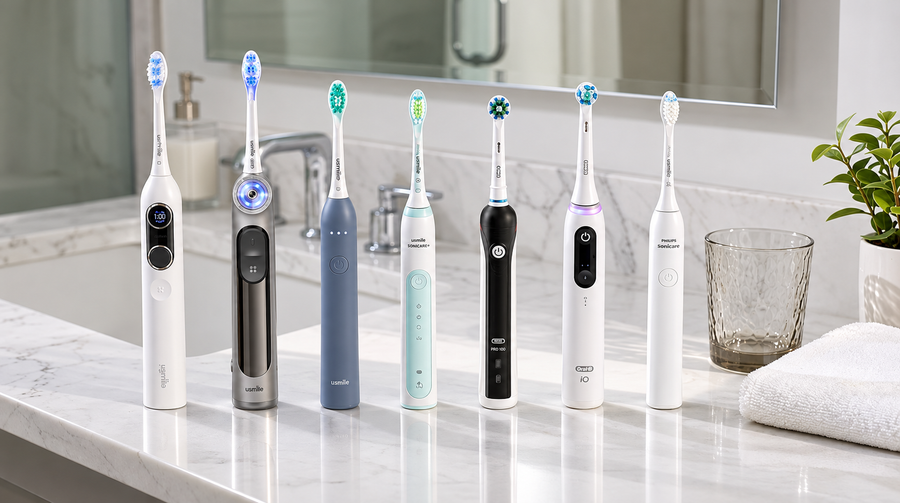
Matching the right soft-bristle electric toothbrush comes down to whether you need active frequency-reduction pressure control for receding gums, plaque visualization for sensitive gumlines, quiet air-cushioned simplicity, or certified pediatric ultra-soft care. Across the usmile electric toothbrush lineup, every model uses 100% soft or ultra-soft filaments—making it easy to narrow down the right fit alongside our tested electric toothbrushes for sensitive teeth.

For Receding Gums, Heavy Brushers & Tight Back Molars — usmile Y20 PRO
The usmile Y20 PRO is built for heavy-handed brushers and receding gums, combining a 4.3 mm ultra-thin silicone-cushioned soft head with an active pressure sensor that automatically lowers vibration frequency. As our flagship adult soft bristle toothbrush for gum recession, it protects vulnerable gumlines through three core features:
- 4.3 mm Ultra-Thin Ergonomic Brush Head 2.0: Roughly 35% slimmer than conventional heads to slip behind wisdom teeth without bumping gums, wrapped in a soft silicone cushion back with biomimetic shock-absorbing fins.
- Active Auto-Deceleration Pressure Sensor: When you press too hard, the handle flashes a red warning light and automatically reduces vibration frequency to shield exposed tooth necks.
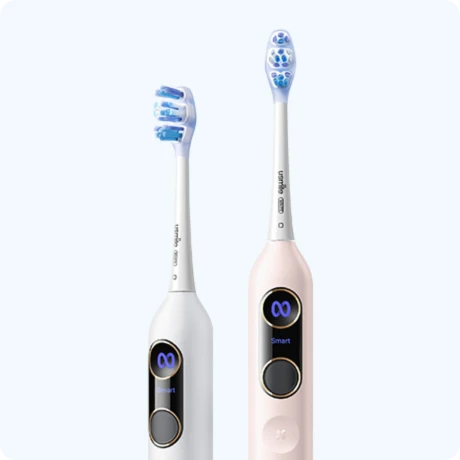
- Standalone Smart Guidance: Includes a dedicated Gum Care mode, a Live 3D Oral Map screen tracking 6 zones / 16 surfaces, FocusCare™ bone-conduction voice cues, and up to a 90-day USB-C battery (operates 100% standalone without requiring an app).
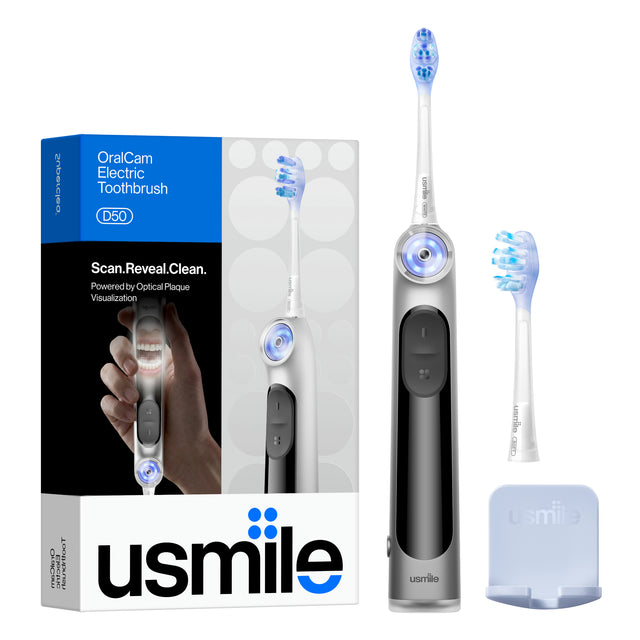
For Sensitive Gums & Hidden Gumline Plaque Visibility — usmile D50 OralCam
The usmile D50 OralCam pairs upgraded 2.0 soft brush heads and a flexible silicone neck joint with a built-in optical camera that shows exactly where gumline plaque remains—so you never over-brush tender spots blindly. It is tailored for anyone seeking a precision soft bristle toothbrush for sensitive gums:
- Upgraded 2.0 Soft Heads + Flexible Silicone Neck: Ships with two full-soft Ergonomic 2.0 heads (Gum Care and Whitening) featuring a flexible silicone neck joint and automatic power-reduction pressure protection that cushions sudden hand force.
- Built-In 300K Camera + Snipe Mode: Uses 405 nm optical fluorescence and on-device AI to highlight missed plaque on the 1.65-inch touchscreen, while Snipe Mode boosts cleaning over heavy plaque (up to 70,800 VPM) and softens automatically over clean, sensitive areas. All visual processing runs 100% locally on the brush for complete privacy, with up to an 80-day battery. (Note: OralCam visual tracking provides daily brushing coverage and plaque feedback only and is not a clinical diagnostic tool for cavities or periodontal disease.)
[[Product Card]]
For Light-Handed Brushers, Teens & First-Time Switchers — usmile P10 S
The usmile P10 S delivers a whisper-quiet (<60 dB), air-cushioned soft brushing experience for light-handed brushers, teens, and first-time sonic users. As an accessible soft toothbrush for sensitive teeth, it focuses on everyday comfort:
- Patented Air-Cushion 1.0 Soft Brush Head: Pairs a full rubber-wrapped back and internal air-cushion pad with >90% end-rounded DuPont Tynex soft bristles and 3-month blue fade indicator filaments.
- Gentle Soft Mode & 180-Day Battery: Offers 3 modes (Soft, Clean, and White up to 33,600 VPM), a 2-minute timer with 30-second quadrant pacing, and up to a 180-day USB-C battery. Because the P10 S is a streamlined, screenless model without an active pressure sensor, it is best suited for brushers who already use a light touch.
[[Product Card]]
For Ages 3–12 (Primary & Mixed Dentition) — usmile Q30 Kids
The usmile Q30 Kids protects baby teeth and erupting adult molars for ages 3 to 12 using EU RoHS/REACH certified non-toxic ultra-soft mini heads and a red pressure-warning light ring. For parents comparing pediatric extra soft toothbrushes, the Q30 provides complete peace of mind:
- Certified Ultra-Soft Mini Heads with Silicone Bumpers: Every Q30 brush head uses pediatric ultra-soft filaments wrapped in a soft silicone anti-collision edge, with three specialized ultra-soft refill options (anti-cavity, gum care, and daily clean) and zero hard bristles across the line.
- Kid-Friendly Pressure Coaching: A Smart Light Ring flashes red if your child presses too hard, paired with bone-conduction voice coaching, a 16-grid progress screen, and up to a 90-day battery.
[[Product Card]]
All adult usmile handles share 100% cross-compatible refill heads, so you can pair either the Classic Clean 1.0 or Upgraded Ergonomic 2.0 cushioned soft heads with any adult model.
| usmile Model | Brush Head & Pressure Guard | Gentle Specs & Best Fit |
|---|---|---|
| usmile Y20 PRO | 4.3 mm Ergonomic 2.0 soft head + silicone back; red alert + auto-frequency drop | Gum Care mode, 3D screen, bone-conduction voice, 90-day battery; best for receding gums & heavy brushers |
| usmile D50 OralCam | Ergonomic 2.0 soft heads + flexible silicone neck + auto-power reduction | 300K plaque camera, Snipe Mode (up to 70,800 VPM), 80-day battery; best for sensitive gums & hidden plaque |
| usmile P10 S | Air-Cushion 1.0 rubber-wrapped head (>90% rounded DuPont Tynex); no pressure sensor | Soft mode, <60 dB quiet motor, 180-day battery; best for light brushers, teens & beginners |
| usmile Q30 Kids | Mini ultra-soft head (EU RoHS/REACH non-toxic) + silicone bumper + red pressure ring | 3 ultra-soft head types, voice coach, 90-day battery; best for kids ages 3–12 (baby & mixed teeth) |
Frequently Asked Questions About Soft Bristle Electric Toothbrushes
Why do stores still sell medium and hard toothbrushes if dentists don't recommend them?
Stores still stock medium and hard manual toothbrushes because roughly 38% of shoppers mistakenly equate stiffer bristles with deeper cleaning, and many buyers use firm brushes outside the mouth to scrub dentures or tile grout. A large European oral health survey reported by MyVariations found that over a third of adults still buy firmer brushes simply out of habit. In addition, a manual hard bristle toothbrush is frequently purchased for household cleaning or scrubbing removable dentures in the sink, as noted in Colgate's oral care guide on soft vs. hard toothbrushes.
Can a soft bristle electric toothbrush remove coffee, tea, and wine stains effectively?
Yes—high-frequency sonic micro-strokes polish away surface coffee, tea, and red wine stains from the outer protein film without needing stiff bristles. A soft bristle electric toothbrush sweeps away daily pigment buildup smoothly, whereas scrubbing with firm bristles carves microscopic scratches into enamel that actually trap darker stains over time.
Why does my new "soft" electric toothbrush head still feel stiff, and does running it under warm water help?
A new brush head labeled "Soft" can feel firm if it uses short-trimmed bristles (10.5 mm), tightly packed flat tufts, or is rinsed under cold tap water—and running it under warm water for 5 to 10 seconds immediately relaxes nylon filaments. If the head still feels too rigid after a warm rinse, switch to a refill with longer multi-level tufts and a cushioned silicone or air-cushion backing.
Why do my gums bleed when I first switch to a soft bristle toothbrush for bleeding gums, and when should I see a dentist?
Mild gum bleeding during the first 5 to 10 days of using a sonic brush usually happens because flexible bristles are clearing neglected plaque from already inflamed gumline grooves. Keep brushing gently at a 45-degree angle with a soft bristle toothbrush for bleeding gums; healthy gums typically stop bleeding within 1 to 2 weeks, and you should see a dentist if bleeding persists past two weeks to check for hardened tartar below the gumline.
Can switching to a soft bristle toothbrush for receding gums make gum tissue grow back?
No—receded gum tissue cannot grow back on its own, but switching to a pressure-controlled soft brush immediately stops further mechanical recession and protects exposed roots. Using a soft bristle toothbrush for receding gums alongside a low-abrasion toothpaste (RDA ≤ 70) is the most effective way to prevent deep wedge-shaped notches from forming on uncovered root dentin.
Is a soft bristle toothbrush for braces safe for brackets, and will braces fray the bristles faster?
Yes, soft sonic bristles are completely safe for orthodontic brackets and dental glue, though friction against metal bracket corners typically requires replacing the brush head every 8 to 10 weeks instead of 12 weeks. A soft bristle toothbrush for braces bends smoothly under archwires without prying on brackets; just keep an eye on the blue fade-indicator bristles so you always brush with upright, rounded tips.
Can adults with severe sensitivity use kids' extra soft toothbrushes or heads, and how do I know a refill head is truly soft?
Adults with extreme sensitivity or tight wisdom-tooth spaces can use compact pediatric heads for targeted spot-cleaning, though an adult 4.3 mm ultra-slim cushioned soft head covers full-sized adult teeth much more efficiently. Whether comparing adult refills or pediatric extra soft toothbrushes, always choose verified manufacturer heads with over 90% end-rounded filaments rather than unbranded generic refills that skip tip polishing.
Is a manual extra-soft toothbrush safer for thin enamel and exposed roots than a soft electric toothbrush?
No—clinical force tracking shows manual brushers press nearly twice as hard on average (1.6 N) as sonic electric toothbrush users (0.9 N). When paired with an active auto-deceleration pressure sensor and low-RDA toothpaste, a soft sonic toothbrush protects thin enamel and exposed roots much more consistently than unmonitored manual brushing.
usmile D50 OralCam Toothbrush
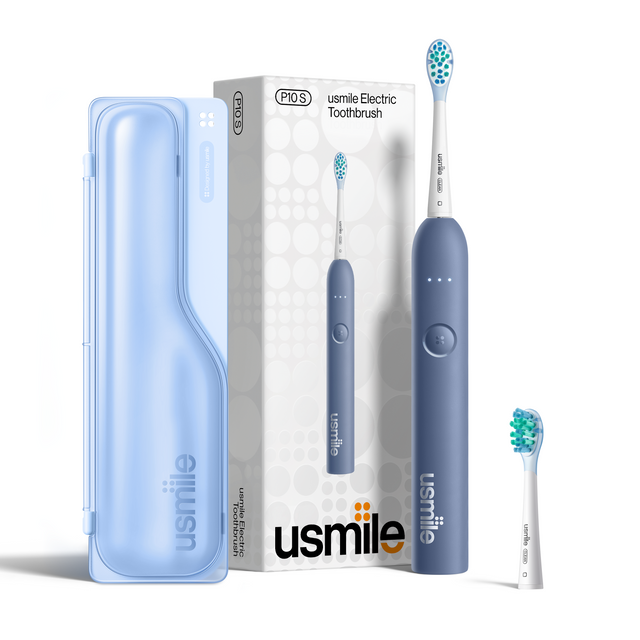
usmile P10 S Electric Toothbrush
The perfect first electric toothbrush — simple, gentle, and long-lasting.
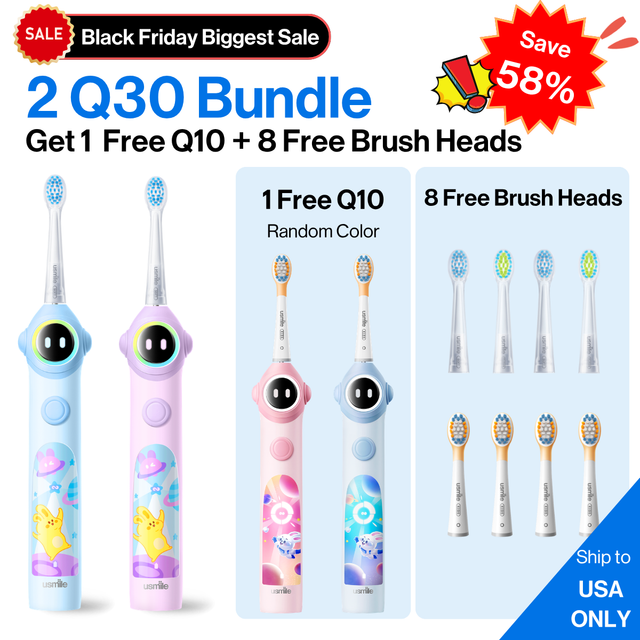
usmile Q30 Kids Electric Toothbrush
A talking brushing coach that helps kids brush better on their own. Safe for ages 3+. Tracks brushing in the app. Try risk-free for 90 days.

Electric Toothbrush
Discover usmile electric toothbrushes with AI guidance, plaque removal, gum protection and smart feedback for adults, kids and first-time users.
Electric ToothbrushDisclaimer
This article is intended for general informational and educational purposes only and is not a substitute for professional dental advice, diagnosis, or treatment. Oral care needs vary from person to person. Always consult a qualified dentist or healthcare professional with questions about your oral health, symptoms, or treatment options.