







Electric Toothbrush for Sensitive Teeth: How to Choose One Safely
Sensitive teeth and a new electric toothbrush — the combination makes people nervous. The reasonable worry is that something more powerful might make things worse. Usually it doesn't. But the answer isn't a flat reassurance; it depends on which features the brush has and how you use it.
The short version: an electric toothbrush can actually be the gentler option for sensitive teeth, because it does the cleaning motion for you. That removes the urge to scrub harder when your mouth doesn't feel clean enough, which is, as Mayo Clinic recommends, exactly what damages enamel and irritates gum tissue over time. The right features turn that advantage into something reliable.
The Short Answer: Yes, Electric Toothbrushes Can Be Good for Sensitive Teeth
 For most people with mild to moderate sensitivity, an electric toothbrush is not too harsh by default. If anything, it's often gentler than manual brushing — it removes plaque without relying on how hard you push.
Where things go wrong isn't usually the motor. It's the user: pressing too hard, using a head that's too firm, or brushing through pain that's actually signaling a bigger problem. The best brushes for sensitive teeth are built around control, not power.
|
One important caveat If your sensitivity is new, getting worse, or localized to one spot — that's not a toothbrush problem. Cracked teeth, cavities, gum disease, and exposed roots all cause sensitivity that no brush setting will fix. A new brush is not a substitute for a dental checkup when the pain is sharp, one-sided, or persistent. |
Why are electric toothbrushes often recommended for sensitive teeth
They take the motion out of your hands. Instead of back-and-forth scrubbing — which is how most people inadvertently abrade enamel — the brush oscillates or vibrates on its own. You guide it; it does the work. That's a meaningful difference for people who brush aggressively without meaning to.
When an electric toothbrush may feel too harsh
Starting on the highest-intensity setting with a medium-stiffness head, pressed firmly against already sore gums. That combination will feel harsh. None of those choices is necessary, and all of them are easy to fix.
When sensitivity means you should see a dentist first
Sharp, sudden pain when eating; cold air triggers it; lingering sensitivity in one specific tooth — these are signs that the tooth structure has a problem beyond surface irritation. Get that evaluated before spending money on a new brush.
Why Teeth Become Sensitive in the First Place
Sensitive teeth aren't just 'weak teeth.' The underlying mechanism is specific. The ADA notes that sensitivity usually begins when the protective outer layer of the tooth — enamel above the gumline and cementum at the root — wears away, exposing the dentin beneath. Dentin contains microscopic tubules connecting to the tooth's nerve. Temperature, pressure, acid, or sweet can travel through those channels and trigger that quick, sharp pain that most people recognize immediately.
|
Cause |
What's happening |
Toothbrush role |
|
Aggressive brushing |
Enamel wears at the gumline; cementum on roots erodes |
The #1 reason to use a pressure sensor — most people don't realize they're doing it |
|
Gum recession |
Gum tissue pulls back, exposing root surfaces without enamel protection |
Soft bristles + lower pressure stop making recession worse |
|
Teeth grinding (bruxism) |
Enamel grinds away slowly, exposing dentin across the biting surface |
Toothbrush choice matters less than getting a nightguard |
|
Whitening treatments |
Bleaching agents temporarily open enamel pores, increasing dentin exposure |
Sensitive mode for 1–2 weeks post-treatment usually resolves this |
|
Acidic foods & drinks |
Acid etches enamel progressively — soda, sports drinks, and citrus are the main culprits |
Don't brush immediately after acidic drinks — wait 30 min |
|
Gum disease |
Infection causes gums to pull away from teeth, exposing roots |
Professional treatment is needed first; brushing can support, but not cure |
|
Cracked tooth or cavity |
Direct pathway to the nerve — can feel identical to sensitivity |
No toothbrush swap fixes this — see a dentist |
Enamel wear and exposed dentin
Most sensitivity complaints trace back here eventually. Enamel doesn't regrow, so once it thins, the dentin underneath stays more exposed. The most common culprit is brushing too hard for too long — which is exactly the habit a pressure sensor is designed to interrupt.
Gum recession and exposed roots
Root surfaces are covered by cementum, which is softer and thinner than enamel. When gums recede — from aggressive brushing, gum disease, or genetics — the roots become exposed and sensitive to almost any contact. Brushing feels sharper there, even with a soft brush, because the tissue beneath it has changed.
Common triggers like overbrushing, whitening, and acidic foods
These three overlap more than people realize. Whitening treatments temporarily increase dentin exposure. Acidic drinks erode enamel. Overbrushing wears away the gum margin that protects the root. Someone dealing with all three simultaneously may find sensitivity escalating quickly — and a new brush won't resolve what's driving it.
What Makes an Electric Toothbrush Better for Sensitive Teeth

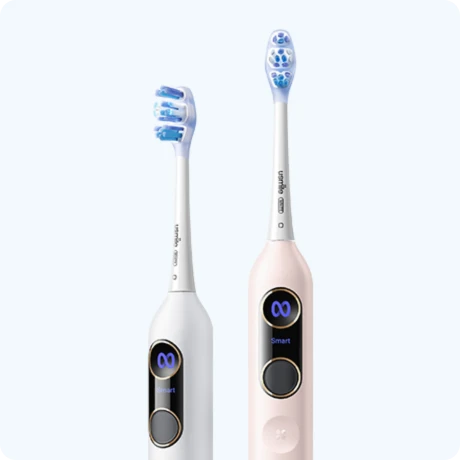
The best electric toothbrushes for sensitive teeth aren't just 'weaker versions.' They're better controlled. That's a genuine difference. Here's what actually matters — electric toothbrushes with a pressure sensor worth considering typically combine these features:
|
Feature |
Why it matters for sensitive teeth |
What to look for |
|
Pressure sensor |
Prevents the overbrushing that causes enamel wear and gum recession |
Visible feedback, you'll notice mid-brush — not a dim background light |
|
Sensitive mode |
Reduces vibration intensity for a gentler starting point |
Should feel meaningfully softer than standard mode |
|
Soft / extra-soft bristles |
Protects enamel and irritated gum tissue while still removing plaque |
Labeled 'soft' or 'extra-soft'; avoid medium or firm |
|
2-minute timer |
Prevents over-brushing from going on too long |
The 30-second quadrant pacer is the most useful version |
|
Brush head availability |
A gentle handle is useless with the wrong head |
Soft replacement heads must be easy to find and reasonably priced |
|
Battery reliability |
A dying battery changes vibration intensity unpredictably |
2+ weeks per charge; charge indicator on handle |
Sensitive mode and gentler brushing action
A sensitive mode lowers the vibration intensity to a setting that won't feel jarring on irritated gums or exposed root surfaces. It's especially useful during the first few weeks of switching from a manual brush, when the unfamiliar sensation needs time to feel normal. Some people use it permanently; others graduate to standard mode once sensitivity settles.
Pressure sensors that help stop overbrushing
The Reddit question from your research captures this well: users want pressure feedback they'll notice, not a dim light that's easy to ignore mid-brush. The best implementations visibly change what's happening — audible feedback, a color shift, or a mode that reduces intensity when you're pressing too hard. That interrupts the overbrush habit in real time rather than informing you after the damage is done.
Soft or extra-soft brush heads
Non-negotiable. You can have a perfectly calibrated sensitive mode and a great pressure sensor, and still undo it all with a medium-firm brush head. The bristle softness is the last line of defense between the motor's motion and the gum tissue. Extra-soft options exist for most major brush systems and should be the default for anyone with existing sensitivity or recession.
Features to Look for in the Best Electric Toothbrush for Sensitive Teeth

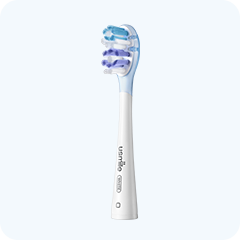
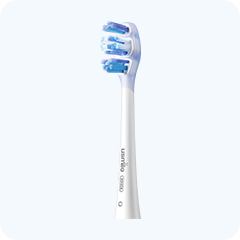
Not all features are equally applicable to this use case. Here's what to prioritize, with a soft-bristle brush head designed for sensitive use as an example of what a thoughtfully designed head actually looks like:
|
Priority |
Feature |
What to actually check |
|
Must-have |
Pressure sensor |
Does the feedback interrupt brushing, or is it easy to ignore? Look for a visible color change or a haptic click. |
|
Must-have |
Soft / extra-soft brush heads |
Available, affordable, easy to reorder. Not all systems carry soft options for every head type. |
|
Must-have |
Sensitive mode |
Test: Does it feel meaningfully different from standard mode? A subtle difference isn't useful. |
|
Important |
2-minute timer with 30s pacer |
Guides brushing duration without depending on you to count. |
|
Useful |
Battery life indicator |
Unpredictable vibration near a dead battery can feel harsher. Visibility of the charge level prevents this. |
|
Optional |
App connectivity |
Tracking can help build habits, but isn't required for sensitivity management. |
Visible pressure sensor vs weak feedback
The consistent complaint from real users: a sensor that blinks occasionally in a peripheral location gets ignored. You're focused on your teeth, not a handle LED. The better implementation either pauses the intensity or sends a noticeable vibration pulse you can't miss because it changes what you're feeling, not just what you can see.
Soft brush head availability and replacement cost
This gets overlooked at purchase. Some brush systems have extensive head ecosystems with clearly labeled soft options. Others have limited ranges. Check before buying: what are the replacement heads, can you get a dedicated soft version, and what do they cost on an ongoing basis? A premium handle paired with mediocre or unavailable soft heads is a poor deal.
Timer, battery life, and comfort in daily use
Small details shape whether a brush gets used consistently. A two-minute timer removes one decision. A battery that lasts two weeks without drama removes another. A handle that doesn't feel heavy or vibrate excessively in the grip makes the whole session less fatiguing. These don't show up in feature comparison lists but matter every morning and night.
Electric Toothbrush vs Manual Brush for Sensitive Teeth
Both can work for sensitive teeth. The question is which one is more likely to work a 2022 clinical trial found that electric toothbrushes showed greater reductions in gingivitis and plaque compared to manual toothbrushes — not because the technology is inherently superior, but because consistent motion and calibrated pressure are harder to achieve by hand.
|
Factor |
Manual soft brush |
Electric (gentle settings) |
|
Plaque removal |
Good with careful technique |
Consistent — doesn't rely on technique as much |
|
Overbrushing risk |
Higher — depends on hand pressure |
Lower — pressure sensor helps interrupt the habit |
|
Gum sensitivity |
Fine if the technique is already light |
Often gentler for people who scrub too hard |
|
Around braces/work |
Needs good dexterity |
Easier — motion is built in |
|
Cost |
Very low |
Higher upfront, ongoing head cost |
|
Best for |
Good brushers with light technique |
Anyone who tends to scrub or needs consistency |
Where electric toothbrushes can be gentler
When you brush manually, the force you apply is entirely dependent on how you feel that day, how awake you are, whether your mouth feels clean enough, and dozens of small decisions you don't consciously make. An electric toothbrush takes most of that variability out. The vibration rate stays constant, the pressure sensor monitors force, and the timer controls duration. For people who scrub harder without realizing it, that consistency is genuinely protective.
Where manual brushes still work well
Someone with good natural technique, who brushes gently and consistently without needing a reminder, doesn't necessarily get more from an electric brush for their specific sensitivity concern. A soft manual brush is also far cheaper, requires no charging, and is easier to travel with. For people who are already doing the right things, it's a valid choice.
Why brushing technique matters more than brush type alone
The wrong technique with a premium electric brush is still the wrong technique. Pressing hard, going too fast, skipping the gumline on the back teeth — these habits persist regardless of what's in your hand. The electric brush makes it easier to break those habits. It doesn't break them automatically.
Can an Electric Toothbrush Make Sensitivity Worse?
Yes — though almost always because of how it's being used, not because of what it is. Cleveland Clinic explains that sensitivity worsens when exposed dentin or irritated gum tissue is repeatedly subjected to mechanical force or pressure. A powered brush makes it worse if the user applies that force incorrectly.
Brushing too hard, even with a powered brush
This is the most common error. People switching from manual brushing often keep their grip and pressure habits intact. The motor doesn't reduce the force — it adds vibration on top of whatever force you're applying. High pressure plus oscillation on the inflamed gum tissue feels like a lot. That's not the brush being too powerful; it's the same mistake with different feedback.
Using the wrong brush head
A medium-firm head on a brush set to standard mode, pressed against exposed root surfaces — that combination will hurt. Each of those three variables is independently fixable. Don't replace the brush; replace the head, switch to sensitive mode, and reduce grip pressure.
Ignoring ongoing pain that signals a dental issue
The red flag: sensitivity that doesn't improve after switching to a gentler brush, correct technique, and sensitivity toothpaste for 4–6 weeks. At that point, the problem is very likely not the toothbrush at all. Cracked teeth, active gum disease, root decay, and severe recession all create sensitivity that looks indistinguishable from ordinary 'my brush is too harsh' complaints — until you get them checked.
Best Use Cases: Who Benefits Most From a Gentle Electric Toothbrush

Three groups where the improvement is most predictable:
|
Sensitive teeth + bleeding gums Needs gentleness and plaque removal together. A soft brush in sensitive mode removes buildup without pushing harder into already irritated tissue — which is usually what's making the bleeding worse. |
Gum recession These users don't need more cleaning power — they need a way to lighten up. Pressure sensor + sensitive mode is genuinely behavior-correcting for people who've been scrubbing without realizing it. |
Habitual hard scrubbers Biggest real-world improvement. The switch from 'press hard = clean harder' to letting the brush do the work often resolves sensitivity complaints that no toothpaste was fixing. |
People with sensitive teeth and bleeding gums
The two problems reinforce each other: gums bleed because they're inflamed, and irritated gum tissue is more sensitive to brushing, so people brush more gently and less thoroughly, which lets plaque keep building. A soft electric brush in sensitive mode breaks that cycle — thorough enough to reduce plaque, yet gentle enough not to compound inflammation.
People with gum recession
More than any other group, these users benefit from a pressure sensor that actually works. The root surfaces that recession exposes are permanently more sensitive than enamel-covered crowns. Repeated mechanical trauma from overbrushing can worsen recession. A brush that visibly and unmistakably signals excess pressure is a genuine harm-reduction tool for this specific situation.
People who tend to scrub too aggressively with manual brushes
Often, the biggest real-world improvement. Their sensitivity isn't from a structural dental problem — it's from years of friction at the gumline. Switching to an electric brush with a responsive pressure sensor means the first time they press too hard, they know it immediately. That feedback loop, repeated twice daily, tends to recalibrate the habit faster than any instruction to 'brush more gently.'
How to Use an Electric Toothbrush If You Have Sensitive Teeth
|
# |
Step |
Detail |
|
1 |
Start with sensitive mode |
No prize for starting on the highest setting. Sensitive mode for the first 1–2 weeks gives irritated gums time to adjust to the vibration. Most people graduate to standard mode afterward; some stay on sensitive mode permanently. |
|
2 |
Let the brush do the work |
Guide it along the gumline and tooth surfaces — don't scrub. The oscillation or sonic vibration is doing the cleaning. Your job is positioning, not force. This is the core habit change. |
|
3 |
Hold the brush at 45° to the gumline |
Angle the bristles toward the gum margin, not straight across the tooth. This lets the tips access the gumline where plaque accumulates most, without driving the bristles into already-irritated tissue. |
|
4 |
Two minutes, four quadrants |
Use the built-in timer. 30 seconds per quadrant, front and back. Most people spend too long on the front teeth and too little on the back molars — the timer doesn't prevent this, but it at least ensures the total duration is correct. |
|
5 |
Pair with sensitive toothpaste |
A desensitizing toothpaste (containing potassium nitrate or stannous fluoride) works by blocking the tubule channels that carry sensation to the nerve. Using it daily with a gentle electric brush addresses both the brushing mechanics and the dentin exposure simultaneously. |
|
6 |
Replace heads on schedule |
Every 3 months, or sooner if bristles are visibly frayed. Worn bristles clean less predictably — they can splay into gum tissue at angles the head wasn't designed to produce. A fresh soft head on a gentle brush is reliably gentler than a worn one. |
Start with the gentlest mode.
Patience is useful here, especially if you're coming from a manual brush and the vibration feels strange at first. The unfamiliar sensation is not sensitivity — it's adjustment. Give it a week before deciding the brush 'doesn't work for you.'
Let the brush do the work.
The single most common error and the easiest to fix: people keep pushing the way they pushed with a manual brush. Stop. Hold the brush lightly, angle it toward the gumline, and move it slowly from tooth to tooth. The motion is already happening — you just need to be in the right place.
Pair it with sensitivity toothpaste and regular dental care
A gentle brush addresses the mechanical side. Sensitivity toothpaste addresses the chemical side — it blocks or calms the tubules. Neither replaces the other, and neither replaces regular professional cleanings, which remove the tartar that drives gum recession and gum disease.
When a Gentle Electric Toothbrush Is Worth Buying
Worth buying when it solves a real, specific problem in your current routine:
|
Your situation |
Is it worth buying? |
Why |
|
You brush too hard with a manual brush |
Yes — strongly |
Pressure sensor + sensitive mode together are the most effective intervention |
|
Sensitivity from gum recession |
Yes — likely |
Soft bristles + lighter pressure protect exposed root surfaces from further irritation |
|
Inconsistent brusher who rushes |
Yes — probably |
Timer and guided mode help; the device corrects duration and force in parallel |
|
Already a gentle manual brusher, healthy gums |
Optional |
An electric brush may feel nicer; it won't change outcomes much |
|
Sensitivity from whitening treatment |
Short-term yes |
Use sensitive mode for 1–2 weeks post-treatment; may not need it permanently |
|
Sharp, localized pain in one tooth |
See a dentist first |
No brush setting addresses a cracked tooth or cavity |
Signs it is worth upgrading
Your gums look or feel irritated after brushing. Your dentist keeps telling you to brush lighter. You've gone through multiple 'sensitive toothpaste' tubes without improvement. You're aware you scrub hard but can't seem to stop, even with willpower alone. Any one of those is a real reason to switch.
When a manual soft brush may still be enough
Good technique, no overbrushing habit, dentist happy with gum health, no recession or significant bleeding. A soft manual brush costs almost nothing and does the job. There's no obligation to upgrade if the current routine is already working.
What is worth paying extra for
The pressure sensor (only if it's responsive enough, actually, to change your behavior) and the brush head ecosystem (soft replacement heads must be available and affordable). Everything else — app features, smart dashboards, travel cases — is secondary. A brush that cleans gently and consistently twice a day is what matters.
Choose a Brush That Protects Teeth While Removing Plaque
Electric toothbrushes are not automatically too harsh for sensitive teeth. For many people, they're the better option — because they remove plaque effectively without relying on the user to apply exactly the right force and motion every time.
The setup that consistently works: soft or extra-soft bristles, a sensitive mode that feels meaningfully gentler, and a pressure sensor that interrupts overbrushing before it happens. That combination shows up as the recommendation in clinical guidance, among dental professionals, and in real user reviews for a reason.
The mistakes worth avoiding: prioritizing power over control, keeping a worn brush head past its useful life, and treating persistent tooth pain as a toothbrush problem when it's actually a dental one. Keeping your brushing routine consistent and gentle is the single habit that determines long-term enamel and gum health — and the right electric brush makes that easier to maintain.
FAQs
Straightforward answers to the questions most people have when choosing a brush for sensitive teeth.
Are electric toothbrushes bad for sensitive teeth?
No. They're often the better option because they remove plaque without relying on how hard you're pushing. Problems come from using the wrong brush head, setting pressure too high, or not switching to a sensitive mode — not from the motor itself.
What is the best electric toothbrush feature for sensitive teeth?
The combination of a responsive pressure sensor, a soft brush head, and a meaningful sensitive mode. That trio addresses the three main ways brushing can worsen sensitivity: too much force, too much abrasion, and too much intensity.
Can an electric toothbrush help with gum recession?
It can help prevent further damage by reducing brushing force and improving plaque removal without abrasion. It won't reverse the existing recession — that's a structural tissue change. For recovery, professional treatment may be needed; the brush supports the daily maintenance around it.
Is a soft manual brush better than an electric toothbrush for sensitivity?
Not in most cases. A soft manual brush works well for people with careful technique who don't overbrush. An electric toothbrush is usually better for everyone else, particularly for those whose sensitivity is partly caused by how they brush, not just by the state of their teeth.
Do pressure sensors really help prevent overbrushing?
They can, but the quality of the feedback matters a lot. A dim background light is easy to ignore. A visible color change or haptic pulse that you feel mid-brush is much harder to ignore. The more disruptive the feedback, the more it actually changes behavior.
Which brush head is best for sensitive teeth and gums?
Soft or extra-soft. Full stop. It's the most important hardware decision for this use case, and it's separate from which handle you buy. Check that soft replacement heads are available for any system you're considering before committing to the handle.
Can brushing too hard cause tooth sensitivity?
Yes — over time, aggressive brushing wears the enamel at the gumline and mechanically pushes gum tissue back, both of which expose the dentin underneath. The pain from that process is indistinguishable from other types of sensitivity, which is why many people don't connect it to their brushing technique.
Should I stop using an electric toothbrush if my teeth hurt?
Not automatically. First, lower the intensity, check the brush head, reduce grip pressure, and see if the pain resolves. If it doesn't improve after a few weeks of corrected technique, or if the pain is sharp, localized, or getting worse, that's when a dental evaluation matters more than any brush adjustment.


Looking for something else?
Best Cheap Electric Toothbrush (2026): Top 5 Budget Picks That Actually Work
LEARN MORE
Ultrasonic Toothbrush vs Electric: Which Technology Wins for Your Smile?
LEARN MORE
Best Electric Toothbrush for Sensitive Teeth (2026) — 5 Tested
LEARN MORE
Does an Electric Toothbrush Have a Lithium Battery
LEARN MORELooking for something else?
How to Make Brushing Teeth Fun for Kids Without Daily Battles
LEARN MORE
Best Toothbrush for Kids Who Hate Brushing: Parent Guide
LEARN MORE
Best Electric Toothbrush for Kids: What Parents Should Look For
LEARN MOREYou may also like
usmile Y20PRO Adults Toothbrush x Q30 Kids Toothbrush
usmile C30 Water Flosser Toiletry Bag Pack
usmile C10 Water Flosser x Q30 Kids Electric Toothbrush
Further reading
Halloween Candy Before Bed: A Kid-Friendly Cleanup Routine to Protect Kids' Teeth
I Thought My Water Flosser Made My Teeth Gaps Bigger—Here’s What May Actually Be Happening
Why Teeth Look More Spaced Out After Water Flossing