





When Do Permanent Teeth Come In? A Parent's Guide
There's a specific moment that happens in every parent's life. Your kid runs up holding what looks like a tiny piece of bone, and yeah, it's a tooth. Their first lost tooth. Your brain does the whole "oh my god you're growing up" thing for about ten seconds before the actual questions start kicking in.
So when do permanent teeth come in? Why is that gap so big? Is the tooth fairy bringing a dollar or five bucks now? Inflation has made this whole tradition kind of weird.
Quick answer first. Permanent teeth come in starting around age 6, give or take a year on either side. The full process is way slower than most parents expect, more like a 6- or 7-year project than a quick switch. And the normal range is wider than people think, so if your kid is ahead of their friends or running a little behind their cousins, it's almost always totally fine. For a clearer view of what shows up when, the permanent teeth eruption chart below breaks down the full timeline tooth by tooth.
What's below covers the real timeline by age, what to look for as each tooth comes in, what's normal versus actually worth a dentist visit, and how to take care of these new teeth that have to last 80 years or more. Also gets into the weird questions parents end up Googling around 11 PM. Stuff like shark teeth, why the new teeth look slightly yellow, and what those little bumps on the front edges are.
Baby Teeth vs. Permanent Teeth: What's the Difference?

Quick foundation. Knowing the basic difference makes the rest of this make a lot more sense.
How many baby teeth do children have?
Twenty teeth in the full baby set. Most kids have them all by around age 3, though my nephew didn't finish his until closer to 3 and a half. Also normal.
The thing is, baby teeth do way more than parents realize. They're not just placeholders sitting there waiting to fall out. They do real chewing work for solid food. They help kids learn to talk clearly (try saying "thanks" without your front teeth, you'll see what I mean). And they hold the actual space in the jaw for the adult tooth that's still years away from showing up. So treating baby teeth like they don't matter because "they're going to fall out anyway" is one of the biggest mistakes I see parents make.
How many permanent teeth will children eventually have?
Thirty-two if all four wisdom teeth come in. Twenty-eight if the wisdom teeth never develop, which actually happens to a lot of people and isn't a problem at all. The American Dental Association says by age 21, all 32 permanent teeth have usually erupted. However, wisdom teeth can occasionally surprise people in their late twenties;it's its own kind of fun.
Why baby teeth still matter
Here's the part I wish more parents knew earlier. A baby tooth lost super early, whether from a fall or untreated decay, leaves a gap behind. The neighboring teeth slowly drift into that gap over the next few months. Then the permanent tooth shows up later, ready to erupt, only to find there's no room for it anymore.
The result is crowding that often needs braces to fix. So those tiny baby teeth your kid loses are actually reserving the space their adult mouth is going to use. Pretty important job for teeth, most adults can't even remember having one.
When Do Permanent Teeth Come In?
Straight answer first, since that's almost certainly what you came for. The rest follows.
The short answer

Most kids get their first permanent tooth somewhere around their sixth birthday. Some are early — five and a half isn't unusual. Others hang back until nearly 7, and there's nothing wrong with that either. The first to push through are usually the lower central incisors — those are the two teeth smack in the middle of the bottom row — and right around the same time, the first permanent molars come in behind the baby molars. That second part trips people up, because nothing falls out first. The molars just appear in the back, and most parents never notice the moment it happens.
Why the first permanent molars catch parents off guard
This one trips up almost every parent I know. The very first permanent teeth your kid gets aren't replacing anything at all. They just erupt into fresh empty gum space behind the existing baby molars. So there's no loose tooth, no swelling, no real sign that anything's happening back there.
Most parents find out from the dentist during a routine checkup, who casually mentions, "Oh, by the way, the six-year molars came in." And you're like... when? You didn't miss anything important. There just wasn't anything obvious to catch.
How long does the whole process actually take
Way longer than you'd guess. From that first permanent molar at around age 6 to the very last baby tooth giving up the ghost around age 12 or 13, you're looking at six, maybe seven years of your kid walking around with a weird mix of baby teeth and adult teeth all in the same mouth. Dentists call this stage mixed dentition, which sounds fancy but really just means "still working on it."
Mixed dentition also makes brushing tricky during these years. Baby teeth sit right next to the bigger adult ones, creating uneven spacing inside the mouth. It's also the era of awkward school photos—big front teeth, missing side teeth, and gap smiles. Your kid will hate looking at those photos when they're older. You'll secretly love them.
Permanent Teeth Eruption Chart by Age

This is the section most parents come here for. Before getting into it, though, please remember that these ages are averages, not deadlines. Falling a few months on either side of any of these is well within the normal range. Falling a year or more outside is when it's actually worth a dentist check.
Ages 6 to 7: First molars and lower central incisors
The opening act. The first four permanent molars come in behind the existing baby molars, where there was previously empty gum. The two bottom front teeth get loose, and the adult versions push up through the gum line over the next few weeks. This is also when tooth fairy season starts in your house, so get some dollar bills ready, because your kid is going to start asking on day one. Trust me.
Ages 7 to 8: Upper central incisors and lower lateral incisors
The top front teeth come in during this stretch, when your kid's smile genuinely starts to look like someone else's. The lower lateral incisors (the ones right next to the central incisors on the bottom) also come in around now. By the end of this age range, you're usually looking at four permanent teeth on the bottom front and two permanent ones on the top front. Quick aside: school photos taken right before this happened versus right after look like two completely different kids.
Ages 8 to 9: Upper lateral incisors
The upper lateral incisors show up, finishing off the four front teeth on top. So by the end of this stretch, all eight front teeth (four upper, four lower) are usually permanent. Some kids hit this earlier. Some later. Both are fine, and your dentist won't be worried unless something looks really off.
Ages 9 to 10: Lower canines
The pointy bottom teeth on either side of the lateral incisors. Canines are useful for tearing food, and they also play a quiet role in lining up how the upper and lower teeth come together when the bite closes. Kind of like alignment guides. Not the most glamorous job, but important.
Ages 10 to 12: Premolars and upper canines
This stretch is a lot. The premolars (the teeth sitting between the canines and the back molars) replace the old baby molars one by one. The upper canines come in around the same time. There's a ton of activity in the mouth at once during this window, and the order of eruption can also get a little weird. Don't worry if your kid's teeth aren't coming in in some neat textbook sequence. Most kids don't.
Ages 11 to 13: Second molars
Behind the first permanent molars, the second molars come in. These are usually the last regular permanent teeth before wisdom teeth show up much later. By the end of this window, your kid basically has their adult set, minus the wisdom teeth. Welcome to the grown-up-mouth phase.
Ages 17 to 21: Wisdom teeth (if they show up at all)
Wisdom teeth, or third molars if your dentist is being formal, show up sometime between 17 and 21. Or maybe. Some people get all four. Some get just one or two. Some get zero. Genetics is kind of weird about wisdom teeth, and nobody really knows why some people get all their wisdom teeth while others get none.
Wisdom teeth are kind of their own thing. Not everyone even gets them. Some teens grow all four; some grow one; and a lot of people go their whole lives without a single one showing up. When they do come in, the problem usually isn't the tooth. It's that there's nowhere left for it to go. The jaw is already full by then, so the tooth ends up sideways or stuck under the gum. Your dentist will say it's impacted.
That stuck position is what causes the trouble. The tooth keeps pushing into the molar next to it, and that pressure is what people feel late at night. The other part is hygiene. A half-erupted tooth has a little flap of gum over it, and you can't really clean under there. Food gets caught, bacteria settle in, and an infection builds up quietly.
So most dentists will want a panoramic X-ray around 16 or 17. Nothing has to hurt yet. It's just easier to see what's coming before it becomes a problem. Get it done even if your teen swears nothing feels off. Wisdom teeth are sneaky. They'll go months without a peep, and then one random night you're up at 2 a.m. looking for an emergency clinic.
What Are the 4 Types of Permanent Teeth?

Short anatomy detour. You don't need to memorize any of this to raise a kid with healthy teeth — let's be clear about that. But these four words get said at every single dental visit, and it's a lot less confusing to nod along when you actually know what your dentist means.
Incisors
The eight teeth across the front — four on top, four on the bottom. Thin, flat, a bit chisel-shaped. They're the ones that do the biting when your kid takes the first chunk out of an apple.
Canines
Four pointed teeth, one on each side of the incisors, top and bottom. They're sharp because they evolved for tearing through tougher food — it's the same reason a dog's canines look so dramatic. They've also got a quieter job most people never think about: when the upper and lower teeth meet, the canines help steer the bite into place. And here's the one most parents don't know — those vampire fangs in every horror movie? Just regular canines, drawn way, way longer than real life.
Premolars
Eight of them total, sitting between the canines and the back molars. Slightly bigger than canines, definitely smaller than molars. They crush and grind food in the middle part of the mouth—kind of the supporting cast of chewing.
Here's a fact that surprises most parents: babies don't have premolars at all. Baby molars fill those spots in a baby's mouth. Then the baby molars fall out, and adult premolars replace them. So technically, the whole premolar category is permanent-teeth-only territory.
Molars
The large back teeth do most of the actual chewing. Most adults have eight regular molars (four upper, four lower) plus up to four wisdom teeth way back behind those. Molars are also the cavity champion of the entire mouth, no contest. The chewing surface is covered in deep grooves where food crumbs get trapped and just stay there for days —basically the perfect setup for tooth decay, which is exactly why dentists almost always recommend sealants for permanent molars—more on those further down.
How to Tell If a Permanent Tooth Is Coming In

Some of these signs are obvious. Others you'd miss completely if you weren't actively watching for them.
The classic sign that a baby tooth is about to go.
The permanent tooth comes up underneath and presses on the baby tooth's roots, dissolving them little by little over a few weeks. The baby tooth gets looser and looser — and then one day it's just gone. At dinner, mid-recess, wherever. The funny part is that the kid almost always knows before the parent does. They'll spend a week working that tooth with their tongue, poking it, reporting back every couple of hours that it's definitely coming out this time. It gets a little obsessive. Let them have it — that's normal.
A new tooth shows up behind a baby tooth.
Parents see this and panic, but it's nothing serious. The new tooth is just coming in behind a baby tooth that hasn't dropped yet, so you'll see two teeth crowded in one spot for a bit. Parents call it shark teeth. Pretty common, actually. Usually, the baby tooth wiggles loose on its own, and the new one slides into place. If it hangs on too long, a quick visit to the dentist sorts it out. More on that below.
Gum swelling or tenderness in one spot

Mild swelling near where a new tooth is about to break through is totally normal, especially with the bigger molars coming in at the back. The gum can look puffy, sometimes a little red. Your kid might mention pressure or just quietly start chewing everything on the other side of their mouth for a few days without saying a word. Soft foods help. So does cold water. Most kids power through it without much fuss.
Tiny ridges on the edges of new front teeth
When permanent incisors first come in, they often have these little bumpy ridges along the bottom edge. They're called mamelons, and they're harmless. They naturally wear smooth over the next few years from chewing. Please do not try to file them down at home. People do this. It's a bad idea, full stop.
The new tooth looks slightly yellow.
Permanent teeth come in looking a little more yellow than the baby teeth around them, and parents lose their minds over this. Please don't. Nothing is wrong with the new tooth. The dentin (the layer just under the enamel) is thicker in adult teeth and has a natural yellowish color to it, so compared to a baby tooth right next to it, the new permanent tooth looks slightly more yellow. As long as the difference is subtle and not dramatic, it's totally fine. Wait until your kid is older and the surrounding baby teeth get replaced. The color difference disappears on its own.
Is It Painful When Permanent Teeth Come In?

Usually mild. Sometimes more than mild. The reason that distinction matters: you don't want to wave off something real, but you also don't want to drag your kid in over completely normal eruption stuff.
A little discomfort is just part of the deal. Some pressure. Tender gums. A few kids get cranky around mealtimes, especially when the big molars are working their way in at the back. But plenty of kids barely say a word about any of it.
What helps? Cold water takes the edge off sore gums. And a few days of softer food gives the chewing a break while everything settles in.
Signs the pain actually needs a dentist
Now, if your kid has severe pain that isn't getting better after a few days, swelling that won't go down, fever, pus, persistent bleeding, or a tooth that just seems stuck and isn't going anywhere week after week, that's a totally different situation. These aren't normal eruption signs. Don't wait for the next routine checkup; call the dentist this week.
Comfort tips that actually help
Cold water or chilled (not frozen) foods work surprisingly well for tender gums. Soft foods take pressure off the area. Keep brushing the spot gently, even when it's sore, because plaque builds up fast when you skip an area for a few days. If your kid is genuinely miserable, ask your dentist about child-safe pain relief. And please skip those over-the-counter teething gels with benzocaine in them. They're not recommended for older kids, and the FDA has actually warned about them for years.
What If Permanent Teeth Come In Before Baby Teeth Fall Out? (Shark Teeth in Kids)

The classic shark teeth situation. Honestly, way more common than the dramatic name makes it sound. I've heard about three different friends' kids dealing with this in just the past year.
What "shark teeth" actually means
Shark teeth are what happen when a permanent tooth erupts behind a baby tooth that hasn't fallen out yet. So you end up with two visible rows of teeth in one spot. The reason it happens is usually that the roots of the baby tooth didn't dissolve as they were supposed to, so the baby tooth stayed firmly anchored even as the permanent tooth tried to push through the gum. The result is the awkward double-row look that ends up in Reddit posts and parent group chats every single week.
When it fixes itself
If that baby tooth is starting to wobble at all, the whole situation often resolves on its own within a few weeks. The baby tooth eventually falls out, the permanent tooth shifts forward into the proper position, and the tongue actually helps nudge it into place over time. That last part sounds like a made-up body fact, but I promise it's real.
When to call the pediatric dentist
Call the dentist if the baby tooth isn't loose at all, the new tooth is coming in at a weird angle, your kid is in real pain, or the double-row is making brushing impossible. The fix is usually just to pull the stubborn baby tooth so the permanent one has room to move into its proper position. Quick visit. Not a big deal.
What If Permanent Teeth Are Delayed?

Some kids just run on a different schedule. But there's a difference between "a little late" and "actually worth checking."
Normal variation is wider than you'd think.
Two siblings can be a full year apart in age, and both have the same tooth and be completely normal. Stanford Medicine Children's Health notes that if a tooth fails to come in within a year of the expected time, that's when it's worth a dentist check.
Possible reasons for a real delay
Crowding in the jaw, meaning there's literally no room. An impacted tooth, meaning the bud is positioned wrong and can't erupt. Hypodontia occurs when a permanent tooth bud fails to develop in the first place. Or sometimes a baby tooth is just hanging on way too long and physically blocking the permanent one underneath.
How dentists check delayed eruption
X-rays, basically. The dentist takes a panoramic image that shows where each tooth is positioned and what's happening beneath the gum line. From there, they decide whether to wait and see, extract a stubborn baby tooth, or refer to an orthodontist. Most of the time, the answer is wait. But it's worth knowing what's actually going on.
Can a 5-Year-Old Lose a Tooth?

Yes, sometimes. Context is what matters.
Age 5 can absolutely be normal.
Some kids start losing baby teeth before age 6. Better Health Victoria notes that it is normal for a child to lose their first tooth between 2 years before and 2 yearsafter age 6. So roughly 4-8 is the wider "normal" range. Girls tend to lose them slightly earlier than boys, although that rule has plenty of exceptions.
When early tooth loss is actually a concern
If your 5-year-old loses a tooth from a fall, a sports injury, or an untreated cavity (not because it was loose first), that's a totally different situation. The same goes for a tooth that gets completely knocked out. Call the dentist the same day. Early loss from these causes can affect how the permanent tooth comes in years down the road.
Why early baby tooth loss matters long-term
Baby teeth hold the space for the permanent teeth growing in underneath. Lose one too early, and the surrounding teeth slowly drift into the gap, and there's no room for the adult tooth when it's ready to erupt. Crowding follows. The dentist sometimes uses a small device called a space maintainer to hold the spot, which is way easier than dealing with the crowding problem later on.
Do Children Need Braces When Permanent Teeth Start Coming In?

This comes up constantly. Short answer: Age 7 isn't too early for a check, but braces themselves usually aren't on the table yet.
Is 7 years old too early for braces?
Not for an evaluation. The American Association of Orthodontists actually recommends a first orthodontic check around age 7. Most kids at 7 don't need braces yet. But the orthodontist can catch crowding, crossbite, severe overbite, underbite, or teeth coming in the wrong spot. Earlier evaluation means more options if anything needs fixing.
When dentists suggest an early orthodontic check
Thumb sucking has clearly affected the bite. Speech issues are tied to tooth position. Crowding is visible even to someone who isn't a dentist. The top and bottom teeth are not meeting properly. Permanent teeth are coming in significantly out of place. If any of these are on your radar, the early check is worth doing.
What early treatment might actually mean
Not always full braces. Sometimes it's a palate expander to widen the upper jaw, a space maintainer to hold a gap, or a habit appliance to help stop thumb sucking. This is called phase-one treatment, and it might occur in elementary school. Phase two, the actual braces, usually happens later when most permanent teeth are in.
How to Care for New Permanent Teeth
The first few years after permanent teeth come in shape long-term dental health, so a steady routine matters more than fancy products. Here is how to care for new permanent teeth in a way that actually sticks.
Brush twice a day with fluoride toothpaste.

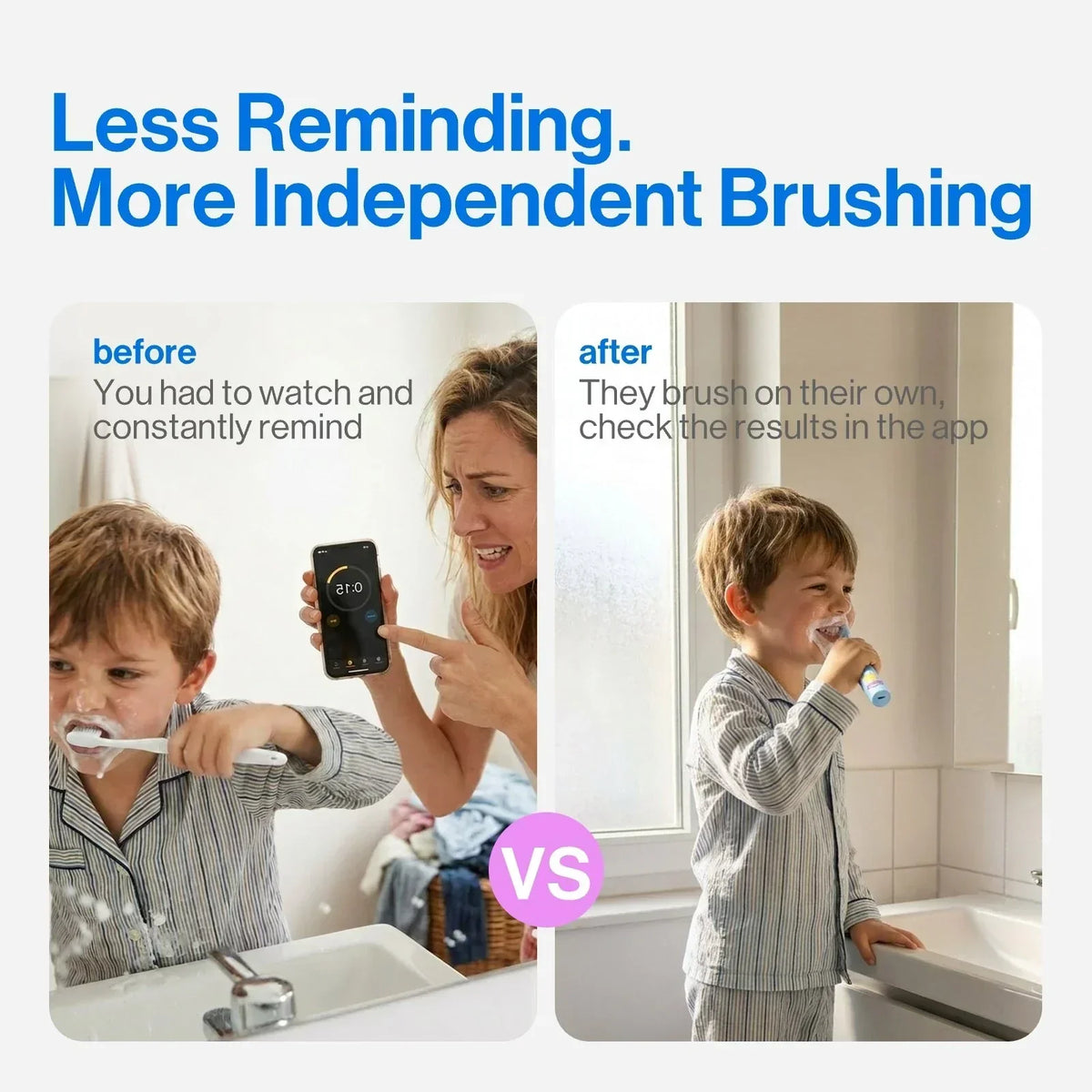
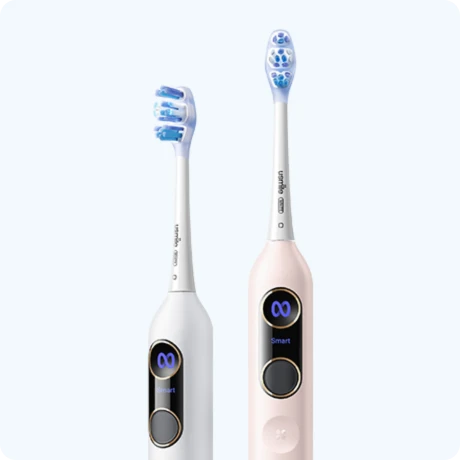
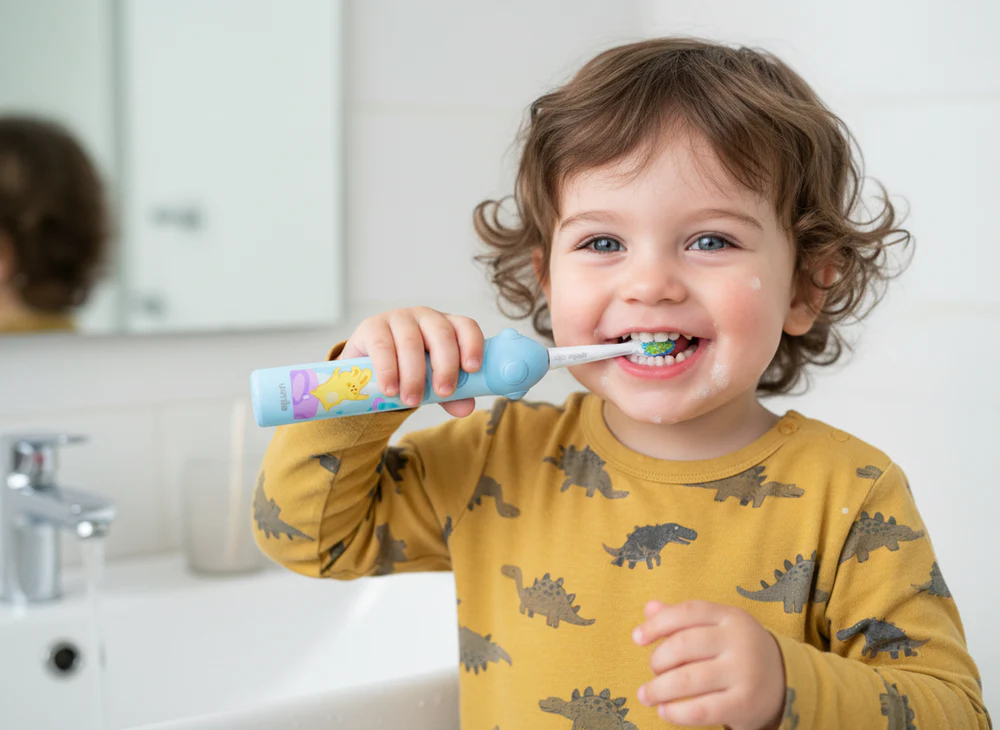
Two minutes in the morning, two minutes at night. Permanent teeth are bigger than baby teeth and have more grooves, so brushing actually matters more once they're in. A smart electric toothbrush for daily brushing makes the two-minute rule easier because the built-in timer keeps your kid honest and the pressure sensor flags when they're brushing too hard, which kids do constantly because they think "hard" equals "clean." It does not.
Floss every day, once teeth touch
As soon as two permanent teeth are touching each other, floss between them. Brushes don't reach where teeth meet, period. Floss picks are fine if traditional floss is becoming a nightly fight. Whatever gets the job done is the right answer for your house.
Ask about sealants for permanent molars
The chewing surface of permanent molars has deep grooves. Food and plaque get stuck in those grooves and stay there, which makes molars the most cavity-prone teeth in the mouth. Dental sealants are a thin protective coating brushed onto those surfaces during a regular visit. Quick. Painless. They dramatically reduce the risk of cavities in those teeth. Worth asking about at the next checkup if your dentist hasn't already brought it up.
Watch the sugar and the snacking.
Same advice that applies to baby teeth. Frequent snacking is harder on enamel than the occasional dessert. Try to keep eating at meal times when you can. Water for the in-between moments. The constant low-level exposure to sugar throughout the day is the real enemy, not the slice of birthday cake.
Upgrade the brush as your kid grows.

Kids grow. Mouths grow. Brush heads need to keep up. The small brush that worked at age 6 is doing a mediocre job at age 11, when larger permanent molars are in the back of the mouth, and the smaller head can't reach them well. Worth checking the full lineup of electric toothbrushes to find something that fits where your kid is now, especially during the mixed dentition years, when the mouth is changing a lot.
Stay on top of dental visits.
Every six months. The dentist tracks eruption order, catches early cavities, monitors alignment, and answers all the questions you didn't think to ask between appointments. Honestly, building an oral care routine your kid actually feels comfortable with from a young age pays off through every dental visit they'll ever have. Cannot stress this enough.
Final Thoughts: A Multi-Year Process, Not a Quick Switch
Permanent teeth start showing up around age 6 and finish coming in over the next 6 or 7 years, with wisdom teeth coming in much later, if they show up at all. Most differences in timing between kids are normal and not worth worrying about. The chart is a guide. Not a deadline. So if your kid is a few months ahead of their classmates or running a bit behind, that's almost always fine.
The bigger focus is care during the mixed dentition years. Brushing twice a day. Flossing once the teeth touch. Sealants on permanent molars if the dentist suggests them. Six-month checkups are treated as normal, not as a once-a-year emergency thing. Permanent teeth have to last 80+ years. The habits your kid sets in elementary school carry forward through every dental appointment they'll ever have. That's the actual long game.
FAQs
How to tell if a permanent tooth is coming in?
Watch for a loose baby tooth, gum swelling in one spot, a new tooth poking up behind or beside a baby tooth, or your kid mentioning pressure in the area. Sometimes you can actually see the tip of the new tooth starting to come through the gum line.
At what age do your permanent teeth come in?
Most kids start around age 6, with the first permanent molars and lower front teeth showing up first. By age 12 or 13, most of the permanent teeth are in place. Wisdom teeth come later, between 17 and 21, if they come at all.
Can a 5-year-old lose a tooth?
Yes. Some kids lose their first baby tooth a little earlier than the average age of 6, as long as it was wobbly first and fell out on its own, no need to worry. If it came out from injury or untreated decay, call the dentist.
Is 7 years old too early for braces?
Not for an evaluation. The American Association of Orthodontists actually recommends a first orthodontic check around age 7. Most 7-year-olds don't need braces yet, but the checkup can catch bite or spacing issues early, when more treatment options are available.
Is it painful when permanent teeth come in?
Usually mild. Some pressure, a bit of gum tenderness, occasional fussiness around mealtime, especially when molars are erupting. Severe pain, persistent swelling, fever, or pus aren't typical and require a dentist's attention.
What are the 4 types of permanent teeth?
Incisors (the front teeth used for biting), canines (the pointed teeth used for tearing), premolars (between canines and molars, used for crushing), and molars (the big back teeth used for grinding food).
Is it safe for a 3-year-old to get fillings?
Yes, fillings can be safe at age 3 when a dentist recommends them. Untreated cavities in baby teeth can cause pain, infection, and problems for the permanent teeth still developing underneath. Pediatric dentists are trained specifically to keep little kids comfortable through the procedure.
Sources
- American Dental Association — Eruption Charts
- Better Health Victoria — Teeth Development in Children
- Stanford Medicine Children's Health — Anatomy and Development of the Mouth and Teeth
- American Academy of Pediatric Dentistry — Dental Growth and Development
- American Association of Orthodontists — Why Age 7?
- Colgate — Permanent Teeth Eruption Chart


Looking for something else?
Best Electric Toothbrush for Gum Disease (2026): 6 Picks Tested for Real Gum Protection
LEARN MORE
Electric Toothbrush on Plane: The Complete Travel Guide (2026)
LEARN MORE
Best Cheap Electric Toothbrush (2026): Top 5 Budget Picks That Actually Work
LEARN MORE
Ultrasonic Toothbrush vs Electric: Which Technology Wins for Your Smile?
LEARN MORELooking for something else?
Best Electric Toothbrush for Sensitive Teeth (2026) — 5 Tested
LEARN MORE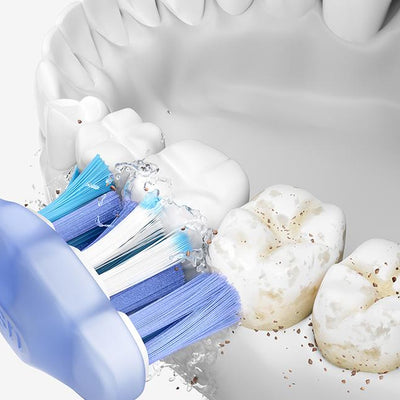
Does an Electric Toothbrush Have a Lithium Battery
LEARN MORE
How to Make Brushing Teeth Fun for Kids Without Daily Battles
LEARN MOREYou may also like
usmile Y20 PRO Upgraded AI Electric Toothbrush
usmile P10 S Electric Toothbrush

usmile Q30 Kids Electric Toothbrush

usmile C30SE Portable Dental Flosser

usmile Q30 Kids Electric Toothbrush Trio Pack

Further reading

Why Teeth Look More Spaced Out After Water Flossing
Best Sustainable Electric Toothbrush 2026: 5 Picks Tested for a Greener, Healthier Smile
Plaque, Stains, or Food Debris? How to Interpret What a Toothbrush Camera Shows