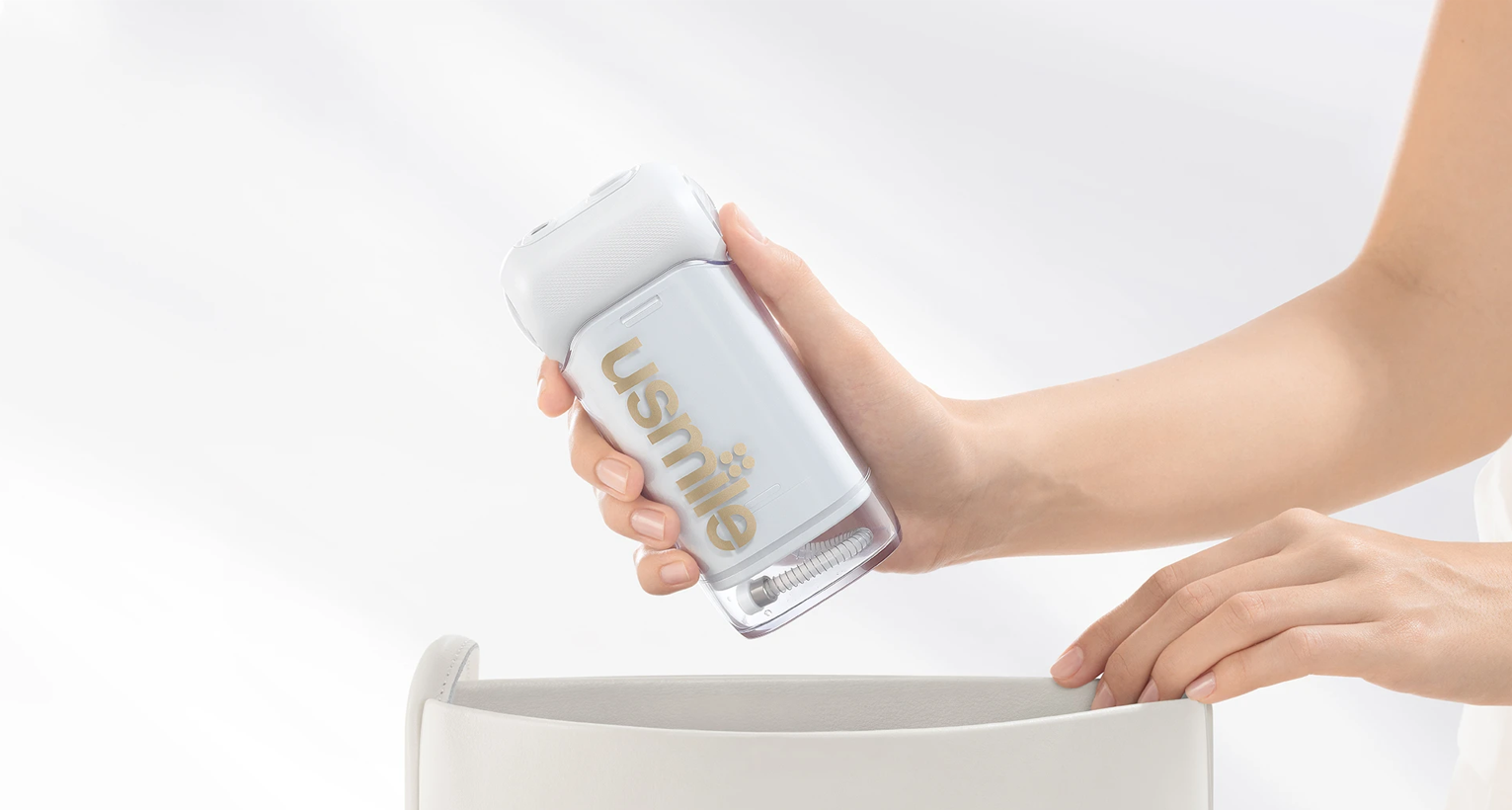
How to Clean a Water Flosser: A Step-by-Step Guide
Nobody really thinks about cleaning their water flosser. You use it, you set it down, the tank sits there damp until tomorrow. Then, a few months later, something smells off, or the pressure drops, and you start wondering what's been living in there.
Cleaning one is genuinely not a big deal — that's the part nobody tells you. The daily version is 30 seconds. The deep clean you actually need once a month takes maybe 10 minutes and involves white vinegar, which you probably already own. That's about it.
What follows is the full routine: what to do after each use, what the monthly deep clean looks like, what you can and definitely cannot put in a dishwasher, and what actually needs to go through the device vs. just a cloth wipe. If you're building out a broader, advanced oral care solution from scratch, this fits right in — but let's deal with the flosser first.
Why Cleaning Your Water Flosser Actually Matters

Tap water looks clean, but it leaves minerals behind — especially if your area has hard water. Those minerals slowly coat the inside of the tank, the internal tubing, and the nozzle tip. Not dramatically. Just slowly, a little every day, until pressure drops and the spray pattern gets weird.
Then there's the stagnant water problem. A tank that sits sealed and damp for 12 hours is a pretty comfortable place for bacteria. This isn't speculation — dental hygienists and brands alike flag it. A registered dental hygienist quoted by Wirecutter put it simply: the easiest way to prevent mold is to make sure the reservoir is empty after every use. Not once in a while. Every time.
And the nozzle tip goes directly into your mouth. A quick rinse helps. It doesn't replace a proper monthly soak.
|
What's actually building up in there: Mineral deposits from tap water are worse with hard water. Stagnant residue in the tank and internal tubing when water sits too long. Debris on the nozzle tip from use. None of it is dramatic until it is. |
Before You Start: Check Your Specific Model's Rules
Here's where people run into trouble. Cleaning instructions aren't universal. Waterpik says its reservoir goes on the dishwasher's top rack. Quip says explicitly: do not put any part in the dishwasher. Philips Sonicare publishes three different instruction sets depending on whether you have the cordless, countertop, or compact version. If you're still deciding which water flosser fits your setup, knowing that cleaning methods vary by model is actually useful information before you buy.
Two things that seem consistent across almost every brand: don't put the motor or handle in the dishwasher, and never run soap through the internal pump. That last one damages the pump — it's usually not covered under warranty, and it's a very easy mistake to make.
Hot water is another thing. Seems harmless. At least one brand specifically warns against it because it can warp plastic seals. Warm water is the safe default unless your manual says otherwise.
Daily Care: What to Do After Every Single Use

This is the part that matters most and takes the least time. Get this right and the monthly deep clean stays easy. Skip it, and you're fighting buildup that's had days to harden.
Empty the reservoir — right now, not later.
The moment you're done flossing. Pour it out. Tilt it side to side while it drains to get it fully empty, not just mostly empty. Standing water in a sealed tank is the single biggest cause of odor and bacterial growth in these devices. Oral-B's care guide says to leave the tank door open until the next use — not propped against something, actually open so air can move through it.
Quick warm water rinse through the device.
Fill the tank partway with fresh warm water. Aim the nozzle into the sink, turn it on, and let it run through. Takes maybe 10 seconds. This flushes whatever's sitting in the internal water path before it has time to dry and stick. Clean the water out, start fresh next time — that's the rule.
Wipe the outside with a damp cloth.
Soft cloth, slightly damp. Handle, base, wherever your hands touched. Then leave it somewhere with airflow. Not in a closed cabinet. Not in a travel case. The thing needs to dry, and it can't do that in an enclosed space.
How Often Should You Clean a Water Flosser?
Different parts of the cleaning routine run on different timelines. Here's how it breaks down:
|
Frequency |
What to Do |
Why |
|
After every use |
Empty tank, warm water flush, wipe exterior, leave lid open |
Stops stagnant water and early mineral buildup |
|
Once a week |
Run warm water through the full internal path, check for residue or smell |
Catches light buildup before it hardens |
|
Once a month |
Full deep clean — vinegar solution through the unit, soak the nozzle and handle, flush with clean water twice |
Removes mineral deposits from the internal water path |
|
Every 3–6 months |
Replace the nozzle tip |
Worn tips clog and affect the spray pattern |
|
After illness |
Deep clean immediately, consider replacing the nozzle tip |
Prevents reintroducing bacteria or viruses on the next use |
Waterpik specifically recommends completing this process once a month to ensure optimal performance. Oral-B flags the daily reservoir rinse as the non-negotiable baseline. Both are right. A monthly deep clean handles what the daily rinse can't reach — they're addressing different parts of the same problem.
How to Deep Clean a Water Flosser: Step by Step

Once a month. The whole thing takes maybe 10 to 15 minutes. Here's what each step actually involves — not the vague version, the one you can follow without stopping to Google something.
Step 1: Power off, unplug, and take it apart
Off, unplugged, nozzle tip removed. Tank detached if yours allows it. You want the parts separate — trying to clean the whole assembled unit at once means something always gets missed, usually the spots that matter most.
Step 2: Clean the water reservoir
Dishwasher-safe? Top rack: skip the heated dry cycle; let it air-dry — the heat-warp risk applies here too. Not dishwasher-safe? Hand wash with warm water and mild soap. A small bottle brush helps with corners and the bottom edges. Rinse well — properly well, not a quick splash — so no soap residue stays behind.
Step 3: Soak the nozzle tip — and handle if your model allows

Two parts warm water, one part white vinegar in a glass. Drop the nozzle tip in, plus the handle if your manual says soaking is okay for it. Five to seven minutes. This loosens mineral deposits and handles surface bacteria without anything harsh. Rinse both under warm running water when done.
Step 4: Run the vinegar solution through the internal water path
Reassemble the unit. Fill the tank with approximately 16 oz of warm water plus 1 to 2 tablespoons of white vinegar. Point the nozzle at the sink. Turn it on. Run the whole thing through without stopping — you want the vinegar solution moving through every part of the internal tubing. Waterpik specifies a 1-to-2 ratio (one part vinegar, two parts warm water) for more precise measurement.
Step 5: Flush with clean water — don't skip this
Fill the tank with plain, clean water and run it through completely. This removes the vinegar from the tubing. Skipping it means the next time you use the flosser, vinegar is the first thing to enter your mouth. One full flush is enough — but do it.
Step 6: Let everything air dry before reassembling
Set the parts somewhere with actual airflow and leave them. Not back in a closed drawer. Not inside the travel case. You just spent 10 minutes getting rid of trapped moisture — don't immediately create the same conditions again by sealing it up while it's still wet.
What to Use and What to Avoid

This is where well-meaning people do the most damage. Bleach feels like it should work. Baking soda seems gentle. Hot water seems fine. None of them is a good idea here.
|
✓ Use This |
✗ Don't Use This |
|
Warm water — for everything |
Hot water — warps plastic seals and internal parts |
|
White vinegar, diluted — internal flush only |
Bleach — corrodes device materials, unsafe near the mouth |
|
Mild dish soap — hand-washing, removable reservoir only |
Baking soda — abrasive, clogs fine internal components |
|
Sof,t damp cloth — exterior wipe-down |
Scrubbing pads — scratches the tank surface and exterior |
|
Small bottle brush — tank interior if manual allows |
Running soap through the internal motor or pump |
|
Top-rack dishwasher — reservoir only, if allowed |
Submerging the motor unit or base in liquid |
Quip's support guide is blunt about the soap rule: never run it through the flosser. Use it only for hand-washing removable parts on the outside. That distinction saves the pump.
Countertop vs Cordless: Where the Cleaning Rules Differ

Same basic routine, different specifics. A cleaning step that's fine for a countertop model can damage a cordless one — and vice versa. Worth knowing which type you have before you start.
|
Cleaning Step |
Countertop |
Cordless |
|
Reservoir — dishwasher OK? |
Usually yes — top rack, no heated dry |
Usually, no handwashing is required |
|
Handle soaking |
Some models allow a 5-minute vinegar soak |
Wipe only — do not submerge |
|
Internal vinegar flush |
Standard — run the full solution through |
Same — close charging port first |
|
Valve (if present) |
Remove, massage under warm water for 30–45s |
No valve in most cordless models |
|
Drying method |
Air dry with tank off and lid open |
Air dry with lid open, charging port covered |
|
Hot water |
Avoid — warps internal seals |
Avoid — same seal risk plus battery sensitivity |
Philips Sonicare publishes separate cleaning pages for each model type. If you own one, bookmark the exact page for your variant — the cordless and countertop steps genuinely differ in ways that matter.
Cleaning Mistakes That Keep Coming Up
Leaving water in the tank
This one causes most of the problems people complain about—the smell, the mold, the weird buildup on the tank walls. Bacteria need moisture and time — leaving a half-full sealed tank overnight gives them both. Empty it every time you finish. Every single time. It genuinely takes five seconds.
Putting the handle in the dishwasher
Even if the tank is dishwasher-safe, the handle isn't. The motor, electronics, and internal components don't survive dishwasher heat or the water pressure. The handle gets wiped down with a damp cloth. That's the whole handle-cleaning routine.
Not replacing the nozzle tip.
Cleaning helps. It doesn't prevent mineral deposits from eventually clogging a nozzle that's been used for six or eight months straight. Most brands say replace every 3 to 6 months. Wirecutter's dental hygienist source says the same. A fresh tip makes a noticeable difference in spray consistency — it's a cheap swap.
Skipping the clean water flush after vinegar
Vinegar is acidic. The whole point of the final flush is getting it out of the internal tubing before you use the device on your mouth. It's not an optional extra step — it's actually the last cleaning step. One full reservoir of clean water, running all the way through. Done.
FAQs
Should water flossers be cleaned?
Yes — and regularly. Mineral buildup, stagnant water, and bacteria are real issues with consistent use. Daily emptying and rinsing handles most of it. Once-a-month deep cleaning handles the rest.
How do you clean a water flosser that hasn't been used in a while?
First, check the tank for visible mold or sliminess. If you see it, clean aggressively. Hand-wash the reservoir with warm, soapy water. Run a 1:2 vinegar-to-warm water solution through the entire internal path. Flush your mouth twice with clean water before using it on your teeth. If mold is embedded in parts you can't reach, replace those parts.
How do you prevent mold in a Waterpik?
Empty the tank after every use and leave the lid or door open to air-dry. Mold needs moisture and an enclosed space — remove both after every session, and it won't get started.
Can you use dish soap to clean a water flosser?
For the removable tank — yes, hand wash, rinse thoroughly. For the internal pump and water path — no. Quip is clear: soap suds damage the pump if they go through the device. Hand-wash the outside parts; that's it.
Why don't dentists recommend water flossers?
A lot of them do. The ADA recognizes water flossers as effective for interdental cleaning. Mayo Clinic supports their use, especially for people with braces, implants, or limited dexterity. Some dentists still prefer string floss for its mechanical scraping action — both tools have real merits, but water flossers aren't dismissed across the board.
Can I use baking soda in my water flosser?
Generally no. It's abrasive enough to damage fine internal components, and it can clog the nozzle over time. Diluted white vinegar works better anyway and is the standard recommendation from most major brands.
Can bacteria grow in a Waterpik?
Yes. Any device that holds water and stays damp and enclosed will eventually grow bacteria. This is exactly why the brands all say to empty the tank and leave it open between uses. Dry and exposed — bacteria don't thrive there.
What can I run through my water flosser to clean it?
Warm water daily, as a flush. White vinegar diluted in warm water monthly — roughly 1 to 2 tablespoons per 16 oz of water, though check your manual for the exact ratio. Always follow the vinegar cycle with a full clean-water flush. That's the complete internal cleaning.

|
Quick summary — the whole routine: Empty the tank after every use. Run a warm water flush. Leave the lid open to dry. Once a month, run diluted white vinegar through the internal path and follow with clean water. Replace the nozzle every 3 to 6 months. If you're using a portable dental water flosser designed for travel or daily commute use, the same routine applies — you're hand-washing the tank rather than using a dishwasher, but everything else is identical. |
Sources
- Waterpik:How to Clean a Waterpik Water Flosser — Official 3-step vinegar cleaning method, monthly cadence, and nozzle tip soaking ratios.
- Oral-B:How to Clean Your Oral-B Water Flosser — Daily reservoir rinse protocol, dishwasher-safe tank instructions, and damp cloth handle care guidance.
- Quip:Water Flosser — Frequently Asked Questions — Cleaning rules for cordless models: never run soap through the internal pump; spot-clean the exterior only with a damp cloth and mild soap.
- Philips Sonicare:How Do I Clean My Philips Sonicare Power Flosser? — Model-specific cleaning instructions covering cordless, countertop, and compact variants; vinegar soak method and nozzle care.
- American Dental Association (ADA):Floss / Interdental Cleaners — ADA guidance on water flossers as recognized interdental cleaning tools, including their clinical evidence base and recommended use alongside brushing.
- Mayo Clinic:Dental Floss vs. Water Flosser: Which Is Better? — Expert clinical comparison of water flossers and string floss; supports water flosser use for patients with braces, implants, or limited hand dexterity.
- WebMD:What Is a Waterpik? — Clinical overview including step-by-step cleaning instructions: vinegar soak method, reservoir dishwasher protocol, tip replacement schedule, and guidance on emptying after every use.
- Jagals P, et al. (2003) — PubMed / Journal of Water and Health:Container-Biofilm and Microbiological Water Quality in Enclosed Storage Containers — Research confirming biofilm formation in sealed, moist plastic containers; scientific basis for draining and air-drying the water flosser reservoir after every single use.
- Healthline:Waterpik vs. Flossing — Pros and Cons — Covers water flosser maintenance alongside usage comparisons; reinforces the case for regular cleaning as part of sustaining effective oral hygiene practice


Looking for something else?
Best Electric Toothbrush for Gum Disease (2026): 6 Picks Tested for Real Gum Protection
LEARN MORE
Electric Toothbrush on Plane: The Complete Travel Guide (2026)
LEARN MOREBest Sustainable Electric Toothbrush 2026: 5 Picks Tested for a Greener, Healthier Smile.docx
LEARN MORE
Best Sustainable Electric Toothbrush 2026: 5 Picks Tested for a Greener, Healthier Smile
LEARN MORELooking for something else?
Best Cheap Electric Toothbrush (2026): Top 5 Budget Picks That Actually Work
LEARN MORE
Ultrasonic Toothbrush vs Electric: Which Technology Wins for Your Smile?
LEARN MORE
Best Electric Toothbrush for Sensitive Teeth (2026) — 5 Tested
LEARN MOREYou may also like
usmile C10 Portable Dental Flosser
usmile C30 Cordless Water Flosser – Portable Oral Irrigator
usmile Y20 PRO Upgraded AI Electric Toothbrush
usmile P10 S Electric Toothbrush
usmile Q30 Kids Electric Toothbrush
usmile C30SE Portable Dental Flosser
Further reading
Plaque, Stains, or Food Debris? How to Interpret What a Toothbrush Camera Shows
The 5 Toothbrushing Spots Kids Miss Most—and How Parents Can Help
The Back-to-School Brushing Reset: A 14-Day Plan for Kids Ages 3–8