Child brushing independently with the usmile Q30 kids electric toothbrush while a parent checks brushing results in the app
Condition Guide2026年9月23日Translation missing: zh-CN.blog.post.reading_time

The 5 Toothbrushing Spots Kids Miss Most—and How Parents Can Help

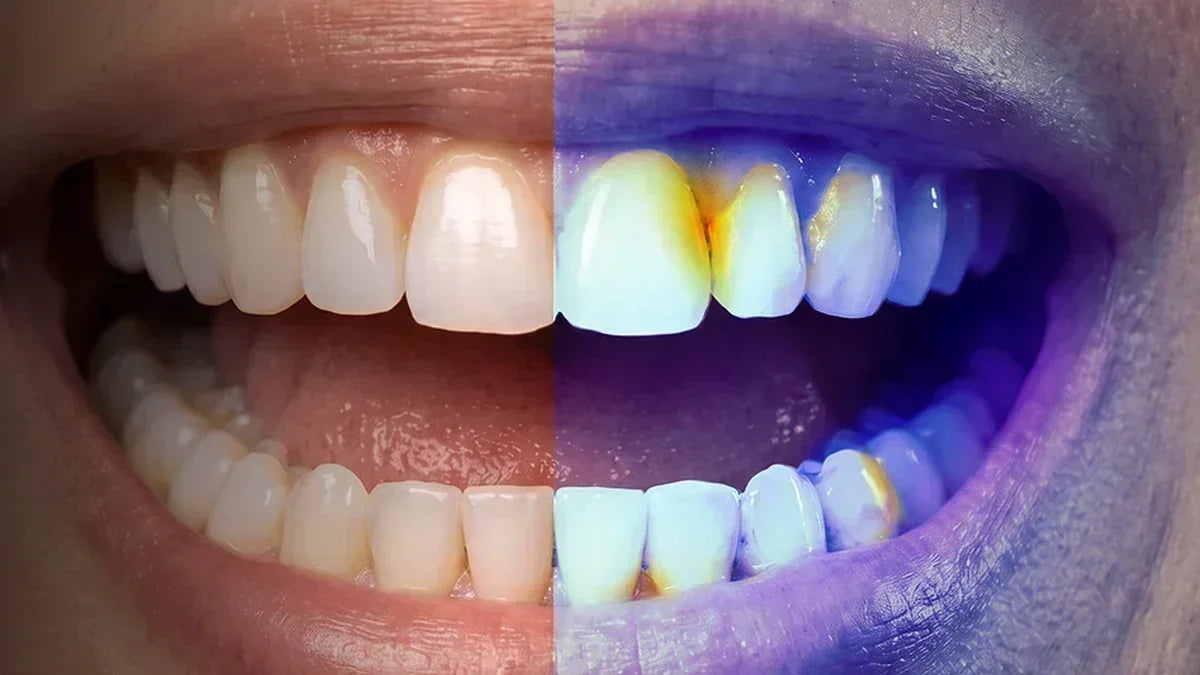
Your child brushed for two full minutes. The timer ended, the toothpaste foamed and the toothbrush looked busy. But did every tooth actually get attention? For many children ages 3–8, the challenge is not willingness or even brushing time. It is coverage.

Young children are still developing the fine motor control, spatial awareness and patience required to clean a small mouth systematically. They may repeat the same easy motion on the front teeth, skip an entire side or stop just before reaching the back. That is why a timer is useful—but not sufficient. The next step is helping children learn where to brush.

Purple usmile Q30 kids smart toothbrush set with two brush heads, charging cable, stickers and product packaging

Why children miss areas even when they try

A child cannot see most tooth surfaces while brushing. They must build a mental map, move the brush at different angles and remember what has already been covered. Add a sleepy bedtime, a strong toothpaste flavor or an unfamiliar vibration, and shortcuts are predictable.

Parents do not need to turn every brushing session into an inspection. A consistent order, age-appropriate tools and occasional check-ins can reduce missed areas without making the routine feel like a test.

1. The very back molars

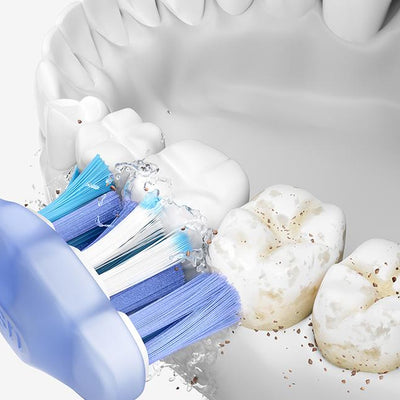
Back teeth are far from the mirror and easy to rush past. Their chewing surfaces also contain grooves where food and plaque can collect. Around age six, the first permanent molars often appear behind the baby teeth without replacing any tooth, so families may not immediately notice that there is a new surface to brush.

Help your child open wide and move the brush all the way to the last tooth on each side. Ask them to pause on the chewing surface, then reach the cheek-facing and tongue-facing sides. A small brush head can make this area easier to access.

2. The inside surfaces of the lower teeth

Children naturally focus on the tooth surfaces visible in the mirror. The inside surfaces—especially behind the lower front teeth—can disappear from the routine. Show your child how to tilt the handle so the bristles meet the inside of the teeth without scraping the gums. A simple cue such as “outside, inside, tops” is easier to remember than a long technique lesson.

3. The gumline

If brushing feels uncomfortable, children may keep the bristles safely in the middle of each tooth. That leaves the area where teeth and gums meet with less attention. Use a soft-bristled, child-sized brush and gentle pressure. The goal is thorough contact, not hard scrubbing. If gums regularly bleed, look swollen or remain painful, arrange a dental evaluation rather than assuming more pressure is the answer.

4. The far side of the child’s preferred hand

Handedness can create a pattern. A right-handed child may find some angles on the right side awkward; a left-handed child may do the reverse. Watch one normal brushing session from a respectful distance. If the child repeatedly skips the same side, start the next few sessions there while attention is fresh.

5. The last few teeth after the child thinks they are done

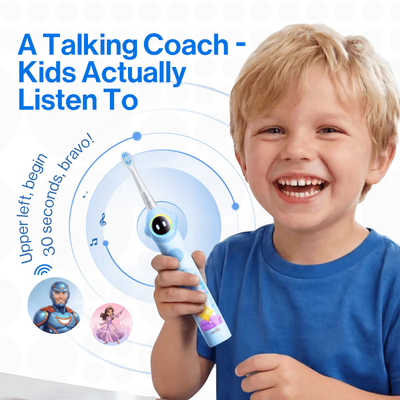
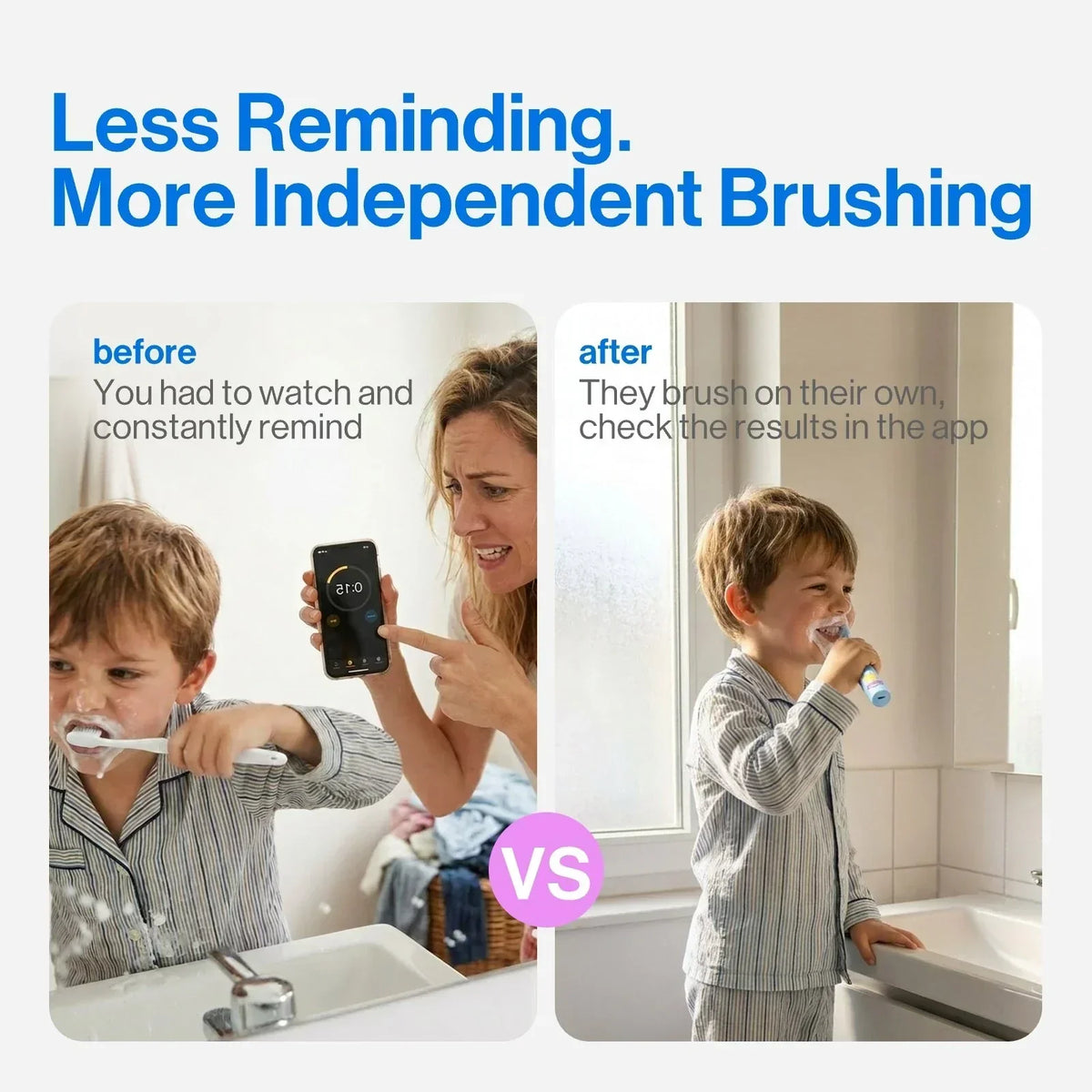
Many incomplete brushing sessions are not random: the child follows part of a route and stops early. A timer cannot identify that pattern by itself. Voice guidance and missed-zone reminders can give children a sequence to follow, while a post-brushing app report can help parents see whether the routine was completed without standing over the sink every night.

The usmile Q30 Kids Electric Toothbrush is designed around this gap between brushing and complete brushing. Its guided experience helps children move through the mouth, soft bristles support gentle daily use, and the app turns an invisible routine into something parents can review. It is still a home-care tool, not a cavity detector or a replacement for professional exams.

Child brushing independently with the usmile Q30 kids electric toothbrush while a parent checks brushing results in the app

Try the “start somewhere different” check

Once or twice a week, ask your child to begin brushing in a different area. If they always start at the top left, begin at the lower right. This breaks autopilot and reveals whether they understand the full route or simply repeat a familiar opening motion.

After brushing, use neutral questions: “Which teeth were hardest to reach?” or “Did the back teeth get a turn?” Avoid asking “Did you brush properly?”—a child is likely to say yes because they genuinely believe they did.

Make complete brushing easier to repeat

Coverage improves when the routine is concrete. Keep the same three-part order, use a brush that fits the child’s mouth, and let guidance carry some of the remembering. Parents can then shift from constant correction to short, useful check-ins. The aim is not a perfect performance tonight. It is a child who gradually learns what “every tooth” actually means.

A visual bathroom cue can reinforce the route. Use a small picture showing upper teeth, lower teeth, outsides, insides and chewing surfaces. Let the child point to each completed area after brushing. This is especially helpful when a verbal reminder disappears in the noise of a busy morning. Keep the cue short enough to understand at a glance, and retire it once the sequence has become familiar.

Looking for something else?

Liquid error (snippets/recommend-article line 11): invalid url input

Best Electric Toothbrush for Teens (2026): Top Picks, Tested and Reviewed

LEARN MORE
Best Electric Toothbrush for Gum Disease (2026): 6 Picks Tested for Real Gum Protection

Best Electric Toothbrush for Gum Disease (2026): 6 Picks Tested for Real Gum Protection

LEARN MORE
Electric Toothbrush on Plane: The Complete Travel Guide (2026)

Electric Toothbrush on Plane: The Complete Travel Guide (2026)

LEARN MORE
Liquid error (snippets/recommend-article line 11): invalid url input

Best Sustainable Electric Toothbrush 2026: 5 Picks Tested for a Greener, Healthier Smile.docx

LEARN MORE

Read more from Blogs

Looking for something else?

Best Sustainable Electric Toothbrush 2026: 5 Picks Tested for a Greener, Healthier Smile

Best Sustainable Electric Toothbrush 2026: 5 Picks Tested for a Greener, Healthier Smile

LEARN MORE
Best Cheap Electric Toothbrush (2026): Top 5 Budget Picks That Actually Work

Best Cheap Electric Toothbrush (2026): Top 5 Budget Picks That Actually Work

LEARN MORE
Ultrasonic Toothbrush vs Electric: Which Technology Wins for Your Smile?

Ultrasonic Toothbrush vs Electric: Which Technology Wins for Your Smile?

LEARN MORE

Read more from Blogs