





Gingivitis: Causes, Symptoms, and How to Reverse It Before It Progresses

On This Page
Quick Answer
Gingivitis is the earliest, reversible stage of gum disease, caused by plaque irritating soft gum tissue without bone loss. It is treatable, though it will not clear up on its own: gentle daily plaque removal—plus a professional cleaning if tartar is present—typically eases early bleeding within 1 to 2 weeks.
Recognizing Gingivitis: Signs, Severity, and How to Tell It Apart From Periodontitis at Home
Most people first suspect something is off when they spit pink foam into the sink. Because early gingivitis rarely hurts, it is easy to shrug off as brushing too hard. Knowing what to look for in the mirror helps you catch inflammation while it is still simple to reverse.
5 Common Signs of Gingivitis (What to Look For)
Healthy gums look firm, feel snug around each tooth, and stay pale pink or your natural darker shade. When gingivitis starts, watch for these five everyday signs of gingivitis:
- Bleeding gums: Pink foam in the sink or blood on your toothbrush or floss is usually the first clue. Healthy gums should not bleed during normal brushing.
- Swollen or puffy edges: The gum margin looks rounded, soft, or slightly puffed up right where it meets the tooth, instead of flat and tight.
- Color changes: Gum edges shift from your normal tone to bright red, dark red, or reddish-purple.
- Tenderness when touched: Gums feel slightly sore or sensitive when bristles or floss brush past them, even if they never throb on their own.
- Stubborn bad breath: A stale odor lingers—or comes right back—even after you brush.

Mild Gingivitis vs. Severe Gingivitis
Not all gingivitis symptoms look the same. Dentists generally assess three levels of gum inflammation to judge how far irritation has gone:
| Level | What You Notice | What It Signals |
|---|---|---|
| Mild gingivitis | Slight redness or puffiness; rare light bleeding | Early soft-tissue irritation |
| Moderate gingivitis | Noticeable red, shiny swelling; regular brushing bleeding | Active buildup needing consistent care |
| Severe gingivitis | Marked swelling; spontaneous bleeding; possible sores | Needs prompt dental evaluation |
In rare cases, severe gingivitis can flare into acute necrotizing ulcerative gingivitis (sometimes called “trench mouth”), causing painful, bleeding gums and ulcers that need urgent dental care.
[[Collection Card]]
How to Tell Gingivitis Apart From Periodontitis at Home (and What a Mirror Can’t Show)
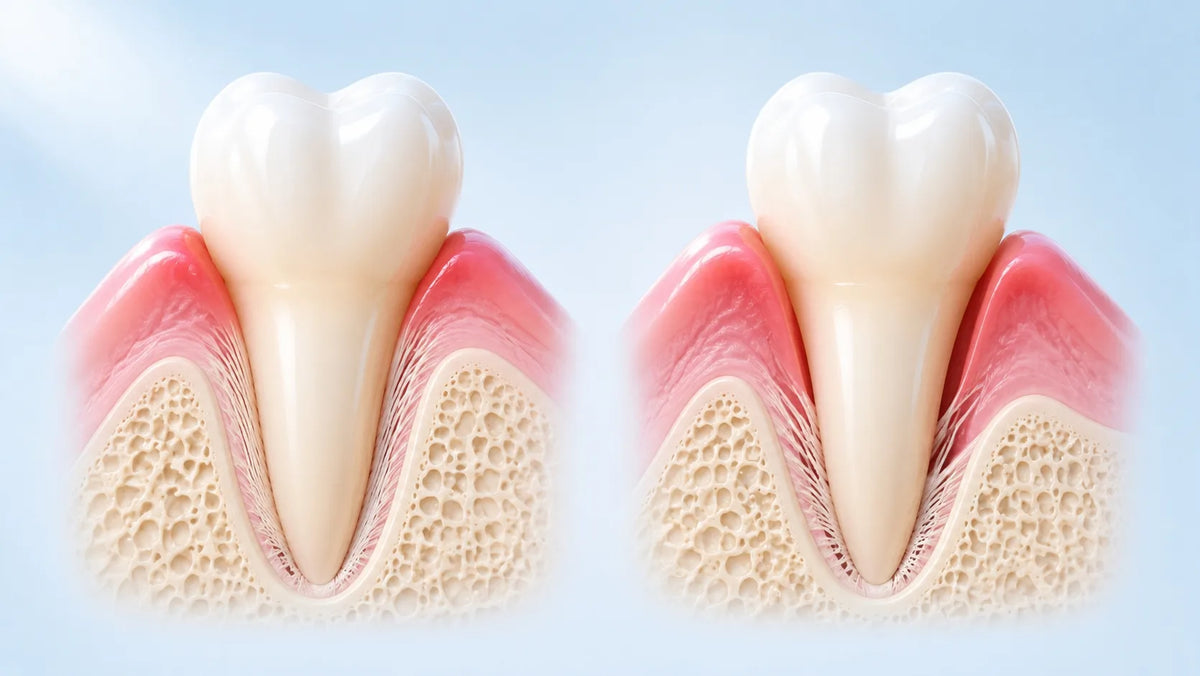
The difference between gingivitis and periodontitis comes down to depth. Gingivitis stays in the soft gum tissue—no supporting fibers or jawbone have been lost, which is why it is reversible. Periodontitis happens when inflammation spreads deeper and begins breaking down the bone anchoring your teeth.
You cannot measure gum pockets or see jawbone in a bathroom mirror, so only a dentist can confirm the diagnosis. Still, a quick at-home check helps you gauge urgency:
| Check at Home | Typical of Gingivitis | Periodontitis Warning Sign |
|---|---|---|
| Gum height & gaps | Puffy or red at normal height | Gums pull back; teeth look “longer” or show dark gaps |
| Tooth firmness & bite | Teeth feel solid; bite feels normal | Teeth feel slightly loose, shifting, or bite feels off |
| Pain & discharge | Painless or mildly sore when brushing | Deep chewing ache, pus at gumline, or foul taste |
| 1–2 week gentle care | Bleeding and puffiness steadily ease | Bleeding or swelling persists or worsens |

Keep one honest limit in mind: very early periodontitis can look almost identical to gingivitis in the mirror. Once bone support is affected, dentists classify it across four periodontal disease stages as part of managing ongoing periodontal disease.
How Common Is Gingivitis?
If you just noticed bleeding gums, you are in very large company. NIH clinical data estimates that roughly 50% of U.S. adults have some form of gingivitis at any given time—often affecting an average of 3 to 4 teeth—and up to 90% of people experience it worldwide.
Left unchecked, that early inflammation can add up. CDC and NIDCR national data shows 42.2% of U.S. adults aged 30 and older already have periodontitis (including 7.8% with severe disease), which is why acting during the reversible gingivitis window pays off.
Why Gingivitis Happens: Plaque, Tartar, and Everyday Triggers
Knowing gingivitis is common helps, but the next question is usually personal: why is this happening to me if I brush every day? Almost always, it starts with missed plaque—and a few everyday amplifiers make gums react faster.
The Plaque-to-Tartar Cycle (The #1 Cause)
In most cases, plaque-driven gingivitis builds up in three quick steps:
- Sticky plaque builds up daily: Oral bacteria form a colorless film along the gumline and between teeth every day after you eat starches and sugars.
- Missed plaque hardens into tartar: Plaque left undisturbed calcifies into rough tartar (calculus) at the base of teeth. Tartar shields bacteria and cannot be brushed away at home.
- Gums swell and bleed in response: Your immune system sends extra blood and inflammatory cells to fight the irritation, leaving gum edges red, puffy, and quick to bleed.
Small daily gaps matter more than most people realize. In U.S. adult survey data, gum disease rates were noticeably higher among adults who skipped regular flossing (53.1% vs. 37.9%) or went more than a year without a dental visit (54.8% vs. 30.3%). Because soft biofilm starts reforming right after meals, understanding dental plaque is the easiest way to stop gum irritation before it hardens.
Everyday Triggers That Raise Your Risk
Even modest plaque can spark noticeable gingivitis when other factors lower your gums’ threshold:
- Hormone shifts: Pregnancy (especially the second and third trimesters), puberty, menstrual cycles, and oral contraceptives increase gum blood flow and amplify inflammation even with minimal plaque.
- Dry mouth and certain medications: Saliva helps rinse away bacteria. Drugs that dry out your mouth—or medications linked to gum overgrowth, such as phenytoin, calcium channel blockers, and cyclosporine—raise your risk.
- Diabetes and lowered immunity: Uncontrolled blood sugar slows gum healing and intensifies inflammation (59.9% of adults with diabetes had periodontitis vs. 40.4% without in NIDCR data).
- Smoking and tobacco: Tobacco creates a deceptive trap. In a large U.S. population study, heavier smoking (>10 cigarettes a day) cut visible gum bleeding nearly in half (odds ratio 0.56), masking early warning signs even as smoking sharply raises serious gum disease risk.
- Hard-to-clean spots and low vitamin C: Crowded teeth, braces, and rough or ill-fitting fillings trap plaque; severe vitamin C deficiency weakens gum tissue directly.
Does Gingivitis Go Away? Reversibility, Healing Timelines, and When to See a Dentist
So does gingivitis go away on its own if you just give it time? No—waiting it out lets plaque stay put and harden into tartar. The good news is that gingivitis is fully treatable and reversible once the physical irritant is removed, because the supporting bone underneath is still intact.
That comes down to a simple Two-Track Reversal Rule: professional scaling clears hardened tartar, while gentle, consistent daily care clears soft plaque so inflammation stays away. Neither rinses nor aggressive scrubbing can replace that division of labor.
Realistic Healing Timelines
How fast your gums bounce back depends on whether tartar is hiding underneath and how widespread the inflammation is:
- Mild, plaque-only gingivitis: Bleeding and tenderness usually start easing within 1 to 2 weeks of gentle, consistent brushing and daily interdental care (or after a routine dental cleaning).
- Localized vs. widespread inflammation: Clinical follow-up data shows about 80% of localized cases clear up after a single professional cleaning and home-care reset, whereas only about 30% of widespread cases resolve in one visit—roughly 70% need follow-up care, with full healing often checked at 1 to 2 months.
The exact pace depends on your starting point, which is why how long gingivitis lasts can range from a couple of weeks for mild buildup to a month or more when tartar is involved.
Why Bleeding Often Continues for the First Few Days
A frustrating pattern catches almost everyone off guard: you finally start flossing or water flossing every night, and your gums bleed more for the first few days. Many people assume they are hurting their gums and stop.
In reality, the tissue was already inflamed before you started. Stopping lets plaque rebound right away. Staying gentle and consistent for 7 to 14 days is what calms the tissue—even if you run into water flosser bleeding gums during your first week.
Home Care vs. Booking a Dentist: How to Decide
Ignoring persistent gingivitis opens the door to irreversible periodontal disease, gum abscesses, or painful ulcerative flare-ups. Use this quick check to decide your first move:
| Your Situation | Best First Move | Why |
|---|---|---|
| Mild bleeding; cleaned <6 months ago | Start gentle daily care | Likely soft plaque; track 1–2 weeks |
| Visible tartar or >6–12 months overdue | Book a dental cleaning | Home tools cannot remove tartar |
| Bleeding unchanged after 2 weeks | Schedule a dental exam | Hidden tartar or deeper pockets likely |
| Recession, pus, loose teeth, severe swelling | See a dentist promptly | Signals possible periodontitis or infection |
How Gingivitis Is Confirmed and Treated (Dental Chair and Gentle Home Care)
Once you know whether to start at home or book a visit, gingivitis treatment is straightforward. No surgery is involved—just a quick exam and consistent daily plaque control.
What Happens at a Gingivitis Checkup (and Questions to Ask)
During a routine gum checkup, your dentist will typically:
- Review your health history, medications, smoking habits, or pregnancy status.
- Check your gums visually for redness, swelling, plaque, and hardened tartar.
- Gently measure the tiny groove around your teeth with a millimeter probe—1 to 3 mm is typically healthy, while readings above 4 mm prompt closer checking (swollen gingivitis gums can create temporary “false pockets” without bone loss, which a dentist separates from true periodontitis).
- Take dental X-rays only if deeper pockets suggest bone loss.
Bringing four quick questions helps you leave with a clear plan: Is this still reversible gingivitis? Which spots am I consistently missing? Do I have tartar below the gumline? How often should I come in for cleanings?
Professional Gingivitis Treatment
When it comes to how to treat gingivitis, professional care resets your clean baseline:
- Professional cleaning (scaling): A hygienist removes hardened tartar and plaque above and slightly below the gumline using hand instruments or ultrasonic tools.
- Fixing local plaque traps: Your dentist may smooth rough filling edges or adjust ill-fitting crowns or bridges that irritate the gum margin.
- Targeted extras when needed: For stubborn inflammation, your dentist may suggest a short-term antimicrobial mouthwash (such as chlorhexidine) or coordinate with your doctor if a medication or vitamin deficiency is driving the swelling.
Gentle 4-Step At-Home Gingivitis Treatment
At home, consistency beats force. Follow these four calm steps every day:

- Brush softly for 2 minutes, twice a day: Use a soft-bristled toothbrush angled about 45 degrees toward the gumline. Let the bristle tips sweep the seam gently—never scrub hard back and forth.
- Clean between teeth once a day: Plaque hides where bristles cannot reach. Use waxed string floss curved gently around each tooth, interdental brushes for wider spaces, or a water flosser started on its lowest gentle pressure setting.
- Use rinses as helpers—not cures: An antimicrobial mouthwash can lower surface bacteria, and warm saltwater rinses can temporarily calm swollen gums—but neither removes plaque biofilm or tartar on its own.
- Track your gums over 7 to 14 days: Watch for gum edges turning firmer and less puffy, with noticeably less pink foam each week.
Mistakes That Slow Healing & Red Flags That Need Prompt Care
- Scrubbing harder: Firm bristles and heavy pressure bruise inflamed gums and can cause gum recession over time.
- Skipping bleeding spots: Avoiding tender areas lets plaque thicken and keeps bleeding going.
- Scraping tartar at home: Metal picks or DIY kits can slice gum tissue and scratch enamel—leave tartar to a hygienist.
- Relying on mouthwash alone: Rinsing without brushing and flossing leaves sticky biofilm intact.
When to see a dentist right away: Book an exam promptly if you notice spontaneous bleeding without brushing, severe or spreading gum swelling, painful gum ulcers, pus, receding gums, loose teeth, or bleeding that does not improve after 1 to 2 weeks of gentle daily care.
Preventing Gingivitis From Returning: Daily Habits and Gentle Gum-Care Tools
Because plaque starts reforming within hours, knowing how to prevent gingivitis starts with simple cleaning habits you can keep on busy mornings and tired nights—paired with food and lifestyle choices that keep your gums resilient:
- Brush twice for 2 minutes: Use fluoride toothpaste and a soft-bristled brush focused gently along the gumline.
- Clean between teeth daily: Stick with whichever interdental method you will actually use every night.
- Swap brush heads on time: Replace them every 3 months, or sooner if bristles start to splay.
- Keep routine dental visits: Schedule cleanings every 6 to 12 months, or on the risk-based timeline your dentist recommends.
Beyond Brushing: Diet, Hydration, and Lifestyle Habits
Cleaning removes plaque from the outside, while what you eat and how you care for your overall health shape how strongly your gums react from the inside:
- Cut back on added sugars, refined carbs, and alcohol: Sugary drinks and refined starches feed plaque bacteria and promote inflammatory stress, while excess alcohol can dry out and irritate oral tissue.
- Eat gum-supporting nutrients: Prioritize vitamin C (bell peppers, citrus, berries, leafy greens) to support gum collagen, along with vitamin D and omega-3-rich whole foods (such as fatty fish, walnuts, and high-fiber vegetables) that support calmer gum immunity.
- Drink water throughout the day: Sipping plain water after meals rinses loose food particles and helps counter dry mouth so saliva can do its natural buffering job.
- Skip tobacco and vaping: Quitting smoking restores healthier blood flow to gum tissue and removes one of the strongest drivers of gum breakdown.
- Manage blood sugar and plaque traps: Keeping diabetes well controlled with your doctor—and asking your dentist to smooth rough fillings or address dry-mouth medications—helps prevent recurring flare-ups.
What Clinical Evidence Says About Electric Toothbrushes and Water Flossers
A manual toothbrush and string floss work well when your technique is thorough and unhurried. Still, clinical research shows why many dentists recommend upgrading when people rush, press too hard, or skip flossing:
| Tool | What Clinical Research Shows | Best Fit & Key Limit |
|---|---|---|
| Electric toothbrushes | 11%–21% more plaque reduction & 6%–11% less gingivitis vs. manual (56 trials) | Helpful if you rush or scrub unevenly; technique still matters & long-term benefit is unclear |
| Water flossers | Consistent bleeding & inflammation reduction across 275 reviewed sources | Great adjunct for braces, implants & tender gums; plaque-removal results are mixed |
If you use a water flosser, keep water pressure comfortable: clinical reviews note up to 70–90 PSI is generally safe for healthy intact gums and 50–70 PSI for tender tissue, while pressures above 90 PSI risk soft-tissue irritation. Anyone at risk of infective endocarditis should check with their clinician before using an oral irrigator.
Choosing Gentle Daily Tools That Help You Stay Consistent
Most people do not abandon gum care out of laziness—they quit because brushing feels harsh, they cannot tell which spots they missed, or flossing back molars feels awkward. Matching your tools to the exact snag in your routine makes daily care far easier to keep up:

| Common Gum-Care Snag | What Helps Most | usmile Option |
|---|---|---|
| Missing plaque along the gumline | Real-time plaque visibility + cushioned soft head | usmile D50 OralCam Toothbrush |
| Pressing too hard on tender gums | Pressure alert + auto-slowdown + Gum Care mode | usmile Y20 PRO |
| Wanting simple, light-touch brushing | Soft Mode + air-cushioned head, no screen/app | usmile P10 S |
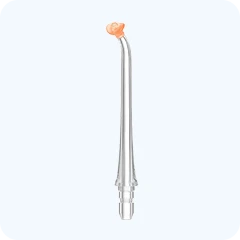
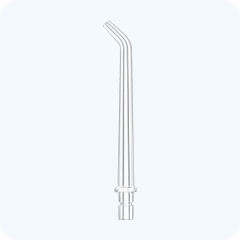
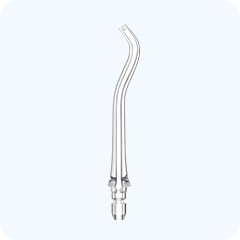
| Tender gums or tight back molars | Gentle 30–35 PSI start + 360° S-shaped nozzle | usmile C30, C50, or C10 |
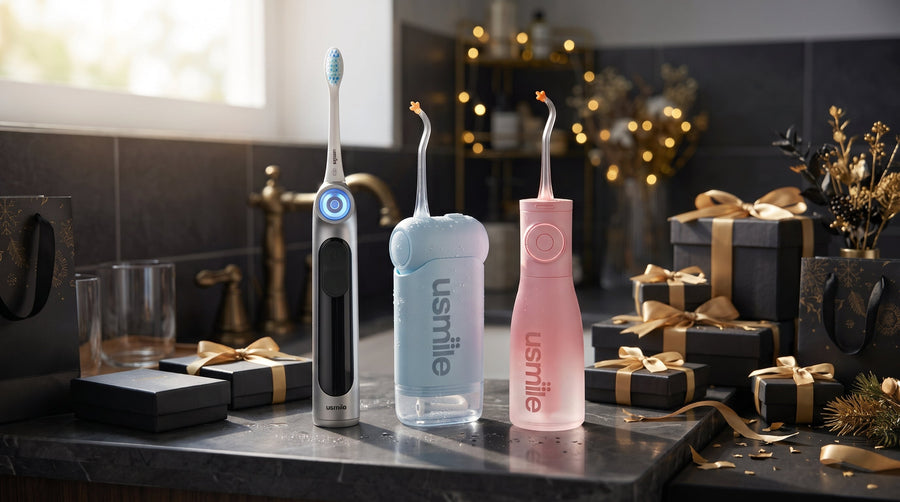
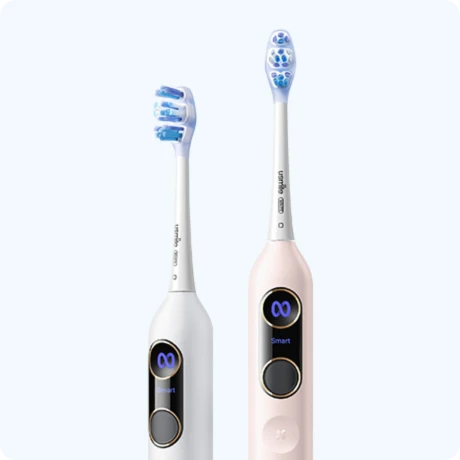
Among usmile electric toothbrushes, the usmile D50 OralCam Toothbrush stands out if hidden gumline buildup is your main challenge: its built-in 405nm QLF optical camera and handle screen highlight matured plaque in real time (processed 100% locally with no Wi-Fi), paired with Snipe Mode adaptive cleaning and a soft cushioned Gum Care Brush Head 2.0. (Optical scanning is strictly for daily brushing feedback—it does not diagnose gum disease or cavities.) If pressure control is your priority, usmile Y20 PRO adds an AI haptic pressure sensor, 4.3mm Ergonomic 2.0 head, and on-handle 3D oral map, while usmile P10 S offers quiet (<60 dB) daily simplicity with up to 180-day USB-C battery life.
[[Product Card]]
For interdental care, usmile water flossers make starting gently straightforward: usmile C30 (5 levels from 30 PSI, 300 mL removable tank) handles everyday precision, usmile C50 (10 levels from 30 PSI, up to 120-second microbubble flow) suits braces, crowns, or unhurried routines, and pocket-sized usmile C10 (starting at 35 PSI) covers travel.
Quick comfort tip: use lukewarm water, place the S-shaped tip inside your mouth aimed at the gumline, lean over the sink, and partially close your lips before powering on.
[[Product Card]]
No home device can remove hardened tartar or replace dental checkups—think of them as everyday partners that keep your gums calm between cleanings.

Frequently Asked Questions About Gingivitis
Is gingivitis contagious through kissing or sharing utensils?
Gingivitis itself is not contagious, though oral bacteria can pass from person to person through saliva. Whether inflammation develops still depends mainly on your own daily plaque control and immune health.
Can pregnancy cause gingivitis even if I brush well?
Yes. Rising estrogen and progesterone—especially in the second and third trimesters—make gum tissue far more reactive even to small amounts of plaque. Gentle daily care and safe routine dental cleanings during pregnancy help keep swelling under control.
Why do my gums bleed more right after I start flossing or using a water flosser?
Inflamed gum tissue bleeds easily when first touched. As long as you keep your touch light (and start a water flosser at its lowest 30–35 PSI setting with lukewarm water), bleeding typically tapers off within 1 to 2 weeks of consistent daily cleaning. If it does not improve, book a dental checkup.
Can saltwater, mouthwash, or hydrogen peroxide cure gingivitis on their own?
No. Warm saltwater and antibacterial rinses can soothe swelling and lower surface bacteria, but rinses cannot break up sticky plaque biofilm or remove hardened tartar. Mechanical brushing, interdental cleaning, and professional scaling when tartar is present do the real work.
Can I still get gingivitis if I brush twice a day?
Yes. Brushing for less than 2 minutes, skipping the gumline or back molars, rarely cleaning between teeth, existing tartar below the gumline, or triggers like dry mouth, hormones, and medications can still cause gingivitis even in daily brushers.
Can smokers have gingivitis even if their gums don’t bleed?
Yes. Cigarette smoking suppresses visible gum bleeding—cutting bleeding on probing nearly in half in heavier smokers in U.S. population data—while sharply raising the risk of serious gum disease. Routine dental exams are especially important if you smoke or vape.
Does gingivitis hurt, or can it feel like tooth pain?
Early gingivitis is usually painless or only mildly tender when brushing. Because inflamed gum edges wrap tightly around the base of each tooth, soreness along the gumline can sometimes feel like sensitive teeth. Sharp, throbbing, or localized tooth pain is not typical of simple gingivitis and deserves a prompt dental visit.
Can a water flosser replace string floss when you have gingivitis?
Water flossers consistently help reduce gum bleeding and inflammation—and many people find them easier to stick with around braces, crowns, or tight back molars—though clinical plaque-removal evidence is mixed. Most dentists view them as a strong companion to brushing and string floss, or a practical daily step when string floss is otherwise skipped.
Catching gingivitis early puts the odds firmly in your favor: pair a professional cleaning when tartar is present with gentle, consistent daily plaque control, and most gums bounce back quickly. To make that daily routine easier on tender gums, pairing one of the gentle usmile electric toothbrushes with usmile water flossers helps keep gumline care comfortable and consistent.
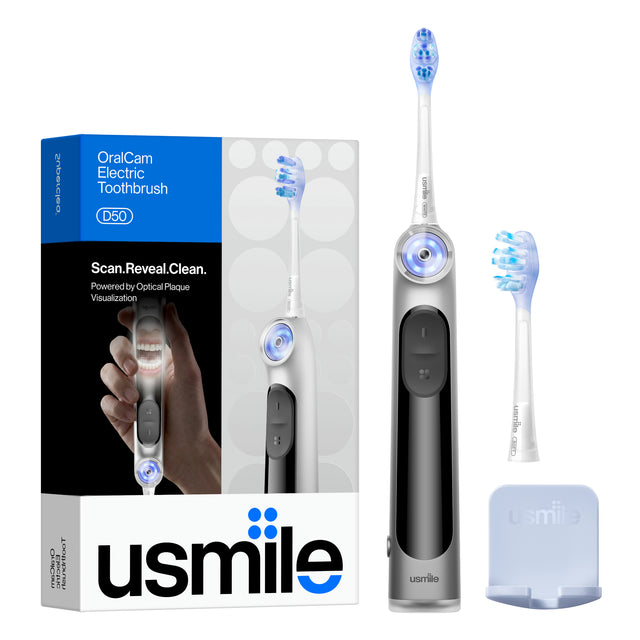
usmile D50 OralCam Toothbrush
Built-in OralCam for real-time plaque visibility and targeted adaptive cleaning for clinical-grade care
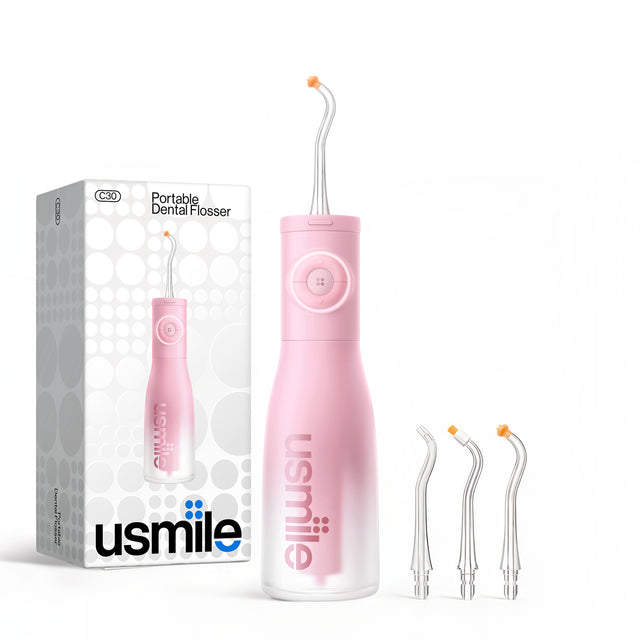
usmile C30 Cordless Water Flosser – Portable Oral Irrigator
For a complete, uninterrupted clean—at home or on the go.

Electric Toothbrush
Discover usmile electric toothbrushes with AI guidance, plaque removal, gum protection and smart feedback for adults, kids and first-time users.
Electric ToothbrushDisclaimer
This article is for general educational purposes only and is not a substitute for professional dental or medical advice, diagnosis, or treatment. Always consult a licensed dentist or qualified healthcare provider regarding bleeding gums, persistent oral symptoms, or personalized care.