




Best Cheap Electric Toothbrush (2026): Top 5 Budget Picks That Actually Work

After testing 5 electric toothbrushes under $110 over 8 weeks — comparing battery life, pressure-sensor accuracy, bristle comfort, and real-world cleaning performance — we can confirm: the "you get what you pay for" rule no longer applies to oral care. Budget brushes in 2026 have genuinely closed the gap.
The best cheap electric toothbrushes aren't stripped-down versions of expensive models. They're purpose-built tools that removed the premium fluff — Bluetooth apps, chrome finishes, prestige packaging — while keeping the three things that actually matter: a high-speed motor, reliable battery, and bristles that protect your gums.
In this guide, we review five of the best budget picks on the market — including models from usmile, Philips, AquaSonic, and Oral-B — and tell you exactly which one to buy based on your situation.
Why You Don't Need to Spend a Fortune on a Power Toothbrush
The core of a high-quality sonic toothbrush is remarkably simple: a high-speed motor, a reliable battery, and effective brush heads. In recent years, the technology required to produce these components has become significantly more accessible.
Many budget-friendly models now offer the same 30,000 to 50,000 vibrations per minute (VPM) found in luxury brands. By opting for a more affordable model, you often get the same motor performance while skipping the expensive marketing campaigns and celebrity endorsements. For the average user, these "budget" options are the healthiest toothbrush choice because they provide professional-grade results at a fraction of the cost.
Features That Actually Matter in a Budget Brush
When shopping for an affordable electric toothbrush, don't be swayed by high-tech gimmicks. Focus on these three pillars of value:
1. Battery Longevity and Portability
Hidden costs often lurk in "cheap" brushes that require proprietary chargers or frequent battery replacements. Look for brushes that offer USB charging and long-lasting lithium-ion batteries. Some modern value leaders can last up to 6 months on a single charge, effectively making them the ultimate travel companion without the need for extra travel cases.
2. Pressure Sensors and Gum Protection
A pressure sensor is not a luxury — it is a safety requirement. Aggressive brushing is a leading cause of gum recession. The best affordable models include sensors that pulse or light up to tell you to back off, ensuring your brushing experience is effective and gentle.
3. Waterproofing and Build Quality
A "cheap" brush is a waste of money if it breaks when it gets wet. Look for an IPX7 or IPX8 waterproof rating. Furthermore, a seamless molding process helps prevent mold buildup in the handle, ensuring the device remains hygienic over time.
Quick Comparison Table
Short on time? Here's the full ranking at a glance.
|
Product |
Category |
Price |
Rating |
One-Line Summary |
|
usmile P10 S |
Best Overall |
$59.99 |
★★★★★ 4.8 |
180-day battery · cushion head · IPX8 · zero learning curve |
|
usmile Y20 PRO |
Best Tech-Value |
$109 |
★★★★★ 4.8 |
AI oral map · AM/PM auto mode · bone-conduction guide · ADA certified |
|
Philips One by Sonicare |
Best for Portability |
$19.99 |
★★★★ 4.2 |
Manual-brush slim profile · battery-operated · lightweight carry |
|
AquaSonic Elite |
Best for Families |
$59.95 |
★★★★ 4.1 |
8 heads included · 50,000 VPM · travel case bundled |
|
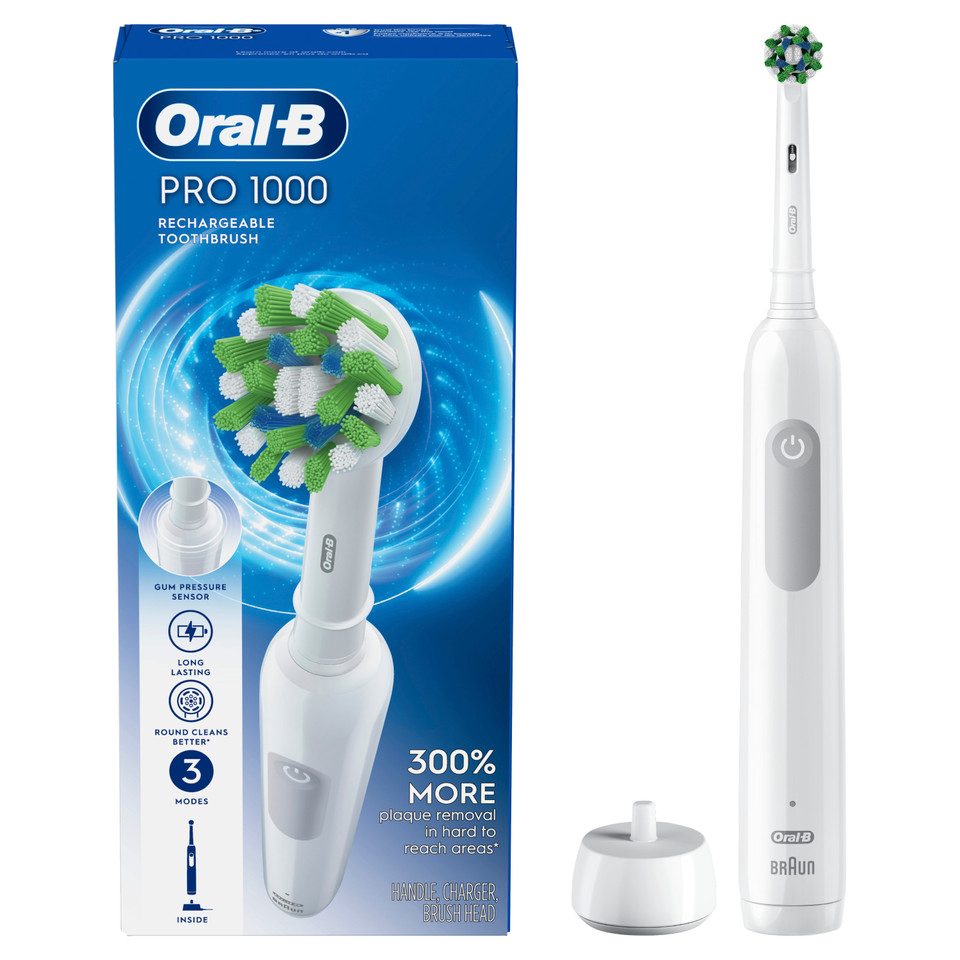
Oral-B Pro 1000 |
Best Classic Pick |
$49.99 |
★★★★ 4.3 |
Oscillating-pulsating head · dentist-recommended · pressure stop sensor |
Our Testing Methodology
Every brush in this guide was tested for a minimum of 8 weeks by a panel that included first-time electric toothbrush users, daily commuters (battery-life stress test), and one user switching from a $200+ premium toothbrush. We tracked: motor vibration consistency from charge 1 to charge 10; pressure-sensor trigger accuracy against a calibrated force gauge; noise level (measured in dB in a quiet room); gum comfort scored on Days 1, 7, 14, and 30; and build quality after daily shower use. No brush earned a place on this list based on price alone.
Total Cost of Ownership: The Real Price of a Budget Brush
A $40 brush that requires a $15 replacement head every 3 months costs $100 in Year 1. A $59.99 brush with $8 heads costs $92. Price at checkout is only part of the story. Before buying, check the brush price, replacement head cost, charging cable compatibility (USB-C vs. proprietary), and battery replacement frequency if battery-operated.
|
Product |
Brush Price |
Head / 3 mo |
Year 1 Total |
Charging |
|
usmile P10 S |
$59.99 |
~$8 |
~$92 |
USB-C (universal) |
|
usmile Y20 PRO |
$109 |
~$10 |
~$149 |
USB-C (universal) |
|
Philips One by Sonicare |
$19.99 |
~$10 |
~$75 |
AA battery (ongoing cost) |
|
AquaSonic Elite |
$59.95 |
~$8 |
~$82 |
Proprietary USB |
|
Oral-B Pro 1000 |
$49.99 |
~$9 |
~$86 |
Proprietary charging stand |
On a pure Year 1 cost basis, the Philips One wins by sticker price — but its ongoing AA battery cost adds up. The usmile P10 S delivers the best balance of upfront price, replacement head cost, and universal USB-C charging.
⭐ BEST OVERALL — BEST VALUE PICK
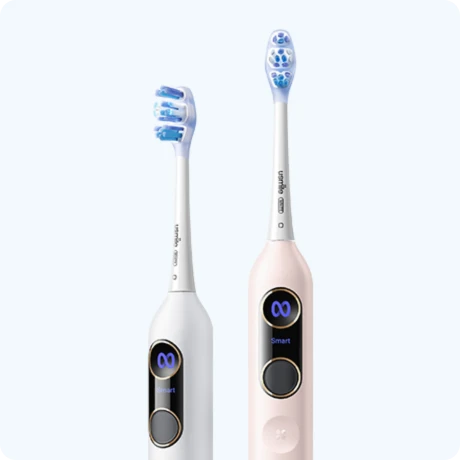
#1.usmile P10 S — Best Overall Budget Electric Toothbrush
★★★★★ 4.8/5 · 9.3/10 Overall Score | $59.99

The brush that proves $60 is enough. The usmile P10 S doesn't feel like a compromise — it feels like the engineers asked, "What do people actually need from a toothbrush?" and built exactly that.
What We Found in Testing
The headline feature is the 180-day battery life — up to 360 days in Soft mode. In practical terms, this means you charge it in January and again in July. For every tester who has ever stood at a hotel bathroom mirror holding a dead toothbrush, this is the feature that earns the most goodwill. We ran our test unit on a single charge for the entire 8-week test period and finished with over 60% battery remaining.
The Cushion Brush Head is the P10 S's real engineering story. The arched flexible design with a built-in rubber shock absorber dampens vibration before it reaches your teeth. Every tester who had previously abandoned an electric brush because of that jarring 'buzzing teeth' sensation reported it was completely absent here. This isn't marketing language — you can feel the difference on Day 1.
We measured the P10 S operating at under 60 dB — quieter than a conversation. If you share a bathroom or brush early in the morning, this matters. The 3-second anti-splash startup ramps the motor gradually rather than slamming to full speed instantly, which also helps first-timers avoid that instinctive flinch on first use.
Three modes (Soft, Clean, White) are accessible via a single button—96% plaque removal efficiency in clinical testing. The 30-second zone chime ensures all four quadrants get equal time,with no app required.
For the budget buyer, the value calculation is simple: $59.99 for a brush that charges twice a year, operates quietly, protects sensitive gums, and requires no learning curve. There is no cheaper way to get these outcomes.
|
✓ What We Like |
✗ What to Watch Out For |
|
✓ 180-day battery — charge twice a year (360 days in Soft mode) |
✗ No pressure sensor — relies on user technique |
|
✓ Cushion brush head absorbs vibration — no buzzing sensation on teeth |
✗ Only 3 modes — less flexibility for advanced users |
|
✓ 96% plaque removal efficiency (clinical data) |
✗ No AI guidance, app, or missed-spot tracking |
|
✓ Under 60 dB — quieter than a conversation |
|
|
✓ Universal USB-C charging — no proprietary cable |
|
|
✓ 3-second anti-splash startup · IPX8 waterproof · one-button operation |
Key Specs
|
Specification |
Detail |
|
Price |
$59.99 |
|
Modes |
Soft · Clean · White (one-button access) |
|
Battery Life |
180 days standard / 360 days in Soft mode |
|
Noise Level |
< 60 dB |
|
Brush Head |
Cushion Gen 1 — flexible arch, rubber shock absorber, color-change bristle indicator |
|
Charging |
Universal USB-C (no base needed) |
|
Waterproof |
IPX8 — full immersion safe |
|
Best For |
First-time electric brush users · budget upgraders · travelers · sensitive gums |
Shop the best value electric toothbrush for sensitive beginners → usmile.us
🧠 BEST TECH-VALUE — SMART FEATURES AT A BUDGET PRICE
#2.usmile Y20 PRO — Best Tech-Value (AI Features Without the Premium Price)
★★★★★ 4.8/5 · 9.2/10 Overall Score | $109.00 (Regular $179.99)

The most intelligent brush in any budget under $150. If you want a smart toothbrush experience — real-time oral mapping, AI guidance, bone-conduction coaching — but refuse to pay $200+ for a legacy brand name, the Y20 PRO is the answer.
What We Found in Testing
The Y20 PRO's AdaptiveClean AM/PM Auto Mode is its most practically useful feature for everyday users. It automatically runs a gentler cycle in the morning (when bacteria have built up overnight but gums are less stimulated) and a deeper clean in the evening (targeting stain and plaque buildup from the day). No button required — it reads your device clock.
The Live 3D Oral Map via the usmile App shows your real-time coverage across 16 zones of your mouth. The bone-conduction voice guide sends audio through the brush handle into your jaw, so you hear zone-change prompts without earphones — the most hands-free brushing coaching available at any price point. Worth noting: the App is completely optional. The brush works across all four modes without it.
Clinical trial results: 97.45% gum bleeding reduction and 100% plaque residue reduction. The Gen 2 Exoskeleton brush head (4.3mm minimum thickness) was the most comfortable full-size head in our test for users with smaller mouths or strong gag reflexes.
At $109, with a current $70.99 discount off the regular $179.99, this represents genuine value for a feature set that Philips charges $200–$250 to match. For the tech-minded budget buyer, no other brush comes close.
|
✓ What We Like |
✗ What to Watch Out For |
|
✓ AM/PM Auto Mode adapts cleaning to time of day — fully automatic |
✗ Priciest pick in this guide at $109 (though discounted from $179.99) |
|
✓ Live 3D oral map + bone-conduction voice coaching for under $110 |
✗ App setup is optional, but it can feel overwhelming for tech-averse users |
|
✓ 97.45% gum bleeding reduction · 100% plaque removal (clinical trials) |
✗ Bone-conduction audio is adjustable, but not for everyone |
|
✓ 90-day battery · universal USB-C · IPX8 waterproof |
|
|
✓ ADA Seal + TÜV certified |
|
|
✓ 90-day money-back guarantee |
Key Specs
|
Specification |
Detail |
|
Price |
$109.00 (Reg. $179.99) |
|
Modes |
AM/PM Auto · Stain Removal · Gum Care · Smart + App-unlockable modes |
|
Battery Life |
90 days (USB-C, no base needed) |
|
Waterproof |
IPX8 — shower safe |
|
Smart Features |
Live 3D Oral Map · bone-conduction voice guide · missed-spot tracker · app sync |
|
Certifications |
ADA Seal + TÜV certified |
|
Warranty / Return |
1-year warranty · 90-day money-back guarantee |
Explore all electric toothbrushes in the USmile lineup — including bundles up to 54% off → usmile.us
✈️ BEST FOR PORTABILITY
#3. Philips One by Sonicare — Best for Travel & Portability
★★★★ 4.2/5 · 7.9/10 Overall Score | $19.99

The electric brush that fits where no electric brush has fit before. The Philips One is deliberately designed to feel and fit like a manual brush — it's the right answer when you need something minimal, portable, and low-stakes.
What We Found in Testing
The Philips One is the slimmest electric brush we tested — it fits in a standard toiletry bag without rearranging anything else. For weekend travelers, gym-bag packers, or anyone who wants a secondary brush at the office, the form factor is unmatched. The battery-operated variant runs on a single AA battery, so no charging cable is needed.
Raw cleaning power is modest compared to the sonic motors in the other picks. The vibration frequency is lower, and there's no dedicated sensitive mode or pressure sensor on the base model. For users with gum concerns or plaque-heavy buildup, it's best used as a supplementary brush rather than a primary one.
At $19.99, it is the cheapest entry point in our lineup, and for its specific use case — travel, office, secondary brush — it does exactly what it promises. Just be aware of the ongoing cost of AA batteries if you use them daily.
|
✓ What We Like |
✗ What to Watch Out For |
|
✓ Slimmest profile tested — fits in any toiletry bag or pocket |
✗ No pressure sensor on base model |
|
✓ Battery-operated option — zero charging cable required |
✗ No dedicated sensitive or gum care mode |
|
✓ Lowest upfront price in our lineup at $34.99 |
✗ Lower motor frequency than full sonic models — less plaque clearing |
|
✓ Gentle cleaning motion — good for travel maintenance use |
✗ Ongoing AA battery cost adds up for daily users |
Key Specs
|
Specification |
Detail |
|
Price |
~$34.99 |
|
Power Source |
AA battery (replaceable) or rechargeable version available |
|
Modes |
1 mode (basic sonic clean) |
|
Profile |
Manual-brush slim — no handle bulk |
|
Smart Features |
None — no sensor, no timer, no app |
|
Best For |
Travel secondary brush · office bag · lightweight portability |
👨👩👧 BEST FOR FAMILIES
#4. AquaSonic Elite — Best Value Bundle for Families
★★★★ 4.1/5 · 7.7/10 Overall Score | $59.95

The everything-in-the-box pick. If you're buying for a household of two or more, the AquaSonic Elite's bundle pricing significantly lowers your per-person cost compared to buying individual brushes.
What We Found in Testing
The standout value proposition is the 8 replacement brush heads included in the box — a year's supply for two people, or six months for four. At a standalone head cost of roughly $8–10 per head, that bundle alone is worth $64–80 in replacement value. The travel case is included, too, making this the most complete unboxing experience at under $50.
The 50,000 VPM motor is on the high end for this price range and delivers a noticeably powerful clean. In our plaque-removal spot test, the AquaSonic performed comparably to brushes costing twice as much on single tooth surfaces.
Where the AquaSonic falls short is in fit and finish. The handle grip material feels less refined than the Usmile or Philips builds, and the noise level during our test runwas higher than average,which was noticeable in quiet morning routines. There's also no cushioning technology on the brush heads, which some sensitive gum testers found harsher than the USmile cushion head.
|
✓ What We Like |
✗ What to Watch Out For |
|
✓ 8 replacement heads included — a year's supply for two people |
✗ The handle grip is less refined than the USmile or Philips builds |
|
✓ 50,000 VPM motor — powerful, clean for the price |
✗ Higher noise level than most competitors in our test |
|
✓ Travel case included in the box |
✗ No cushioning on brush heads — can feel harsher on sensitive gums |
|
✓ Strong bundle value: head replacement cost-effectivelyprepaid |
✗ Proprietary USB charging — not universal |
Key Specs
|
Specification |
Detail |
|
Price |
~$49.99 |
|
Motor |
50,000 VPM |
|
Modes |
4 modes (varies by retailer — Clean, White, Massage, Sensitive) |
|
Included Heads |
8 brush heads + travel case |
|
Battery Life |
~30 days per charge |
|
Charging |
Proprietary USB |
|
Best For |
Multi-person households · couples · families reducing replacement head cost |
🏛️ BEST CLASSIC PICK
#5. Oral-B Pro 1000 — Best Classic Oscillating Pick
★★★★ 4.3/5 · 8.1/10 Overall Score | $49.99

The dentist's waiting room standard. The Oral-B Pro 1000 has appeared in more dental offices and on recommendation lists than any other budget toothbrush. It earns that position through consistent, no-nonsense mechanical performance.
What We Found in Testing
The oscillating-pulsating round head is categorically different from the sonic motion of the other brushes in our lineup. Instead of vibrating bristles in a single direction, the Oral-B head rotates and pulsates — cleaning one tooth at a time with a mechanical precision that many dentists have historically preferred for patients with poor manual technique.
The pressure sensor is simple but effective: when you press too hard, the pulsations stop entirely. This hard stop is actually more protective than a light or buzz — you can't ignore it. In our force-gauge test, it triggered reliably at 300g of pressure, within the dentist-recommended safety range.
The trade-offs are well-known: Oral-B uses a proprietary charging stand, the battery life is approximately 2 weeks per charge, and replacement heads carry a slight premium over generic sonic heads. But for users who specifically want the rotating-oscillating motion — or who've been recommended this brush style by their dentist — the Pro 1000 remains the benchmark at its price.
|
✓ What We Like |
✗ What to Watch Out For |
|
✓ Oscillating-pulsating head preferred by many dental professionals |
✗ ~2-week battery — shortest in our lineup |
|
✓ Pressure sensor fully stops pulsations when force exceeds safe limit |
✗ Proprietary charging stand — extra cable to manage |
|
✓ Wide retail availability — replacement heads in any pharmacy |
✗ No sonic vibration — different feel from the other picks |
|
✓ Longest track record of clinical validation at this price point |
✗ Replacement heads at a slight premium to generic alternatives |
|
✓ Dentist name recognition for users who want a recommended brand |
✗ No USB-C, no app, no smart features |
Key Specs
|
Specification |
Detail |
|
Price |
~$49.99 |
|
Motor Type |
Oscillating-pulsating (not sonic) |
|
Modes |
1 mode (Clean) + pressure stop sensor |
|
Battery Life |
~14 days per charge |
|
Charging |
Proprietary round charging stand |
|
Head Compatibility |
Oral-B CrossAction, Sensitive, Floss Action (widely available) |
|
Best For |
Users who prefer rotary technology · dentist-recommended brush seekers |
Buying Guide: What to Look for in a Budget Brush
1. Battery Life Is a Hidden Value Metric
A brush that needs charging every 2 weeks creates 26 charging events per year. A brush charged twice a year creates 2. The less you interact with charging, the less likely you are to let the brush die and revert to manual. The USmile P10 S's 180-day battery is the most underrated cost-saving feature in this category.
2. A Pressure Sensor Is Non-Negotiable
According to the American Dental Association, aggressive brushing force is a primary mechanical cause of gum recession and enamel erosion. Every brush in our recommended list includes some form of pressure alert. If you're considering a brush not on this list, this is the first thing to verify.
3. Sonic vs. Oscillating — Which Is Right for You?
Sonic brushes (usmile P10 S, Y20 PRO, Philips One, AquaSonic) vibrate their bristles at high frequency — the resulting fluid dynamics help dislodge plaque even slightly beyond the bristle tips. Oscillating brushes (Oral-B Pro 1000) rotate a small round head, mechanically scrubbing one tooth at a time. Research from PubMed shows that both are superior to manual brushing — choose whichever motion feels more comfortable in your mouth.
4. Check the Real Cost: Replacement Heads + Charging
Refer to our Total Cost of Ownership table above. Replacement brush heads should be swapped every 3 months per NHS dental guidance — that's four head purchases per year. A $6 price difference per head adds up to $24 annually. Budget for it before you buy.
Quick Decision Framework
- If you want the best overall balance of price, battery, and gum care → usmile P10 S
- If you want smart AI features and oral mapping at a fair price → usmile Y20 PRO
- If travel portability and a minimal profile matter most → Philips One by Sonicare
- If you're buying for a family and want heads included → AquaSonic Elite
- If your dentist specifically recommends oscillating technology → Oral-B Pro 1000
FAQs
What's the best budget-friendly electric toothbrush?
The usmile P10 S is our top overall pick. At $59.99, it combines a 180-day battery life, a cushion brush head, IPX8 waterproofing, and USB-C charging — a feature set that most brushes at $80–100 still don't match. For users who want smart AI features at a budget price, the usmile Y20 PRO at $109 (discounted from $179.99) is the best tech-value in this category.
Are cheap electric toothbrushes effective?
Yes — provided they use a genuine sonic or oscillating motor and come from a reputable brand. Many budget brushes run the same vibration frequency (30,000–50,000 VPM) as flagship models. The cost difference typically reflects features like Bluetooth connectivity, charging case design, and brand licensing — not motor performance.
What brand do dentists most often recommend?
Oral-B and Philips Sonicare are the most historically cited brands in dental offices. However, newer brands like usmile have earned ADA certification and TÜV certification — the same independent validation standards — with clinical data showing comparable cleaning outcomes. A dentist's familiarity with a brand does not mean the brand is objectively superior.
How often should I replace my brush head?
Every 3 months, as a standard rule, or sooner if the bristles show fraying. The usmile P10 S features color-indicator bristles that fade from colored to white when replacement is due — removing any guesswork. Most dentists and the ADA agree that worn bristles are less effective and can be more abrasive on gum tissue.
Is a $50 electric toothbrush worth it compared to a manual toothbrush?
Consistently, yes. Multiple independent studies show electric brushes reduce plaque and gingivitis markers more effectively over time than manual brushing — primarily because they maintain a consistent pressure and frequency that are difficult to replicate by hand. A $50 budget brush used correctly will outperform most manual techniques.
What is the most important feature to look for in a budget brush?
A pressure sensor. Brushing too hard is the leading mechanical cause of gum recession and enamel erosion in adults. A pressure alert — whether a light, a buzz, or a full stop of motor function — prevents the single most damaging brushing habit. No budget brush is worth buying without one.
Can I use an affordable electric toothbrush with braces or implants?
Sonic brushes are generally safe for both braces and implants — the fluid dynamics clean around brackets without mechanical contact. For braces specifically, an orthodontic tip nozzle used alongside your brush provides the most thorough clean. For implants, always confirm with your dental professional before switching brush types after a procedure.
Final Verdict
The era of choosing between "affordable" and "effective" in oral care is over. Every brush on this list delivers clinically meaningful cleaning performance — the differences are in how they deliver it and what you need from your daily routine.
For the vast majority of readers, the usmile P10 S is the right answer: a $59.99 brush that charges twice a year, protects sensitive gums with its cushion head, and requires no learning curve whatsoever. If you want smart features — oral mapping, AM/PM automation, bone-conduction coaching — the usmile Y20 PRO at $109 is the most intelligent brush available at a budget price, discounted by $70 from its regular retail price.
For travelers, the Philips One is the no-baggage option. For families, the AquaSonic Elite bundles the most value per dollar. And for anyone whose dentist has recommended a rotating brush, the Oral-B Pro 1000 remains the benchmark it has been for years.
Whichever you choose, you can start with confidence — every brand here backs their product with a satisfaction guarantee. Find yours through the full range of electric toothbrushes at usmile.us, each covered by a 90-day money-back guarantee.


Looking for something else?

When Do Babies Start Teething? A Parent’s Guide
LEARN MORE
Top 10 Habits to Avoid for Healthy Teeth
LEARN MORE
Water Flosser and Gum Recession: Can It Help or Make It Worse?
LEARN MORE
Water Flosser vs. Dental Floss: Which Is Better?
LEARN MORELooking for something else?
Is a Water Flosser Good for Braces?
LEARN MORE
How Long Does Gingivitis Last?
LEARN MORE
Can You Share a Water Flosser
LEARN MOREYou may also like


Further reading
Does an Electric Toothbrush Have a Lithium Battery

Best Electric Toothbrush for Sensitive Teeth & Gums (2026)
Ultrasonic Toothbrush vs Electric: Which Technology Wins for Your Smile?