




Best Portable Water Flosser: 7 Features That Matter for Travel and Daily Care
A reliable portable water flosser pairs a 30-35 PSI gentle start, 45-120s flow, 360-degree nozzle, and removable IPX7 tank for mold-free travel and daily care.

On This Page
The best portable water flosser balances a compact, travel-ready body and multi-month rechargeable battery with at least 45 to 60 seconds of steady water flow, a gentle 30–35 PSI starting mode, a 360° rotating nozzle, and a removable tank that dries completely. Matching these seven features to your routine matters more than chasing peak pressure.
What Makes a Water Flosser “Portable”? Understanding the 3 Cordless Designs
If you want to ditch a bulky countertop machine tethered to a bathroom outlet, a portable water flosser—also known as a portable oral irrigator—makes daily interdental care much easier. Still, the word “portable” gets used for three very different cordless designs, and knowing how they differ keeps you from buying a model that does not fit your sink or your suitcase.

1. Collapsible Travel Water Flossers (Smallest in Your Bag)
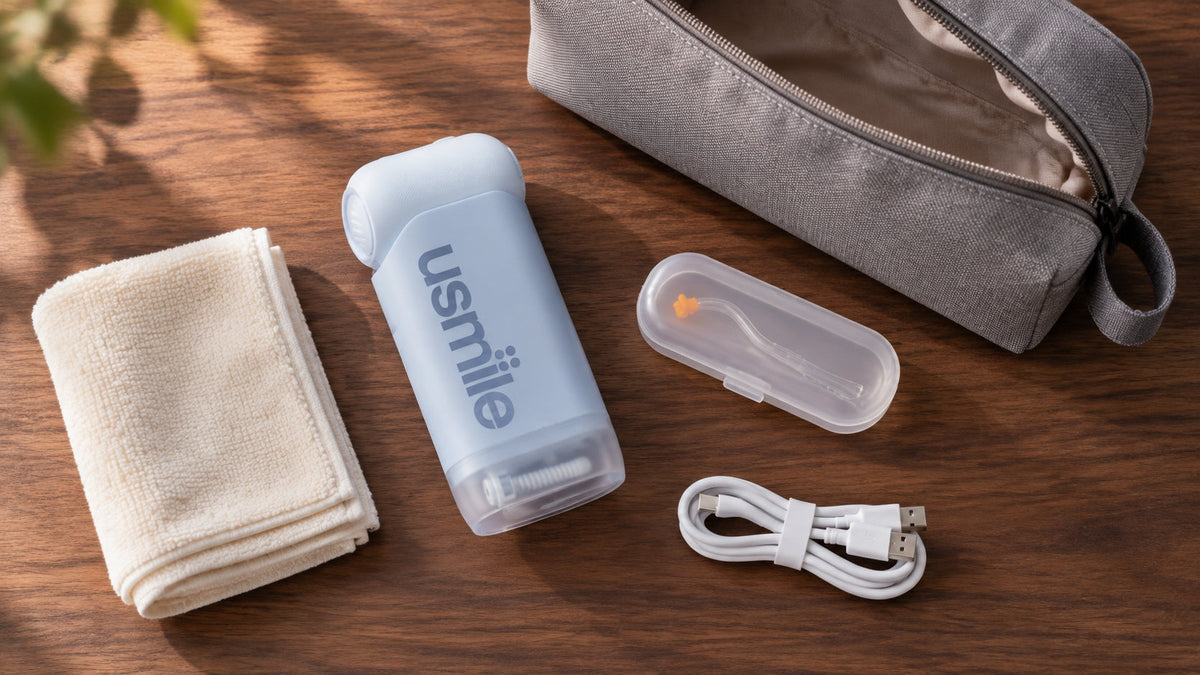
A collapsible travel water flosser lets the pump handle slide neatly inside a pull-out 150–180 mL water tank when you are finished. That nesting structure gives you the smallest water flosser footprint available—roughly the height of a smartphone—making it an effortless mini water flosser for travel, carry-on toiletry kits, gym bags, and office drawers.
- Best for: Frequent flyers, one-bag travelers, and quick post-lunch cleanups.
- The trade-off: The smaller tank covers one brisk daily session, while slower flossers may need a quick refill.
2. Standard Handheld Cordless Flossers (Balanced for Small Vanities & Trips)
A one-piece compact water flosser houses the pump, battery, and a larger 200–300 mL detachable tank inside a single upright handle. It stands slightly taller in a travel bag than a collapsible unit, but it frees you from bathroom cords while delivering 60 to 120 seconds of uninterrupted water flow.
- Best for: Small apartment bathrooms with tight vanity space and travelers who prefer not to refill mid-session.
- The trade-off: Takes up a bit more space in a toiletry pouch than a pull-out design.
3. Cordless Countertop Models (Wire-Free at Home, Too Bulky for Luggage)
Some newer models pair a rechargeable 550–650 mL base station with a separate hose and slim handpiece. They work well in shared family bathrooms that lack an outlet near the sink, but their base is far too bulky to serve as a practical water flosser for travel.
- Best for: Multi-person home bathrooms with no nearby wall outlet.
- The trade-off: Built for the bathroom shelf rather than a carry-on suitcase.
The 7 Features That Matter When Choosing a Portable Water Flosser
Finding the best portable water flosser is much simpler when you stop comparing inflated spec sheets and look at the three things that actually shape your experience every day:
- Portability & Power (Features 1–2): Will you actually enjoy packing and charging it?
- Cleaning & Comfort (Features 3–5): Does it give you enough water, gentle control, and easy reach?
- Hygiene & Reliability (Features 6–7): Can you dry it cleanly and keep it running for years?
Part 1: Portability & Power
1. Compact Size, Dry Weight, and Travel Lock Protection
When you are packing a carry-on or toiletry bag, two physical details decide whether a travel water flosser actually comes with you: how compact it gets when stowed and how light it feels in your bag. Most modern cordless designs weigh roughly 300 to 325 grams dry—about the weight of a smartphone in a protective case—so they sit comfortably beside your toothbrush without adding noticeable bulk.
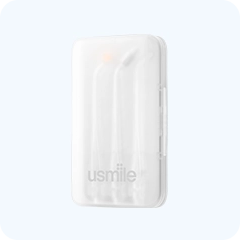
Two thoughtful travel details make just as much difference on the road: a travel lock (or protected switch) that keeps the pump from accidentally turning on inside a packed bag, and a dedicated nozzle storage case that keeps your tips clean in transit.
- What to look for: A dry weight near 300 g, a slim or collapsible footprint, a travel lock, and a protective tip case.
2. Multi-Month Battery Life, USB Charging, and Air-Travel Readiness
Convenience is the main reason to choose a rechargeable water flosser—and few things disrupt a trip faster than realizing you left a proprietary charging dock at home. While some cordless models need recharging every two weeks, high-capacity lithium-ion designs can run 60 to 95 days on a single charge (based on one 1-minute session a day).
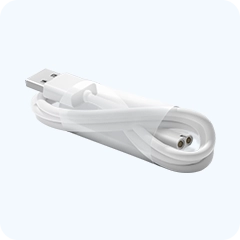
That translates to charging your flosser just four to six times a year, so you can leave the cord behind on multi-week vacations. Favor simple USB charging (especially universal USB-C on full-size cordless units) over bulky magnetic pucks or slow 8-hour barrel adapters, and always make sure the charging port is completely dry before plugging in.
If you fly often, there is no need to worry about airport rules. Under the Federal Aviation Administration (FAA) PackSafe guidelines, built-in lithium-ion batteries in personal care devices—typically around 9–10 Wh, well under the 100 Wh limit—are safe for air travel. Simply empty the water tank before security and keep any spare lithium batteries in your carry-on bag.
- What to look for: At least 30 to 95 days of battery life per charge and convenient USB charging.

Part 2: Cleaning Performance & Comfort
3. Tank Capacity and Continuous Flossing Time (45 to 120 Seconds)
Running out of water halfway through your mouth is one of the fastest ways to get frustrated with a small water flosser. For a comfortable, unhurried routine across both upper and lower teeth, aim for at least 45 seconds of continuous water flow.
Here is the detail most shoppers overlook: tank milliliters alone do not tell you how long a flosser will run—pump design changes the math.
- Short-burst air pumps: Some ultra-tiny mini water flosser models stretch a micro tank by firing short, intermittent bursts rather than a steady stream.
- Standard steady pulsed pumps: A 180 mL collapsible tank provides roughly 45 to 50 seconds of steady pulsed flow (ideal for quick daily maintenance), while a 300 mL tank extends that to 60 seconds.
- High-efficiency vortex microbubble pumps: Newer cordless designs pair a 300 mL tank with a high-speed vortex pump to deliver up to 120 seconds of continuous flow—giving braces wearers a full two minutes of uninterrupted cleaning without stopping to refill.
- What to look for: At least 45–50 seconds of steady flow for light travel, or 60–120 seconds if you want zero refills at home or around braces.
4. Gentle Starting Pressure (30–35 PSI) and Steady Pulsation
It is easy to assume that a water flosser advertising 150 or 160 PSI will clean better than a gentler device. In reality, extreme water pressure does not automatically remove more plaque—and starting too strong is the quickest way to make tender gums sting or bleed.
What actually lifts away food debris and soft plaque is steady pulsation (around 1,400 pulses per minute) paired with comfortable control. Look at the lowest setting before the highest. A gentle 30 to 35 PSI starting floor gives first-time users, sensitive gums, and newly tightened braces a soothing entry point before gradually stepping up to 95–120 PSI. By contrast, portable models that start at 80 PSI can feel harsh right out of the box.
Always start on the lowest comfortable mode and trace along your gumline rather than aiming straight into gum pockets. If water flossing causes persistent pain or ongoing bleeding, pause and check in with your dentist, as advised by the American Dental Association (ADA).
- What to look for: A gentle 30–35 PSI starting mode, steady ~1,400 PPM pulsation, and at least 4 adjustable levels.
5. 360° Ergonomic Nozzles for Back Teeth and Braces
Many boxes advertise seven or eight included tips, yet most of them are identical straight plastic tubes. In everyday use, nozzle shape matters far more than tip count.
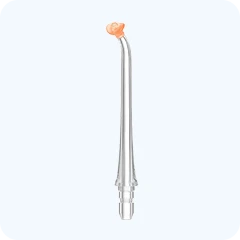
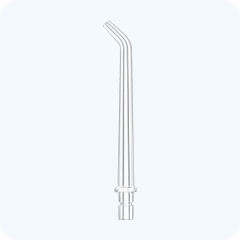
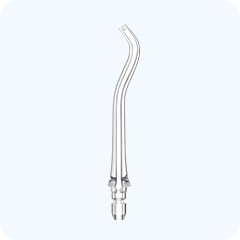
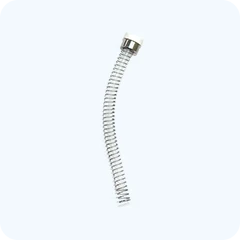
Straight tips force you to twist your wrist at an awkward angle to aim water along the inside surfaces of your back molars, which often sends water spraying onto the mirror. A 360° rotating S-shaped nozzle fixes this by echoing the natural curve of a dentist’s mirror, letting your hand stay relaxed while the stream reaches tight back-tooth angles cleanly.
Instead of chasing a pile of duplicate tips, look for three genuinely useful styles:
- Standard Nozzle: A focused daily stream (~0.6 mm) for interdental gaps and along the gumline.
- Orthodontic Nozzle: Combines a slim tapered bristle cluster with the water jet to sweep around brackets and wires.
- Posture-Correct Guidance Tip: Uses a soft positioning guide to help beginners align the stream along the gumline with less guesswork and splashing.
- What to look for: A 360° rotating S-shaped nozzle plus targeted tips matched to your teeth or orthodontic work.

Part 3: Hygiene & Long-Term Reliability
6. Detachable Tank Design and IPX7 Waterproofing for Mold-Free Drying
Among frequent travelers, the fastest way a travel flosser ends up in the trash is trapped moisture and internal tank buildup. Zipping a damp, sealed reservoir into a warm toiletry bag invites biofilm and stale odors within weeks.
Two separate design details keep your flosser fresh:
- IPX7 waterproofing: Lets you rinse the exterior safely and even floss in the shower—one of the easiest ways to avoid countertop splashes altogether.
- A fully detachable tank (slide-off or twist-off): Waterproofing only protects the outside. Being able to remove the reservoir completely lets you rinse every corner and leave it open on a hotel counter to air-dry before packing.
One quick note on collapsible pull-out tanks: they include a tiny air-relief vent near the top so the pump can draw water smoothly without creating a vacuum. Simply hold the tank upright under the faucet while filling so water stays inside instead of trickling from the vent.
- What to look for: IPX7 waterproof protection paired with a wide-opening, slide-off or twist-off removable tank.
7. Clinical Validation, Warranty Coverage, and Easy Replacement Tips
Finally, think beyond your first few weeks of ownership. When evaluating any portable dental water flosser, check for three signs of long-term dependability:
- Independent clinical validation: The ADA Seal of Acceptance confirms a water flosser has been independently reviewed for safety and effectiveness in removing plaque and helping reduce gingivitis.
- Easy-to-buy replacement nozzles: Dental professionals recommend replacing water flosser tips every 3 to 6 months, just like a toothbrush head. Make sure you can order authentic replacement nozzles directly online without jumping through hoops.
- Clear warranty and trial terms: A straightforward 1-to-2-year warranty and a reasonable return window protect your purchase if a pump or battery ever wears out early.
- What to look for: Transparent warranty terms, easy online access to replacement tips, and ADA Acceptance when clinical certification is a priority.
How to Prioritize These 7 Features for Your Routine (3 Real-Life Scenarios)
No single portable water flosser can be both the tiniest pocket-sized travel tool and a 2-minute orthodontic powerhouse at the same time. The easiest way to decide is to see which of the 7 features matter most in your day-to-day routine.
1. Frequent Travel & Carry-On Packing (Prioritize Features 1, 2 & 6)
If your priority is keeping your routine consistent on flights, road trips, or at the office, compact folded size (Feature 1), multi-month battery life (Feature 2), and quick tank drying (Feature 6) come first.
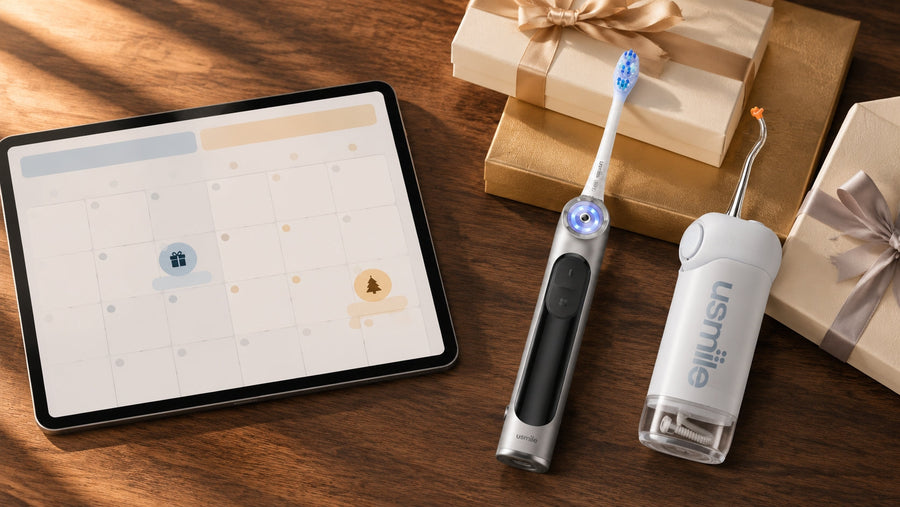
The usmile C10 Portable Dental Flosser—named “Best travel water flosser” by CNN Underscored—is built around those exact travel priorities. Its pull-out 180 mL tank folds down to 146.8 mm (about smartphone height) and weighs roughly 300 g dry, while delivering 45–50 seconds of steady 0.6 mm pulsed flow across four modes (starting at a gentle 35 PSI Massage mode). With up to 95 days of battery life per charge, three 360° S-shaped nozzles in a travel case, and a slide-off tank that air-dries cleanly on a hotel vanity, it slips right into carry-on luggage. If you prefer taking longer than 50 seconds per session, you simply refill the tank once.
[[Product Card]]
2. Small-Bathroom Daily Use & Weekend Trips (Prioritize Features 1, 3 & 4)
Many people buy a bulky corded flosser only to tuck it under the sink because their apartment bathroom lacks counter space or a nearby outlet. If your cordless flosser will live at home most days and come along on weekend trips, prioritize a 60-second single-fill tank (Feature 3), an ultra-gentle 30 PSI starting pressure (Feature 4), and a built-in travel lock (Feature 1).
The usmile C30 Cordless Water Flosser is a well-balanced portable oral irrigator for this hybrid setup. Its 300 mL detachable tank holds 67% more water than a collapsible travel model—giving you 60 seconds of steady flow to finish your whole mouth in one fill—alongside five linear pressure steps (30 to 110 PSI), universal USB-C charging (up to 60 days per charge), and a Flight Mode< lock for safe packing.
[[Product Card]]
3. Braces, Dental Work & Deep Cordless Cleaning (Prioritize Features 3, 4, 5 & 7)
Fixed braces, archwires, bridges, and implants demand more time and gentler control. Flushing carefully around 28 or more brackets usually takes 90 to 120 seconds, and newly tightened wires leave teeth tender for days. Here, extended continuous runtime (Feature 3), fine pressure gradations (Feature 4), specialized orthodontic bristles (Feature 5), and ADA clinical validation (Feature 7) matter most.
Instead of keeping you tied to a countertop cord, the ADA-Accepted usmile C50 Portable Dental Flosser pairs a 300 mL tubeless detachable tank with a high-speed vortex pump for up to 120 seconds of continuous flow—more than twice the runtime of a standard cordless tank. It includes 10 pressure levels (30–120 PSI, with Levels 1–3 tailored for post-adjustment sensitivity), an upgraded S-shaped slim-bristle orthodontic nozzle, and 60-day USB-C battery life. In a 28-day clinical evaluation, the C50 also demonstrated an 84.93% reduction in gum bleeding sites and a 64.17% improvement in plaque index.
[[Product Card]]
| Routine & Example | Tank & Runtime | Pressure & Battery |
|---|---|---|
| Travel & Commuting (usmile C10) | 180 mL collapsible; 45–50s flow | 4 modes (35–110 PSI); 95-day battery |
| Small Bathroom & Trips (usmile C30) | 300 mL detachable; 60s flow | 5 levels (30–110 PSI); 60-day USB-C |
| Braces & Deep Care (usmile C50) | 300 mL vortex tank; 120s flow | 10 levels (30–120 PSI); ADA Accepted |
(Note: Battery estimates are based on one 1-minute session per day; actual duration varies by mode and session length.)

Quick 5-Step Travel & Daily Checklist for Mess-Free Water Flossing
Even the best portable water flosser can feel messy on day one if you switch it on before it is in your mouth. Follow these five simple steps to keep yourself—and the bathroom mirror—dry:
- Fill upright with lukewarm water: Lukewarm water feels much gentler on sensitive teeth than cold tap water. Hold collapsible tanks upright under the faucet so the air-relief vent stays clear.
- Click in your nozzle and pick a low setting first: Choose a gentle 30–35 PSI mode before turning the pump on.
- Lean over the sink and partially close your lips: Place the tip at a 90-degree angle along your gumline, close your lips loosely around the shaft to guide water down into the sink, and then press power.
- Trace your gumline tooth by tooth—before brushing: Many dentists recommend water flossing before brushing so you flush away loose food debris first and make the habit harder to skip. Rotate the 360° S-shaped nozzle to clean behind your back molars without twisting your wrist.
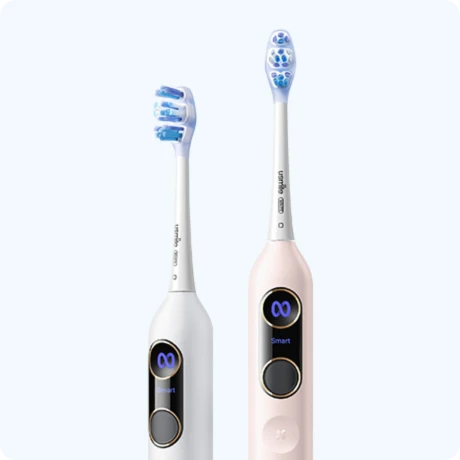
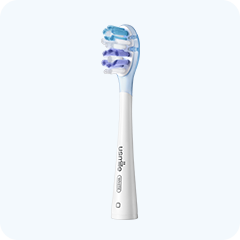
- Drain, purge, and air-dry before packing: Pour out leftover water, run the pump for two seconds to clear the intake tube, and detach the reservoir to dry completely before zipping your travel flosser beside your daily toothbrush (such as a compact sonic brush like the usmile P10 S Electric Toothbrush).
Frequently Asked Questions About Portable Water Flossers
1. Is a portable water flosser as effective as a countertop model?
Yes. As long as a cordless model delivers steady pulsation (around 1,400 pulses per minute) and enough water flow for a thorough clean, portable water flossers remove plaque and food debris just as effectively as corded countertop machines. The practical difference comes down to tank capacity and cord-free convenience.
2. Is a 180 mL small water flosser tank big enough, or do I need 300 mL?
A 180 mL tank provides roughly 45 to 50 seconds of steady water flow, which is enough for most adults to clean their whole mouth once they get used to the rhythm. If you prefer a slower pace without refilling—or you have braces, bridges, or implants that take extra time—a 300 mL tank (delivering 60 to 120 seconds of flow) is noticeably more convenient.
3. Can a portable water flosser replace string floss, and should I use it before or after brushing?
According to the American Dental Association (ADA), a water flosser complements—rather than replaces—twice-daily brushing and regular interdental cleaning. String floss physically scrapes sticky biofilm from tight tooth-to-tooth contacts, while pressurized water excels at flushing along the gumline, deep pockets, and around braces. Most dental professionals suggest water flossing before brushing so loosened debris is swept away before toothpaste coats your teeth.
4. Should you use warm water or mouthwash in a portable water flosser?
Lukewarm water is the most comfortable everyday choice, especially if your teeth are sensitive to cold. If you want to add mouthwash, choose a non-alcoholic formula diluted with warm water, and always run a full tank of plain warm water through the unit afterward so residue does not clog internal valves.
5. Can you use a portable water flosser in the shower?
Yes, as long as the device carries an IPX7 waterproof rating and any charging port cover is properly sealed. Flossing in the shower is one of the easiest ways for beginners to build the habit without worrying about splashing water onto a bathroom mirror.
6. Can you bring a rechargeable water flosser for travel on an airplane?
Yes. Built-in lithium-ion batteries inside personal oral irrigators sit around 9–10 Wh—well under the 100 Wh ceiling set by FAA PackSafe regulations. Pack your rechargeable water flosser in your carry-on bag with the water tank completely emptied before passing through airport security, and engage its travel lock if it has one.
7. How often should you clean a portable water flosser and replace the nozzle tip?
Empty and detach the water tank to air-dry after every session so moisture never lingers inside. Once a month, flush the unit with one part white vinegar to two parts warm water—followed by a full tank of plain warm water—to dissolve hard-water mineral scale. Replace standard and specialty water flosser nozzles every 3 to 6 months, or sooner if a tip looks worn or discolored.
Final Takeaway: Focus on the 7 Features That Build a Consistent Habit
Choosing the best portable water flosser is rarely about buying the machine with the highest PSI claim or the largest pile of extra tips. It comes down to seven practical features that remove daily friction: a compact size you will actually pack, a battery that lasts for months, 45 to 120 seconds of steady water flow, a gentle 30–35 PSI starting level, a 360° S-shaped nozzle that reaches back molars effortlessly, a removable tank that dries completely mold-free, and reliable warranty and replacement tip support.
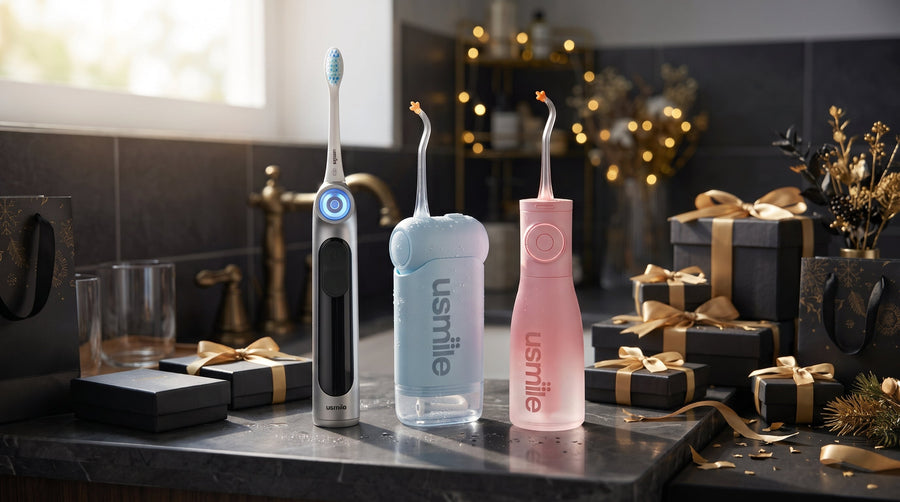
Once you know which of those features matter most for your teeth and schedule, it is easy to find a portable dental flosser that fits naturally into your routine—whether that is the collapsible usmile C10 Portable Dental Flosser for light travel, or the 60-second usmile C30 and ADA-Accepted 120-second usmile C50 in the usmile Cordless Water Flosser.
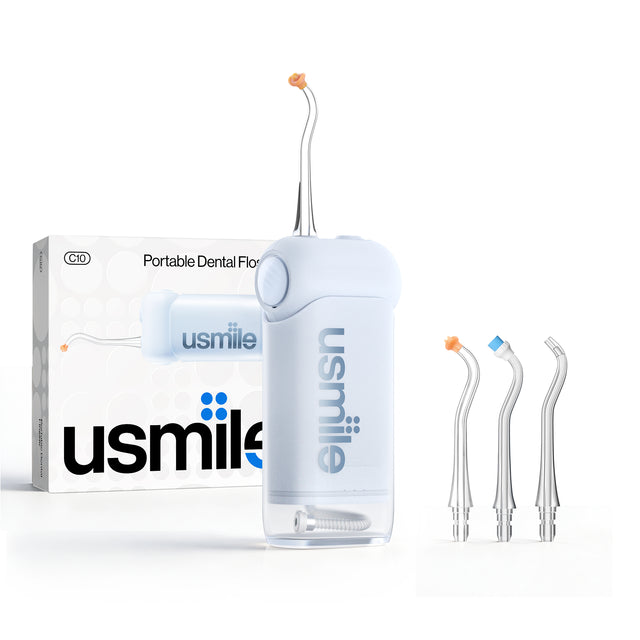
usmile C10 便携式冲牙器
360° 喷嘴深度清洁,4 种模式,超长续航——单次充电可使用长达 95 天。
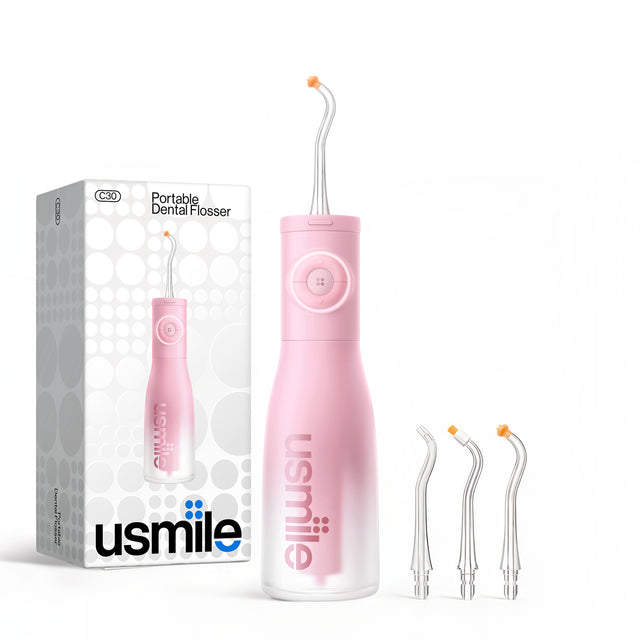
usmile C30 便携式冲牙器 – 手持式水牙线
无论是在家还是外出,都能享受完整、不间断的清洁体验。
Portable Water Flossers & Oral Irrigators
From an easy first clean to ultra-portable power and pro-level control, find the water flosser built for your routine.
冲牙器Disclaimer
This article is for general oral-health education only and does not replace individualized dental diagnosis or treatment. If you have active gum disease, recent oral surgery, dental implants, or persistent pain or bleeding during use, consult a licensed dental professional.