Child Brushes Teeth But Still Gets Cavities: 12 Hidden Reasons Parents Often Miss
You stand there every night and watch it happen. The brushing, the rinsing, the good toothpaste you went out of your way to buy. Then the dentist finds a cavity anyway, and you walk out feeling like you missed something obvious. Here's what nobody bothers to tell parents: brushing was never going to carry the whole job by itself. What your kid eats matters.
How often they're snacking matters more than most people think. Enamel strength, fluoride, the amount of spit their mouth actually makes overnight — that's all in the mix too. Johns Hopkins Medicine notes that "my kid brushes but still gets cavities" is among the most common things pediatric dentists get asked, and over half of US children end up with at least one cavity in their baby teeth. So no, you're not failing at this. You've just got a few blind spots, and most of them have nothing to do with the toothbrush itself. The fix is buildinghealthy oral care habits at home that go past the two minutes at the sink.
How a Cavity Actually Shows Up
Your kid's mouth? It's a whole ecosystem there. We're talking hundreds of different bacterial species hanging out on teeth, gums, tongue, you name it. Most of them are completely fine. A few are even helpful — they aid digestion, keep nastier bugs in check, and do the usual immune stuff. But a handful are jerks. The main troublemaker, if you want to get specific, is a bacterium called Streptococcus mutans. These cavity-causing bacteria feed on the sugars left behind in your child's mouth and produce acid as a byproduct. That acid slowly wears down the enamel, weakens the tooth surface, and sets the stage for tooth decay. Streptococcus mutans loves sugar, loves it more than your toddler loves screen time. Every sip of juice, every gummy snack, every sticky cracker becomes fuel for these bacteria to keep producing more acid throughout the day.
When it gets fed (which, in a kid's mouth, is constantly), it produces acid as a waste product. Charming, right? That acid attacks the tooth's outer layer — the enamel — for about twenty minutes after every meal or snack. Then saliva swings in like a cleanup crew, dumps calcium, phosphate, and any fluoride hanging around back onto the surface, and rebuilds what got lost.
Now imagine that on a loop. Bite, acid, repair. Sip, acid, repair. Here's where it falls apart — when those bites and sips come too close together, the repair team can't catch up. Saliva is still working when the next acid wave hits. So enamel slowly loses ground. First, a chalky white patch shows up on the tooth. Then it gets softer. Then it caves in, and you've got an actual hole, which is the moment we stop calling it 'early decay' and start calling it a cavity. So no, the real question isn't whether your kid is brushing. It's how many acid attacks their mouth is absorbing in a day, and whether the enamel ever catches its breath in between.
12 Reasons Your Child Brushes Teeth But Still Gets Cavities
1. The Brushing Looks Fine, But the Spots That Matter Get Skipped

Want to do an eye-opening experiment tonight? Pull up a stool in the bathroom and just watch your six- or seven-year-old brush. The whole routine, start to finish. It's hilarious and slightly horrifying. Most kids at that age go straight for the front teeth because those are the ones they see in the mirror. They do a couple of swipes across the middle. Then they declare victory and try to leave. Back molars? Barely got a touch.
Gumline? Not even on their list. Inside the teeth, where most cavities actually hide? Forget it. And honestly, this isn't them being lazy. It's wrist development. The fine motor coordination needed to brush every surface properly doesn't fully arrive until around age seven or eight—no amount of reminding speeds that up.
So skip the technique lecture. Just take over the back half of the brushing yourself—30 seconds. Hit the molars. Drag the bristles along the gumline. Get the inside surfaces. Done. Building a realsmart oral hygiene routine at home isn't about brushing more often. It's about actually cleaning every tooth, every night. Which sounds simple until you remember most six-year-olds would rather chew on the toothbrush than aim it properly.
2. They're Not Actually Brushing for Two Minutes

Try this. Tell your seven-year-old to brush for two minutes, then quietly time them on your phone. I'll wait. Most of you just discovered your kid has been brushing for around forty seconds, maybe less, and confidently calling it done. And listen, two minutes is genuinely brutal when you're six, and the cat is in the next room, and there's a half-built Lego project on the floor.
Plus, the toothpaste tastes weird, the bathroom is cold, and brushing is the most boring part of the entire day. So you get scrub-scrub-rinse-bye. Forty seconds isn't enough time for fluoride to do anything useful. It isn't enough time for the bristles to clear plaque off every tooth. The math just doesn't work out.

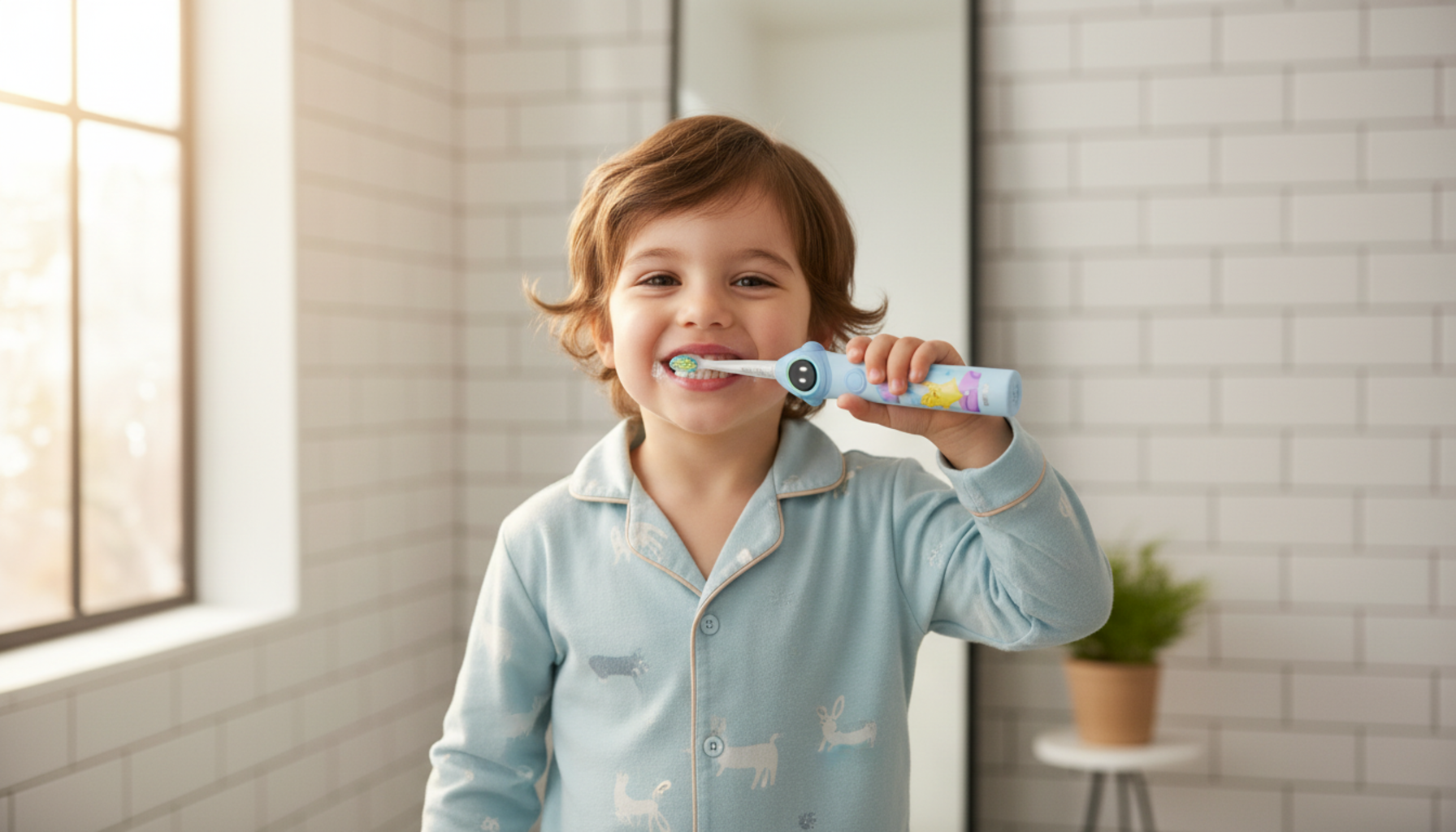
So bring in something to handle their timing. A sand timer on the counter works. A favorite song that runs roughly two minutes works (Taylor Swift's "Shake It Off" is 3:39, which gives a little buffer). Or just hand them a brush that handles the timing itself. This is where electric toothbrushes for kids genuinely shine. A talking kids' toothbrush with a built-in timer runs the full two minutes on its own. It pulses at every thirty-second mark, so your kid switches to the next section without being nagged. Cheers them on through the brushing. Within a couple of weeks, most kids stop fighting because it no longer feels like a chore and starts to feel like a little game. Worth every dollar if your house has been hosting nightly brushing standoffs.
3. Flossing Quietly Disappeared from the Routine

Here's the part most parents really don't want to hear: a toothbrush physically cannot reach between teeth. Doesn't matter what brand. Doesn't matter how expensive. The bristles are too thick to slide into the spots where teeth meet. So if your kid's teeth are touching (and at some point, almost everyone's do) and nobody is flossing, then food is sitting in those gaps every single day. Bacteria are feeding on it. Acid is forming. And you can't see any of it happening because the damage is hidden in spots only X-rays catch.
The good news? Flossing kids isn't anywhere near as awful as it sounds. Those little plastic Y-shaped floss picks — the ones that look like tiny weapons — work miles better than string for small fingers. Most pharmacies stock them for under five bucks. The actual trick is making it automatic. Same time every night, before brushing, not after. Floss first because the toothpaste's fluoride can reach the spaces between teeth that were just cleaned. Honestly took me years to figure out that order. Most articles online get it wrong.
4. The All-Day Snacking Habit

This is where it gets uncomfortable for a lot of parents. The cavity culprit usually isn't candy at all. It's snacks—and not even junky snacks—any food eaten constantly. The standard kid schedule in a lot of households looks like this: breakfast at 7:30, a fruit pouch in the car at 8:15, Goldfish at school around 10, lunch at noon, a granola bar after pickup at 3, apple slices at 4 because dinner is still an hour out, dinner at 6, then a "small" bedtime snack at 7:30. From a tooth's perspective, that's eight acid attacks in twelve hours. Saliva doesn't get a single minute to do its repair work.
The CDC's children's oral health guidance basically agrees: the frequency of snacking matters way more than people realize. The fix is dead simple, even if the rollout takes a few weeks of negotiation. Shrink the snack windows. Two, maybe three set times a day. Plain water in between, not juice or milk. When they are snacking, lean on foods that don't stick around — cheese cubes, plain yogurt, baby carrots, sliced apple, hard-boiled eggs, and a small handful of nuts if they're old enough to handle them without choking risk.
5. The Foods You Think Are Healthy Are Actually Sugar in Disguise

Here's what genuinely makes parents mad when they figure it out: half the "healthy" snacks marketed for kids are basically candy with better PR. Flip a pouch of fruit snacks and read the sugar grams. Check the back of a flavored yogurt cup. Look at what's actually in those organic granola bars from the natural foods aisle. The marketing screams wholesome, but the bacteria in your kid's mouth genuinely cannot tell the difference between organic cane sugar and the sugar in a Skittle. Sugar is sugar to them.
And the sticky stuff is the absolute worst category — raisins, fruit leather, gummy vitamins (yes, even the vitamins). Ice cream rinses off teeth in about thirty seconds. A single raisin can wedge between two molars and just live there until brushing time: same sugar count, totally different damage. Nobody warns you about raisins, honestly. They should. I'm not saying ban this stuff. I'm saying move it to mealtimes when saliva is already flowing, then teach your kid to drink water after. Not a perfect rinse, but a real improvement over nothing.
6. Juice, Sippy Cups, and the Slow-Drip Sugar Bath

Apple juice. The most innocent-looking drink on the planet. The thing pediatricians sometimes suggest for dehydrated kids. Total tooth wrecker.
Here's what nobody tells you when they hand you that first sippy cup at a baby shower. Fruit juice is essentially sugar water without the fiber slowdown you get from whole fruit. Once it's in a sippy cup, your kid drags around the living room all afternoon? Their teeth are getting bathed in sugar for hours. The same goes for chocolate milk, sports drinks, and those flavored waters with cute cartoon characters on the bottle. Even some of the "natural" almond milks have way more sugar than people realize — read the labels next time you're at the store.
The single worst version of this, hands down, is the nighttime bottle. Kid falls asleep with milk or juice still in their mouth. Liquid pools around the front teeth. By morning, the start of what dentists call baby bottle tooth decay is setting in. It's fast. Ugly. It usually requires sedation to fix because toddlers can't sit still in a dental chair for treatment. Just don't do it. Switch to water only in the bedtime cup or bottle from tonight on. Kids adjust within three or four nights, even if the first one is rough.
Pediatric guidelines from the American Academy of Pediatrics recommend limiting 100% fruit juice to about 4 ounces per day for children ages 1 to 3, and serving it only with meals rather than sipping it throughout the day. For kids ages 4 to 6, the limit is around 4 to 6 ounces per day. Serving juice with food helps reduce the time sugar contacts teeth, which lowers the risk of cavities. Water and plain milk should still be the main drinks during the day.
Source: American Academy of Pediatrics —Where We Stand: Fruit Juice
- Open cup for juice, not a sippy cup or straw, they can sip from for hours
- Plain water between meals. Boring, yes. Important, also yes.
- Nothing but water in the bedtime cup or bottle. Ever. No exceptions.
7. The Night Brush Gets Rushed or Quietly Skipped

Think about what actually happens overnight. Your kid is asleep for nine, ten, sometimes eleven hours straight. The entire time, their mouth nearly stops producing saliva. So whatever was clinging to their teeth at 8 p.m. is still parked there at 6 a.m. — no rinsing, nothing washing it off, just sugar and bacteria left to work the night shift undisturbed.
That's the whole reason the bedtime brush outranks the morning one. It sounds like the kind of thing a dentist says to scare you. It isn't. Out of every brushing in your child's day, this is the one that simply can't slide.
Not when grandma's staying over and doesn't want to be the one who said no. Not when bedtime has already turned into a full meltdown. Not when you're running on empty and just want everyone in bed already.
Anchor it to the same slot every single night — somewhere between pajamas and the bedtime story works well, because it's predictable. And the second tooth is brushed, the kitchen shuts down. No last cup of milk. No "just a tiny sip" of the flavored water. No bowl of grapes because someone announced they're starving. Anything sweet after that final brush quietly cancels the whole effort. Plain water is the one thing that still gets through.
8. Naturally Thin Enamel or Deep Grooves in the Molars

Sometimes the problem isn't behavior at all. It's anatomy. Some kids are simply born with deeper grooves on their back molars than others. The chewing surfaces have tiny crevices so narrow and deep that no bristle, no matter how soft or expensive, can physically reach the bottom. Food gets in there. Bacteria move in next. And a cavity forms in a spot you literally cannot clean with a toothbrush. That's not failed parenting. That's just how that particular kid's teeth came in.
Pediatric dentists have a great fix for this called sealants. Basically, a thin plastic coating is painted over the grooves to seal them shut. Application is quick — your kid sits in the chair, the dentist paints it on, a special blue light cures it in about thirty seconds, and they're done. No drills. No needles. No numbing required. And the data is wild — sealants drop cavity risk on those back teeth by something like 80 percent. That's one of the strongest single-intervention numbers in all of dentistry. Worth asking about when the first permanent molars come in, around age six. Then again, around age twelve, when the second set arrives.
9. Mouth Breathing and a Constantly Dry Mouth

Go peek at your kid tonight while they sleep. Lips slightly open? Breathing through the mouth instead of the nose? Maybe a soft little snore going? If that's the picture, you might've just found the piece you've been missing.
Mouth breathing in kids happens way more than parents realize. Usually it traces back to allergies, big tonsils or adenoids, or congestion that never fully clears — and most families just shrug and decide that's how their kid has always slept.
The cavity connection here is pretty straightforward. Breathing through the mouth dries everything out. A dry mouth makes less saliva. And saliva is the only reason your child's mouth can neutralize acid and rebuild enamel on its own — pull it out of the equation and that built-in repair system is basically coasting on fumes. Bacteria do well in a dry mouth. Acid hangs around far longer than it should. And that frustrating "but he brushes constantly, what gives?" question finally starts to make sense. If the mouth breathing is a nightly thing, bring it up with your pediatrician or dentist — sorting out the cause often does more for those teeth than anything you change at the sink.
10. The Fluoride Situation Is Slightly Off

Fluoride is one of the most thoroughly studied tools in modern dentistry, and it performs several genuinely important functions at once. It hardens enamel. It helps replace lost minerals. And in early-stage decay, it can actually reverse damage before it ever turns into a real cavity. The catch? A few small, common mistakes around fluoride use end up canceling out most of its benefit — without parents ever realizing what's going wrong:
- Sticking with fluoride-free training toothpaste long after teeth have come in
- Using too little toothpaste (a rice-sized smear under age three, a pea-sized amount for ages three to six)
- Rinsing the mouth out aggressively with water right after brushing
- Drinking exclusively bottled water, which usually contains very little fluoride
The simplest fix at home? Teach your child to spit after brushing without then rinsing with water. Spit out the extra toothpaste, but try to skip the water rinse right after. Dentists usually recommend this because the fluoride in your toothpaste works best when it stays on your teeth for a little longer. Rinsing right away washes most of it down the drain before it can strengthen the enamel. Leaving that thin layer behind gives the fluoride more time to do its job, which helps protect against cavities over time. It's less of a strict rule and more of a small habit that pays off in the long run. Letting the toothpaste residue sit on the teeth gives the fluoride time to actually do its job, rather than getting washed straight down the drain in five seconds before it has any real chance to work.
11. The Six-Month Dental Visit Keeps Getting Pushed Back
Early cavities are remarkably quiet things. No pain. No obvious visual signs in many cases. Your kid won't complain about something that doesn't actively hurt yet. The only person likely to catch decay before it becomes a full-blown filling is a pediatric dentist with the right tools and a trained eye — which is exactly why those routine checkups matter so much more than most parents give them credit for.
The American Academy of Pediatrics recommends that children have their first dental visit by age one, followed by checkups every six months thereafter. And those appointments aren't just for cleanings, either. They're when sealants are applied during the right developmental window, when fluoride varnish is applied for extra protection between visits, and when any early decay is stopped. At the same time, it's still cheap and easy to treat—pushing those visits off by six months or a year? Honestly, it's one of the costliest dental mistakes families routinely make.
12. Cavity Bacteria Got Passed From You (Plus Vitamin Gaps)

Here's a fact most parents have never been told, and one that dentists rarely bring up in casual conversation: babies aren't actually born with the bacteria that cause cavities. They pick those bacteria up later, usually from a primary caregiver, through completely ordinary behaviors. Sharing a spoon at dinner. Blowing on hot food before handing it over. A kiss on the mouth. Once those cavity-causing bacteria move in and settle, the child becomes considerably more prone to cavities for the rest of their life. This is one reason why some kids seem to get cavities no matter how carefully their parents brush and floss them — the bacterial deck was already stacked years before.

Two simple shifts make a meaningful difference here. First, try not to share utensils, cups, or pre-chewed food with your baby, especially in the first couple of years when bacterial colonization is most active. Second, take serious care of your own teeth, because a lower bacteria load in the parent's mouth means less of it gets transferred to the child in the first place. That second one is easier to pull off than it sounds. A smart electric toothbrush for daily brushing with a pressure sensor and zone tracking quietly takes most of the guesswork out of adult brushing, which raises the bar for the whole family's oral health — not just yours.
There's also a nutrition piece worth mentioning that's sometimes overlooked in conversations about cavities. Kids who run low on vitamin D, calcium, or phosphorus tend to have weaker enamel and a harder time remineralizing the small bits of damage that happen every single day. A balanced diet with dairy or fortified plant milks, leafy greens, eggs, fatty fish, and a bit of safe sunlight exposure helps build strong teeth from the inside out — supporting all the brushing work you're already doing on the outside.
What You Can Actually Do Starting Tonight
If your kid keeps getting cavities, the answer is rarely "brush harder." It's about fixing the habits around brushing. Here's what actually moves the needle, ranked roughly by impact. Help with the night brush until age seven or eight, even when they protest. Cut back on all-day grazing — stick to set meals and two or three snacks with water in between. Swap juice and sweet drinks for plain water between meals. Use a pea-sized amount of fluoride toothpaste and teach them to spit but not rinse. Pick a brush that fits their mouth and makes brushing for 2 minutes easier. And book that six-month dental visit you've been putting off.

If the brushing battle itself is the real issue at your house, switching to a kid-friendly electric toothbrush with a soft head and a built-in timer often solves half the nightly fight without anyone saying a word. Tools don't replace the habit, but they make sticking to it way less of a negotiation. Sometimes that's the only difference between consistent brushing and skipped nights.
When to Call the Pediatric Dentist
Don't wait for pain. By the time a kid complains about a tooth hurting, the decay is usually deeper than anyone wants, and the repair gets bigger and more stressful. Call the dentist sooner if you see any of these:
- A chalky white spot on a tooth, usually right at the gumline
- A brown or dark spot that wasn't there before
- Sensitivity to cold or sweet foods that comes and goes
- A small hole you can see or feel with your tongue
- Pain while chewing, especially on one side of the mouth
- Bad breath that doesn't clear with regular brushing
The good news? The earliest stage — that chalky white spot before a real hole — is often reversible with fluoride and some habit changes. A real cavity isn't, but it's a quick fix when caught early. The longer it sits, the bigger the eventual repair. When in doubt, err on the side of an extra visit.
The Bottom Line
When a child brushes teeth but still gets cavities, the brushing technique is rarely the main problem. Diet, snacking, fluoride exposure, enamel quality, saliva flow, dental visits, and bacteria all play a role. The good news? Most of those things you can actually change at home, starting today, without spending much money.

If cavities keep coming back no matter what you try, ask your dentist about sealants, prescription fluoride, and possibly an AI-powered electric toothbrush so the whole family brushes more accurately. Small daily tweaks plus a six-month checkup are usually enough to keep most kids cavity-free.
FAQs
Why does my child keep getting cavities despite brushing?
Brushing only removes plaque from surfaces a bristle can reach. Cavities also depend on how often acid is hitting the teeth, which comes down to snacking, sugary drinks, weak enamel, mouth breathing, and skipped flossing. Most kids with recurring cavities are dealing with two or three of these at once. Fix one, you see partial improvement. Fix all of them, and the cavities usually stop.
Is it normal for a 7-year-old to have cavities?
Unfortunately, yes. The CDC reports that more than half of US kids aged six to eight have had at least one cavity in their baby teeth, which makes tooth decay the most common chronic disease of childhood. Common doesn't mean acceptable, though. At that age, cavities are almost always preventable with sealants, fluoride, and tighter snacking limits.
How can I reverse cavities in a 2-year-old?
Only the earliest stage — the chalky white spot before a real hole forms — can be reversed. At that point, brushing twice a day with a rice-sized smear of fluoride toothpaste, cutting juice and sweet drinks, and seeing a pediatric dentist quickly can stop the decay. Your dentist may also apply fluoride varnish or silver diamine fluoride. Once a real hole shows up, it needs a filling. No home remedy patches an actual cavity.
Is it normal for a 4-year-old to have four cavities?
It happens more than parents like to admit, but four cavities at four is a signal that something needs to change. The usual causes are sippy cups with milk or juice, all-day snacking, and brushing that's too short or too gentle. A pediatric dentist can build a prevention plan and treat the existing cavities before they spread to nearby teeth.
How many cavities can a 7-year-old have?
There's no fixed limit. It depends on enamel quality, diet, hygiene, and how often they see a dentist. Some kids never get one. Others get three or four in a year. If your seven-year-old has had multiple cavities in a short window, ask the dentist about sealants, prescription fluoride toothpaste, and a closer look at diet and saliva.
Can vitamin D deficiency cause cavities?
Indirectly, yes. Vitamin D helps the body absorb calcium and phosphorus, which are the building blocks of strong enamel. Severe vitamin D deficiency in early childhood can leave enamel weaker and more vulnerable to acid. Sunlight, fatty fish, eggs, and fortified milk all help. Always check with your pediatrician before adding supplements.
How do dentists fix a cavity in a 5-year-old?
Most small cavities in baby teeth get a tooth-colored filling in one short visit, usually under an hour. More extensive decay sometimes requires a stainless steel crown for durability, especially on back molars. Pediatric dentists use numbing gel, nitrous oxide (laughing gas), or mild sedation to keep kids comfortable. They're trained to make the whole thing low-stress for kids and parents.
What foods help heal cavities naturally?
No food patches an actual cavity — only a dentist can. But several foods support stronger enamel at the early white-spot stage. Calcium-rich choices like milk, yogurt, cheese, and leafy greens are particularly helpful. So are phosphorus sources like meat, fish, eggs, and beans, plus vitamin D foods to help absorb both. Crunchy raw veggies stimulate saliva, which is the body's built-in enamel repair team.
How long does it take for a cavity to form on a child's tooth?
It varies. A white spot can appear within a few weeks of heavy sugar exposure. Going from a white spot to a real hole usually takes several months. But baby teeth have thinner enamel than permanent teeth, so decay can move surprisingly fast in young kids — sometimes starting to finish in six months or less. That's why six-month dental checkups matter so much during the baby-teeth years.
Sources
- NIDCR – The Tooth Decay Process: How to Reverse It and Avoid a Cavity
- CDC – Oral Health Tips for Children
- American Academy of Pediatrics – Toothbrushing Tips for Young Children
- Johns Hopkins Medicine – Tooth Decay (Caries or Cavities) in Children
- Nemours KidsHealth – Keeping Your Child's Teeth Healthy
- World Health Organization – Oral Health


Looking for something else?
Best Electric Toothbrush for Gum Disease (2026): 6 Picks Tested for Real Gum Protection
LEARN MORE
Electric Toothbrush on Plane: The Complete Travel Guide (2026)
LEARN MOREBest Sustainable Electric Toothbrush 2026: 5 Picks Tested for a Greener, Healthier Smile.docx
LEARN MORE
Best Sustainable Electric Toothbrush 2026: 5 Picks Tested for a Greener, Healthier Smile
LEARN MORELooking for something else?
Best Cheap Electric Toothbrush (2026): Top 5 Budget Picks That Actually Work
LEARN MORE
Ultrasonic Toothbrush vs Electric: Which Technology Wins for Your Smile?
LEARN MORE
Best Electric Toothbrush for Sensitive Teeth (2026) — 5 Tested
LEARN MOREYou may also like
usmile Q30 Kids Electric Toothbrush Trio Pack


usmile Y20PRO Adults Toothbrush x Q30 Kids Toothbrush


Further reading
Plaque, Stains, or Food Debris? How to Interpret What a Toothbrush Camera Shows
The 5 Toothbrushing Spots Kids Miss Most—and How Parents Can Help
The Back-to-School Brushing Reset: A 14-Day Plan for Kids Ages 3–8